BLU Zoey review
The BLU Zoey suits people who genuinely do not want a smartphone: travelers carrying a backup, workers who need a durable second line, or anyone in a market where data is metered and expensive. If you need any device capable of more than calls, texts, and FM radio, even an entry-level smartphone will serve you better.
This review is written with AI assistance from BLU’s published specifications and public benchmark data for the BLU Zoey, and the rating is spec-based. GoSolo does not physically test devices; where we estimate real-world behaviour such as battery life or charge time, we say so. How we rate phones.
Overview
The BLU Zoey is a 2013 feature phone aimed squarely at users who need calls, texts, and basic media without smartphone complexity or cost. At €20, it delivers exactly that: a pocket-sized candybar with FM radio, a VGA camera, and a week of battery life between charges, though you'll find the 128×160 display cramped and the 32MB storage laughable by any standard.
What This Actually Is
The BLU Zoey is not a smartphone, not a mini-smartphone, not a stepping stone. It is a feature phone from 2013 that costs €20 and does exactly one job: stay alive between calls and texts with minimal fuss. No apps, no internet beyond basic GPRS, no social media. If you need a second line for work calls while leaving your main phone at home, or a durable backup for travel to places where theft or loss is a real risk, the Zoey exists. For everyone else, it is a relic that happened to be affordable enough to still be sold, discontinued though it is.
Display & Build
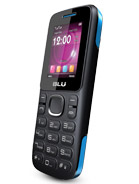
The screen is 1.8 inches with 128×160 pixels—a resolution last seen on phones from the late 2000s. Text is legible at arm's length if your eyesight is good, but composing a message or reading a long SMS requires genuine focus. The TFT panel has no protection, no brightness to speak of, and the 20% screen-to-body ratio tells you this was designed when bezel space was unlimited. Build-wise, the phone is solid candybar plastic, 65 grams and 13mm thick. It will not break if dropped onto linoleum, which was the durability bar for feature phones a decade ago.
Performance & Storage
There is nothing here to benchmark. The 32MB of internal storage fills up with the OS alone; adding anything—a ringtone, a photo, a contact list—eats into already-zero free space. The 24MB of RAM explains why the OS was written lean and why multitasking is not a concept. Thankfully, there is a dedicated microSDHC slot for extra storage, but files on the card remain secondary; you cannot run apps from it, only store media. Everything runs at the pace you would expect from a phone that predates smartphones.
Camera & Media
The VGA sensor (640×480) produces images that are soft, color-shifted, and useful only as proof you were somewhere. In daylight they are passable thumbnails; indoors, they are blurry. There is no flash beyond the flashlight built into the body, no video stabilization, and no zoom. On the upside, the phone records video, plays MP4 and H.264 files, and has an MP3 player and FM radio with a built-in antenna, which means you can listen to news or music without burning through call credit on GPRS.
Battery & Connectivity
The 820 mAh battery is removable, and the battery life figures—750 hours standby, 14 hours talk time—are not marketing hyperbole but realistic given the display and the processor are both minimal. That translates to roughly a week of light use or three days of moderate texting and calls. The removable battery is a genuine practical plus; you can carry a spare and swap it rather than hunt for a charger, invaluable in regions with spotty power access. Connectivity is GSM 2G only; no 3G, no WiFi, no Bluetooth beyond basic 3.0, no GPS. You are making calls, sending SMS, and accessing GPRS data at dialup speeds, or not at all.
Why It Still Exists at €20
The Zoey was cheap when it launched in 2013 and remained cheap because the components—a basic ARM processor, minimal RAM, a display bought in bulk—never got expensive to source. For someone in a market where a €150 phone is a month's budget, this device sits somewhere real: not a smartphone, not a burden, but a tool that boots in under a second and lasts a week. It has no pretense of being smart, no battery drain from idle apps, no distracting screen. It is the anti-smartphone, and that deliberate simplicity has a quiet logic for a subset of users.
Verdict
The BLU Zoey suits people who genuinely do not want a smartphone—travelers carrying a backup, workers in hazardous environments, or anyone in a market where mobile data is metered and expensive. It is not a budget phone for people who cannot afford better; it is a phone for people who have chosen not to own a smartphone at all. If you want a capable secondhand device with range of features, even entry-level, look elsewhere. If you want a dead-simple call-and-text box that vanishes in your pocket and outlasts your charger, the Zoey remains functional, if not pleasant to use.
Verdict
The BLU Zoey suits people who genuinely do not want a smartphone: travelers carrying a backup, workers who need a durable second line, or anyone in a market where data is metered and expensive. If you need any device capable of more than calls, texts, and FM radio, even an entry-level smartphone will serve you better.
- Genuinely lasts days: the 820 mAh battery quotes up to 750 hours standby and 14 hours talk time, a practical win for people far from chargers
- Removable battery lets you carry a spare and swap it when needed, a rarity even in 2013
- FM radio with built-in antenna means news and music without needing apps or data
- Weighs 65g and fits a pocket: designed for people who do not want a device that demands attention
- 32MB storage and 24MB RAM make it nearly useless for anything beyond calls and texts; even installing a simple app is an afterthought
- 1.8-inch 128×160 display is tiny and dim by 2013 standards, let alone today; reading texts requires squinting
- VGA camera produces thumbnail-quality images, suitable only as proof a moment existed
BLU Zoey Key Specifications
The essentials at a glance. See the full spec sheet.
| Released | 2013, August. Released 2013, August |
|---|---|
| Display | 1.8 inches, 10.2 cm2 (~20.3% screen-to-body ratio), TFT, 65K colors |
| Resolution | 128 x 160 pixels (~114 ppi density) |
| RAM & storage | 32MB ROM, 24MB RAM |
| Main camera | VGA |
| Selfie camera | No |
| Battery | 820 mAh |
| Software | Android |
| Dimensions | 110 x 45.7 x 13 mm (4.33 x 1.80 x 0.51 in) |
| Weight | 65 g (2.29 oz) |
| Durability | Flashlight |
| Network | GSM |
| NFC | No |
| USB | microUSB |
BLU Zoey FAQ
Common questions, answered from the spec sheet.
Does the Zoey support 5G?
No. The Zoey tops out at GSM, without 5G.
What display does the Zoey have?
A 1.8 inches, 10.2 cm2 (~20.3% screen-to-body ratio) TFT, 65K colors, 128 x 160 pixels (~114 ppi density).
How big is the Zoey battery?
The Zoey has a 820 mAh battery.
Does the Zoey have NFC?
No, the Zoey does not list NFC support.
Is the Zoey water resistant?
The Zoey carries a Flashlight rating.
Does the Zoey support a microSD card?
Yes, the Zoey supports expandable storage (microSDHC (dedicated slot)).