Celkon C22+ review
The Celkon C22+ is not a phone to buy in 2024. If you own one and your 2G network still exists, it works for emergency calls and texts. If you are shopping for a feature phone, look at a modern alternative that supports 4G or 3G networks—2G is almost extinct, and this device's limited battery and cramped screen make it frustrating even as a backup.
This review is written with AI assistance from Celkon’s published specifications and public benchmark data for the Celkon C22+, and the rating is spec-based. GoSolo does not physically test devices; where we estimate real-world behaviour such as battery life or charge time, we say so. How we rate phones.
Overview
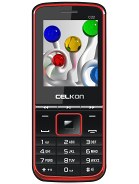
The Celkon C22+ is a 2011 feature phone with a 1.8-inch TFT display, dual-SIM GSM connectivity, and a removable 1000 mAh battery. It's a relic of the pre-smartphone era, useful only as a nostalgia piece or emergency backup phone in regions where 2G networks still exist.
What you're looking at
This is not a current phone—it was discontinued over a decade ago. The Celkon C22+ belongs in a museum or a drawer, not in a buying decision. If you've stumbled here, either you own one and are curious what it was, or you're considering a genuine feature phone for a specific, niche reason. For clarity: this is a 2G-only GSM device from 2011, with no 3G, no internet capability, and no modern wireless standard. It is a voice-and-text phone with a flashlight, FM radio, and basic media playback. Nothing more.
Display and usability
The 1.8-inch TFT screen with 176x220 pixels (157 ppi) is tiny and dim by any standard, including its own era. Text is readable only under good light and at arm's length. There is no internet browser, so you are not missing a worse experience—you simply cannot browse. The 20.1% screen-to-body ratio reflects the thick bezels typical of early 2010s phones. For checking text messages or a contact, it works. For anything else, it is a chore.
Connectivity and networks
GSM 850/900/1800/1900 means this phone works on basic 2G networks in regions that have not yet shut them down. Many countries have already decommissioned 2G entirely, rendering the C22+ a paperweight. Bluetooth 2.0 is slow and limited; the FM radio works where signals exist; microUSB charging is a legacy connector that requires a cable you may not own. There is no WiFi, no GPS, no 3G, and no LTE. Dual-SIM support lets you juggle two GSM carriers, which was practical when people still chose between local SIM cards for voice and text across regions.
Camera and media
The 1.3 MP rear camera captures stills and records video, though both are extremely low-resolution by any measure. Footage or photos from this sensor will pixelate and blur even on a small phone screen. There is no front-facing camera, which was uncommon in 2011. For a device meant to store media, the 0 MB internal storage is not a handicap—you must use the microSDHC slot to store anything. Audio and video playback is supported, so if you load MP3s or video files onto a card, they will play. Practical if you want a music player with no internet dependency; otherwise, redundant.
Battery and charging
The removable 1000 mAh Li-Ion battery claims up to 400 hours standby and 5 hours of talk time. In practice, 5 hours of voice use means you are charging daily if you use this as a primary phone, or every few days in true standby. The removable design is a plus only if you have spare batteries on hand; otherwise, you are tethered to a charger. Charging speed and efficiency are not documented, but microUSB is slow by modern standards.
Why this exists now
If you are reading this in 2024 or later, the C22+ is a curiosity or a backup. It survives in regions where 2G networks are still operational and where a no-frills, replaceable-battery phone serves as insurance against battery failure on a modern device. It is also a cold comfort for anyone locked out of a smartphone ecosystem or without electricity access for weeks at a time. For everybody else, it is outdated by over a decade and useful only as a novelty or a test of your nostalgia for pre-smartphone simplicity.
Verdict
The Celkon C22+ is not a phone to buy in 2024. If you own one and your 2G network still exists, it works for emergency calls and texts. If you are shopping for a feature phone, look at a modern alternative that supports 4G or 3G networks—2G is almost extinct, and this device's limited battery and cramped screen make it frustrating even as a backup.
- Removable battery—a rarity now, though its 1000 mAh capacity means you'd need spares constantly
- Dual-SIM support for cost management across networks
- Extremely light and compact at 75g and 15mm thick
- FM radio and microSDHC slot for audio and files, both useful on a device with zero internet
- GSM-only in an LTE and 5G world; useless in countries that have shut down 2G networks
- 1.8-inch, 176x220 pixel display is cramped even for a phone this old; reading anything is a strain
- 1000 mAh battery with up to 5 hours of talk time means constant charging if used as a daily device
Celkon C22+ Key Specifications
The essentials at a glance. See the full spec sheet.
| Released | 2011 |
|---|---|
| Display | 1.8 inches, 10.2 cm2 (~20.1% screen-to-body ratio), TFT |
| Resolution | 176 x 220 pixels (~157 ppi density) |
| RAM & storage | 0 MBBuy memory card |
| Main camera | 1.3 MP |
| Selfie camera | No |
| Battery | 1000 mAh |
| Software | Android |
| Dimensions | 108 x 47 x 15 mm (4.25 x 1.85 x 0.59 in) |
| Weight | 75 g (2.65 oz) |
| Durability | Flashlight |
| Network | GSM |
| USB | microUSB |
Celkon C22+ FAQ
Common questions, answered from the spec sheet.
Does the C22+ support 5G?
No. The C22+ tops out at GSM, without 5G.
What display does the C22+ have?
A 1.8 inches, 10.2 cm2 (~20.1% screen-to-body ratio) TFT, 176 x 220 pixels (~157 ppi density).
How big is the C22+ battery?
The C22+ has a 1000 mAh battery.
Is the C22+ water resistant?
The C22+ carries a Flashlight rating.
Does the C22+ support a microSD card?
Yes, the C22+ supports expandable storage (microSDHC (dedicated slot)).