Celkon C33 review
This phone has no buyer today. If you stumbled on one at a flea market, leave it. It is a dead artifact from the early 2010s with no usable functionality in 2024 or beyond. Even enthusiasts of old phones have moved on to models with at least a usable screen or internet connectivity.
This review is written with AI assistance from Celkon’s published specifications and public benchmark data for the Celkon C33, and the rating is spec-based. GoSolo does not physically test devices; where we estimate real-world behaviour such as battery life or charge time, we say so. How we rate phones.
Overview
The Celkon C33 is a 2011 feature phone built for basic calls and texts with a removable battery and FM radio. It is worth nothing today except as a museum piece or parts donor—it lacks a real internet connection, a usable camera, and even the modest durability or charm of contemporaneous phones that have aged better.
What this phone is
The Celkon C33 is a basic dual-SIM candybar phone from 2011, positioned at the absolute entry level of the Indian market. It offers calls, texts, FM radio, and little else. There is no WiFi, no 3G, no meaningful storage, and a 2.0-inch TFT screen so small and low-res (176 x 220 pixels at 141 ppi) that reading anything is a strain. This was cheap and disposable even then. Today it is purely historical—a snapshot of what budget phones looked like when the smartphone wave was just beginning to roll over the market.
Build and design
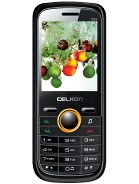
At 77g and 14.3mm thick, the C33 is genuinely pocketable and light. The design is utterly anonymous—a black plastic wedge with color accents (yellow or silver stripes) and a small screen that takes up less than a quarter of the face. Dual SIM slots were a selling point in emerging markets where people juggled work and personal numbers, or shopped for the cheapest rates per call. By modern standards, a removable battery is a quaint luxury, but in 2011 it meant you could carry a spare and never be stranded. The phone is durable in the way old plastic is: it will survive drops, but it will not survive time. The battery inside is almost certainly dead or useless now.
Display and usability
A 2.0-inch TFT screen with 176 x 220 resolution is barely adequate for a phone even in 2011. At 141 ppi, individual pixels are visible, text is small, and contrast is poor. There is no way to browse the web with any pleasure (not that you could—no WiFi). The screen-to-body ratio of 24.7% shows how much bezel and plastic surrounded tiny displays in that era. Reading an SMS or navigating a menu is tolerable, but anything demanding is painful.
Connectivity and battery
The C33 is GSM-only with GPRS—no EDGE, no 3G, no WiFi. In 2011, when 3G was rolling out, this was already a budget compromise. Data speeds are glacial by any standard. The 1000 mAh battery promises up to 9 hours 20 minutes of talk time and 400 hours of standby in the spec, but removable Li-Ion batteries from 2011 are almost certainly dead or severely degraded by now. Even new, 1000 mAh was on the small side for a phone used all day. The FM radio with recording is a genuinely useful feature for listeners without data access, but it does not offset the phone's fundamental limitations.
Camera and media
A 1.3 MP camera was standard on entry-level phones in 2011, and the C33's is no exception—it is virtually useless. Stills are dim, noisy, and low-detail; video recording works in principle but produces footage barely worth watching. The phone can play audio and video files from microSD card, but there is no way to transfer anything without a computer and microUSB, which itself is a 2.0 connector (slow, even for 2011).
Why it no longer matters
The Celkon C33 was a cheap phone for people who needed to make calls in 2011 and could not afford anything better. It served that purpose adequately then. Today it is obsolete in every meaningful way. Even as a secondhand curiosity, it has no purpose—no carrier still supports GPRS, the battery is dead, and the screen is too small to read. It belongs in a drawer or a recycling bin, not in anyone's pocket.
Verdict
This phone has no buyer today. If you stumbled on one at a flea market, leave it. It is a dead artifact from the early 2010s with no usable functionality in 2024 or beyond. Even enthusiasts of old phones have moved on to models with at least a usable screen or internet connectivity.
- Removable battery and microSD card slot—conveniences standard phones have ditched
- Dual SIM support and FM radio with recording for a 2011 budget phone
- Compact at 77g and light enough to pocket without thinking about it
- No internet connectivity (no WiFi, no EDGE, GPRS only) makes it useless for anything beyond calls and texts in 2011, let alone now
- 1000 mAh battery is small even by 2011 standards and degrades quickly; original units are likely dead
- 1.3 MP camera is dim, low-res, and produces unusable stills—a relic of the earliest phone camera era
Celkon C33 Key Specifications
The essentials at a glance. See the full spec sheet.
| Released | 2011 |
|---|---|
| Display | 2.0 inches, 12.6 cm2 (~24.7% screen-to-body ratio), TFT |
| Resolution | 176 x 220 pixels (~141 ppi density) |
| RAM & storage | 0 MB |
| Main camera | 1.3 MP |
| Selfie camera | No |
| Battery | 1000 mAh |
| Software | Android |
| Dimensions | 111 x 46 x 14.3 mm (4.37 x 1.81 x 0.56 in) |
| Weight | 77 g (2.72 oz) |
| Network | GSM |
| USB | microUSB |
Celkon C33 FAQ
Common questions, answered from the spec sheet.
Does the C33 support 5G?
No. The C33 tops out at GSM, without 5G.
What display does the C33 have?
A 2.0 inches, 12.6 cm2 (~24.7% screen-to-body ratio) TFT, 176 x 220 pixels (~141 ppi density).
How big is the C33 battery?
The C33 has a 1000 mAh battery.
Does the C33 support a microSD card?
Yes, the C33 supports expandable storage (microSDHC (dedicated slot)).