Coolpad C16 review
The Coolpad C16 is built for budget buyers who value battery life and a large screen over raw speed and charging pace. Anyone accustomed to snappier performance or who needs to charge quickly during the day should look elsewhere.
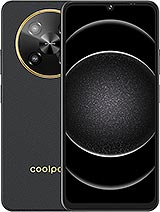
This review is based on Coolpad’s published specifications and public benchmark data for the Coolpad C16, and the rating is spec-based. GoSolo does not physically test devices; where we estimate real-world behaviour such as battery life or charge time, we say so. How we rate phones.
Overview
The Coolpad C16 is a budget Android phone built around a 6.75-inch screen and a 5000mAh battery that trades speed and fast charging for longevity and screen real estate. It suits people who value a full day's runtime and a large display on a modest budget, but the slow processor and glacial 10W charging mean it's not for anyone who demands snappy performance or quick juice-ups.
Design & build
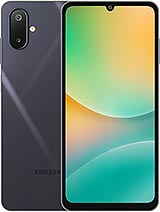
At 215g and 8.7mm thick, the C16 sits comfortably in hand for a large-screened phone, leaning toward the heftier end but not unwieldy. The metal and plastic construction feels ordinary for a budget device—no premium materials, but it doesn't scream cheap either. The side-mounted fingerprint sensor is a sensible choice for everyday unlock speed. Dual Nano-SIM plus microSD expansion (shared slot) covers the connectivity and storage bases without gimmickry, though the card slot's shared nature means you sacrifice a SIM if you want more storage.
Display
The 6.75-inch 90Hz IPS LCD is the phone's most obvious appeal. The screen is big and bright enough for comfortable reading, streaming, and web browsing, and the 90Hz refresh makes scrolling and swiping noticeably smoother than a 60Hz panel would. However, at 260 ppi density, text isn't as sharp as you'd get on a 720p mid-range phone with a smaller diagonal, and the 400-nit peak brightness can feel dim in direct sunlight. For someone who spends a lot of time on-screen and values size over pixel density, this is a genuine strength; for someone accustomed to a tighter display, it will look slightly soft.
Performance
The Unisoc T606 is entry-level silicon designed to handle email, messaging, social media, and light browsing—not much more. Everyday tasks work without obvious lag, but sustained heavy multitasking or gaming will reveal its limits. The 4GB RAM option is tight for background app management; the 6GB variant is genuinely better for keeping apps in memory, but it does not transform the experience. This chipset is behind what rivals offer at the same price today. If you need to run multiple apps, play modern games at playable settings, or expect the phone to feel responsive a year from now when apps grow heavier, the C16 will disappoint.
Camera
The 50MP main sensor with f/1.8 aperture and autofocus captures respectable detail in daylight and holds up reasonably well in dim indoor lighting thanks to the wide aperture. The 2MP macro is a spec-sheet addition rather than a practical tool—it's too low-res to justify regular use. The 8MP selfie camera covers video calls and social media adequately, though it lacks the finesse of cameras on mid-range phones. Video recording is supported, but the modest processor means don't expect advanced stabilization or 4K performance. This is a camera that suits casual snapshots and daytime photos; it won't replace a mid-range phone or a real camera for serious use.
Battery & charging
The 5000mAh cell is genuinely large and delivers about one to one-and-a-half days of moderate screen time (emails, social, video streaming). For light users, this could stretch to two days. The real problem is charging: 10W is archaic by today's budget phone standard, and rivals at this price routinely hit 30W or faster. Expect 4 to 5 hours from dead to full, which means planning ahead if you need a quick top-up mid-day. For someone with access to a desk charger or overnight charging, the battery life makes up for the slow charging; for anyone on the road or away from power for hours, this is a genuine trade-off.
Software & connectivity
Android 14 ships clean without the bloatware that plagues some budget phones, which is refreshing. The lack of 5G means LTE is your ceiling—speeds in the 15–50 Mbps range depending on signal, which is fine for most tasks but lags behind 5G regions. Wi-Fi 5 and Bluetooth 5.0 are solid standards for this class and pair reliably with accessories. NFC is listed as region-dependent, so check your market.
Value & verdict context
For under $150 (typical global-south pricing), the C16 offers a clear identity: a battery that lasts, a screen that doesn't strain your eyes during long reading sessions, and a camera that works in most light. It does not pretend to be a workhorse or a gaming phone. The trade-offs are real—the Unisoc T606 is noticeably slower than competing chipsets, the 10W charging is the slowest you'll find at this price today, and the 720p resolution at this size shows its age. If you live in a region where 5G coverage is sparse and your priority is battery endurance and screen size over speed and quick charging, this phone makes sense. If you hop between apps constantly, play games, or need a fast charger, look at rivals with a newer chipset and at least 30W charging.
Verdict
The Coolpad C16 is built for budget buyers who value battery life and a large screen over raw speed and charging pace. Anyone accustomed to snappier performance or who needs to charge quickly during the day should look elsewhere.
- 5000mAh battery easily lasts a full day of moderate use without a midday top-up
- 6.75-inch display is genuinely large and useful for reading, video, and web browsing, with 90Hz making scrolling feel fluid
- 50MP f/1.8 main camera captures usable detail in normal light and handles low-light scenes better than typical budget sensors
- Android 14 out of the box with a clean interface, no heavy pre-loaded bloat
- 10W charging is painfully slow; expect 4–5 hours to a full charge from empty, which rivals at the same price now hit 30W or faster
- Unisoc T606 is entry-level and struggles with sustained multitasking, gaming, and heavy apps—even the 6GB variant feels constrained
- 720p display at 6.75 inches means relatively soft text and images; 260 ppi density is noticeably lower than mid-range phones
Coolpad C16 Key Specifications
The essentials at a glance. See the full spec sheet.
| Released | 2024, September |
|---|---|
| Display | 6.75 inches, 110.0 cm2 (~84.1% screen-to-body ratio), IPS LCD, 90Hz, 400 nits |
| Resolution | 720 x 1600 pixels, 20:9 ratio (~260 ppi density) |
| Chipset | Unisoc T606 (12 nm) |
| RAM & storage | 128GB 4GB RAM, 128GB 6GB RAM, 256GB 4GB RAM |
| Main camera | 50 MP, f/1.8, (wide), AF 2 MP (macro) |
| Selfie camera | 8 MP, f/2.0 |
| Battery | 5000 mAh |
| Charging | 10W wired |
| Software | Android 14 |
| Dimensions | 167.9 x 77.9 x 8.7 mm (6.61 x 3.07 x 0.34 in) |
| Weight | 215 g (7.58 oz) |
| Network | GSM / HSPA / LTE |
| NFC | Yes (market/region dependent) |
| USB | Yes |
Coolpad C16 FAQ
Common questions, answered from the spec sheet.
Does the C16 support 5G?
No. The C16 tops out at GSM / HSPA / LTE, without 5G.
What chipset does the C16 use?
The C16 runs on the Unisoc T606 (12 nm).
What display does the C16 have?
A 6.75 inches, 110.0 cm2 (~84.1% screen-to-body ratio) IPS LCD, 90Hz, 400 nits, 720 x 1600 pixels, 20:9 ratio (~260 ppi density).
How big is the C16 battery?
The C16 has a 5000 mAh battery. Charging is rated at 10W wired.
Does the C16 have NFC?
Yes, the C16 has NFC.
Does the C16 support a microSD card?
Yes, the C16 supports expandable storage (microSDXC (uses shared SIM slot)).
Does the C16 have a headphone jack?
No, the C16 does not have a 3.5mm headphone jack.
Alternatives to consider
If the C16 isn’t quite right, these are the closest calls.
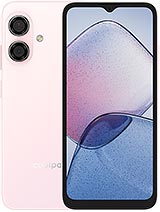
Cool 40i

Coolpad Daguan C60
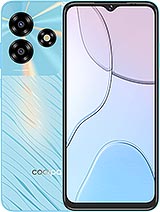
C15

Coolpad Y70 Lite
Galaxy M06 5G