Coolpad Cool 20+ review
The Cool 20+ appeals to budget buyers in regions where dual SIM is a priority and LTE is sufficient, but it asks you to live with a sub-standard display and frustratingly slow charging. Unless you absolutely need two SIM cards in one phone, better options exist for the same price.
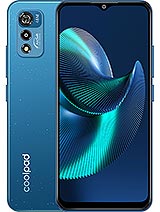
This review is based on Coolpad’s published specifications and public benchmark data for the Coolpad Cool 20+, and the rating is spec-based. GoSolo does not physically test devices; where we estimate real-world behaviour such as battery life or charge time, we say so. How we rate phones.
Overview
The Coolpad Cool 20+ is a large-screen budget Android from 2023 built for dual-SIM and basic tasks, not speed or photography. It delivers what you pay for: a functional phone with a 6.52-inch display and a day's battery, held back by a low-resolution screen, weak charging, and sluggish performance once you step beyond everyday use.
Design and build
The Cool 20+ is thin and reasonably light for its screen size, measuring 8.7 mm and tipping the scales at 197 grams. Glass front and back are standard at this price, though they feel less durable than you might hope. The dual nano-SIM design is handy for travellers or anyone juggling work and personal numbers, and the microSD slot uses a shared tray rather than taking up a SIM slot, so you won't have to choose. The industrial design is unremarkable—there's no edge or finish that makes it stand out in hand, which is fine for a phone designed to be forgotten about and simply used.
Display
A 6.52-inch IPS LCD is generous for the price, and the 82.5% screen-to-body ratio shows Coolpad got the bezels under control. But the 720×1600 resolution at 269 ppi is the phone's clearest weakness. Close inspection reveals visible pixelation, and the colours feel drained compared to even mid-range IPS panels from rivals—blacks lack depth and whites look sickly. For streaming video or social media at arm's length, the screen is passable. For reading text or gaming, the low pixel density becomes tiresome. This is where you notice the budget most acutely.
Performance
The Helio G85 is a mainstream mid-range chip from 2021 and shows its age by 2023. Daily tasks—messaging, email, light browsing—run without noticeable lag, and the phone handles common apps smoothly. Gaming is a different story. Light titles like Candy Crush run fine, but demanding games like Genshin Impact force you to low settings and frame drops, while Fortnite tops out at 30fps on minimum graphics. If you're a casual user who opens apps now and then, the chip is adequate. If you demand responsiveness under load or any gaming ambition, the gap becomes obvious compared to phones just 50 euros more.
Camera
The 48MP main sensor is a 1/2.0-inch module with an f/1.8 lens and PDAF, which sounds capable on paper but falls short in practice. Daytime shots are acceptable—details are captured and colours are reasonably accurate—but dynamic range is limited and the small sensor struggles in dim light, producing grainy, muddy images by sunset. The 1080p video caps at 30fps, so footage feels choppy compared to 60fps rivals. The 5MP selfie camera is functional for quick portraits or video calls but won't impress. For a phone at this price, the camera is average rather than a strength. If stills matter to you, this isn't where to invest.
Battery and charging
The 4500 mAh battery delivers a full day on mixed use—browsing, messaging, some video—but heavy users will need an evening charge. The real friction is the 10W charger, which takes 2 to 2.5 hours to refill from empty. By 2023 standards, 10W is glacial; competitors at this price have moved to 25–65W. If your phone dies mid-morning, you're stuck waiting half an hour for even a 20% boost. The battery itself is respectable, but the charging infrastructure makes it feel inadequate.
Software and connectivity
Android 11 with CoolOS 2 is functional but already outdated by April 2023—newer flagships were shipping Android 13. No indication of a roadmap to Android 12, so software updates are likely to be scarce. Connectivity is LTE-only with no 5G, which is a limitation even in budget segments by that year. Wi-Fi 5 (802.11ac) is present and adequate for indoor browsing, but it lags behind Wi-Fi 6 that many competitors now offer. Dual-band support and Bluetooth 5.0 keep things modern enough for audio and tethering.
Value and verdict
At around 130 euros, the Coolpad Cool 20+ occupies an awkward middle ground. You get a large screen and dual SIM, but neither is special enough to justify ignoring the trade-offs. The 720p display is a genuine annoyance, 10W charging is a daily frustration, and the Helio G85 is aging. For the money, rivals pack sharper screens, faster charging, or more capable processors. This phone makes sense only if dual SIM is essential to you and you're willing to tolerate weak charging and a pixelated display. If those constraints don't apply, spend the extra 20–30 euros and get a phone that doesn't compromise on fundamentals.
Verdict
The Cool 20+ appeals to budget buyers in regions where dual SIM is a priority and LTE is sufficient, but it asks you to live with a sub-standard display and frustratingly slow charging. Unless you absolutely need two SIM cards in one phone, better options exist for the same price.
- Dual nano-SIM and microSD expansion in a phone at this price
- Large 6.52-inch display with an 82.5% screen-to-body ratio, useful for video and reading
- Headphone jack included, still rare in modern budget phones
- Decent everyday performance from the Helio G85 for messaging, browsing, and social media
- Only 10W charging makes the phone slow to refuel—expect 2 to 2.5 hours from empty, impractical if you need a quick top-up during the day
- 720p resolution on a 6.52-inch screen (269 ppi) looks pixelated and washed-out in direct comparison with modern rivals
- No 5G and older Wi-Fi 5 means it already feels dated on connectivity by 2023 standards
Coolpad Cool 20+ Key Specifications
The essentials at a glance. See the full spec sheet.
| Released | 2023, April |
|---|---|
| Display | 6.52 inches, 102.6 cm2 (~82.5% screen-to-body ratio), IPS LCD |
| Resolution | 720 x 1600 pixels, 20:9 ratio (~269 ppi density) |
| Chipset | Mediatek MT6769 Helio G85 (12 nm) |
| RAM & storage | 128GB 4GB RAM, 128GB 6GB RAM |
| Main camera | 48 MP, f/1.8 (wide), 1/2.0", PDAF 0.3 MP |
| Selfie camera | 5 MP |
| Battery | 4500 mAh |
| Charging | 10W wired |
| Software | Android 11, CoolOS 2 |
| Dimensions | 164.3 x 75.7 x 8.7 mm (6.47 x 2.98 x 0.34 in) |
| Weight | 197.1 g (6.95 oz) |
| Build | Glass front, glass back |
| Network | GSM / CDMA / HSPA / CDMA2000 / LTE |
| NFC | No |
| USB | USB Type-C 2.0, OTG |
Coolpad Cool 20+ FAQ
Common questions, answered from the spec sheet.
Does the Cool 20+ support 5G?
No. The Cool 20+ tops out at GSM / CDMA / HSPA / CDMA2000 / LTE, without 5G.
What chipset does the Cool 20+ use?
The Cool 20+ runs on the Mediatek MT6769 Helio G85 (12 nm).
What display does the Cool 20+ have?
A 6.52 inches, 102.6 cm2 (~82.5% screen-to-body ratio) IPS LCD, 720 x 1600 pixels, 20:9 ratio (~269 ppi density).
How big is the Cool 20+ battery?
The Cool 20+ has a 4500 mAh battery. Charging is rated at 10W wired.
Does the Cool 20+ have NFC?
No, the Cool 20+ does not list NFC support.
Does the Cool 20+ support a microSD card?
Yes, the Cool 20+ supports expandable storage (microSDXC (uses shared SIM slot)).
Does the Cool 20+ have a headphone jack?
Yes, the Cool 20+ has a 3.5mm headphone jack.
Alternatives to consider
If the Cool 20+ isn’t quite right, these are the closest calls.
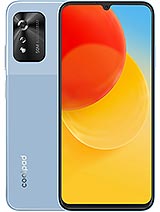
Cool 30i

Cool 40i
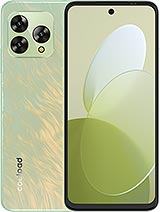
Cool 30 Play
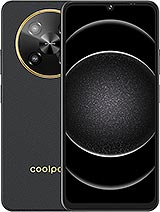
C16
Galaxy A06