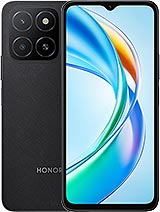
Coolpad CP12p review
The CP12p suits someone on a very tight budget who needs a large screen for readability and spends most time on simple tasks like messaging and browsing. Anyone who multitasks, games, or values fast charging should look at a newer budget phone, even at a slightly higher price."
This review is based on Coolpad’s published specifications and public benchmark data for the Coolpad CP12p, and the rating is spec-based. GoSolo does not physically test devices; where we estimate real-world behaviour such as battery life or charge time, we say so. How we rate phones.
Overview
The Coolpad CP12p is a bare-bones budget phone anchored by a large 6.52-inch screen and low price, but hampered by a 2020-era Helio P22 chipset, slow 10W charging, and thin software features. At €110 it covers the essentials for light use and nothing more.
Design and Build
The CP12p weighs 194 grams and measures 8.3 mm thick, making it heavier and bulkier than you would expect at this price. Glass front and back with an unnamed aluminium frame give it a sturdier feel than the usual plastic shells in this bracket. That said, glass on both sides is a fingerprint magnet and a liability for durability; a single drop is likely to shatter the back. The 20:9 aspect ratio and narrow bezels make the frame feel modern, but there is no IP rating for water resistance and no Gorilla Glass protection listed, so handle it with care.
Display
The 6.52-inch IPS LCD screen is the phone's main selling point. At 269 ppi, it is not sharp by today's standards—text at arm's length shows pixelation if you look for it—but the large diagonal and 80.5% screen-to-body ratio mean it feels roomy for everyday use. It is a 60 Hz panel with 720×1600 resolution, so there is no motion smoothness for games, and colour accuracy is baseline IPS fare: serviceable but not vibrant. For reading, browsing, and video playback, it works. For gaming or demanding visual work, you will notice the refresh rate ceiling and modest ppi quickly.
Performance
The Helio P22 is a 2020-era entry-level SoC, and it shows. Light tasks like messaging, calls, and casual web browsing run without obvious hiccup, but multitasking, app switching, and even moderate gaming expose its limits. The octa-core Cortex-A53 at 2.0 GHz is slow by today's standards—even budget rivals released in 2023 had moved to faster cores and higher clock speeds. Expect stutter when you have more than three or four apps in memory, and forget about gaming beyond the lightest titles. The 4GB RAM and eMMC 5.1 storage compound the problem; eMMC is slower than UFS and fills up fast on a 128GB device. This is a phone for light users who do not multitask or demand speed.
Software
Android 13 ships out of the box, which is respectable for an April 2023 phone. Coolpad's skin is light, so you are mostly using stock Android without heavy customization. The firmware is minimal and bloat-free by budget standards. No promises on update timelines are evident from the spec sheet, and Coolpad's historical track record on support is mixed, so plan for limited OS upgrades down the line. For a device at this price, you are not buying this for long-term software support anyway.
Camera
The 16 MP main camera with PDAF and f/2.2 aperture captures acceptable daylight photos; detail is respectable and exposure is usually balanced. The 2MP macro lens is more novelty than tool—macro shots are low-res and add little real value. Video tops out at 1080p 30fps, which is fine for quick clips but not for sustained recording or any serious use. The 8MP selfie camera is baseline for portraits and video calls. Overall, the camera is competent in good light and weak indoors or in low light. It is not a strength of this phone.
Battery and Charging
The 4500 mAh battery delivers about one full day of typical use, or 6 to 7 hours of continuous screen-on time. That is acceptable for a device this size and class. The real weakness is 10W charging, which takes roughly 3 hours to empty to full. By 2023 standards, this is glacial—even budget rivals hit 18W or 20W—so you are committing to long charging sessions. If you forget to plug in overnight, you will spend a morning tethered to the outlet. There is no wireless charging, which is expected at this price.
Value and Verdict
At €110, the CP12p targets buyers who value screen size and low cost above all else. The large display is genuine appeal, and the dedicated microSD slot is rare at this tier. The glass build feels better in hand than typical budget plastic. However, the Helio P22 is simply too slow for 2023, even judged leniently against entry-level rivals. 10W charging is frustrating. If you prioritize speed, responsive multitasking, or any gaming, look elsewhere; if you need a simple, large-screen device for messaging, calls, and light video, and you are willing to live with lag and overnight charging, it works.
Verdict
The CP12p suits someone on a very tight budget who needs a large screen for readability and spends most time on simple tasks like messaging and browsing. Anyone who multitasks, games, or values fast charging should look at a newer budget phone, even at a slightly higher price."
- Large 6.52-inch screen with an 80.5% screen-to-body ratio leaves little bezel waste and feels spacious for reading and video
- Dedicated microSD slot lets you expand storage without sacrificing a SIM, a rarity even at this price
- Glass build on both sides and an aluminium frame feel more solid than typical budget rivals
- 3.5mm jack and FM radio suit users in markets where these still matter
- 10W charging takes roughly 3 hours for a full top-up, then you are tethered to the outlet for the rest of the day
- Helio P22 from 2020 stutters under any real load; multitasking and games are sluggish, and the lag builds up fast
- Only 4GB RAM and 128GB storage with eMMC 5.1, both modest even by 2023 standards and prone to slowdown as you fill it
Coolpad CP12p Key Specifications
The essentials at a glance. See the full spec sheet.
| Released | 2023, April 15 |
|---|---|
| Display | 6.52 inches, 102.6 cm2 (~80.5% screen-to-body ratio), IPS LCD |
| Resolution | 720 x 1600 pixels, 20:9 ratio (~269 ppi density) |
| Chipset | Mediatek MT6762 Helio P22 (12 nm) |
| RAM & storage | 128GB 4GB RAM |
| Main camera | 16 MP, f/2.2, (wide), 1/3.0", PDAF 2 MP (macro) |
| Selfie camera | 8 MP, f/2.0, (wide) |
| Battery | 4500 mAh |
| Charging | 10W wired |
| Software | Android 13 |
| Dimensions | 166.2 x 76.7 x 8.3 mm (6.54 x 3.02 x 0.33 in) |
| Weight | 194 g (6.84 oz) |
| Build | Glass front, glass back |
| Network | GSM / CDMA / HSPA / LTE |
| NFC | No |
| USB | USB Type-C 2.0, OTG |
Coolpad CP12p FAQ
Common questions, answered from the spec sheet.
Does the CP12p support 5G?
No. The CP12p tops out at GSM / CDMA / HSPA / LTE, without 5G.
What chipset does the CP12p use?
The CP12p runs on the Mediatek MT6762 Helio P22 (12 nm).
What display does the CP12p have?
A 6.52 inches, 102.6 cm2 (~80.5% screen-to-body ratio) IPS LCD, 720 x 1600 pixels, 20:9 ratio (~269 ppi density).
How big is the CP12p battery?
The CP12p has a 4500 mAh battery. Charging is rated at 10W wired.
Does the CP12p have NFC?
No, the CP12p does not list NFC support.
Does the CP12p support a microSD card?
Yes, the CP12p supports expandable storage (microSDXC (dedicated slot)).
Does the CP12p have a headphone jack?
Yes, the CP12p has a 3.5mm headphone jack.
Alternatives to consider
If the CP12p isn’t quite right, these are the closest calls.
Cool 30i
Cool 20+
Cool 40i
CP12
Galaxy XCover 7