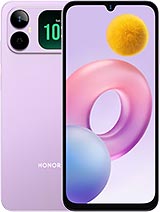
Cubot A40 review
The Cubot A40 is a no-frills entry-level phone for light daily use: messaging, calls, and casual browsing work fine, but a 720p screen on a 6
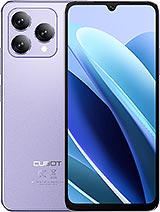
This review is written with AI assistance from Cubot’s published specifications and public benchmark data for the Cubot A40, and the rating is spec-based. GoSolo does not physically test devices; where we estimate real-world behaviour such as battery life or charge time, we say so. How we rate phones.
Overview
The Cubot A40 is a no-frills entry-level phone for light daily use: messaging, calls, and casual browsing work fine, but a 720p screen on a 6.88-inch display looks pixelated, and the Unisoc T606 chip chokes on anything heavier. It is worth considering only if the price is significantly lower than the next tier, and you do not intend to game or run demanding apps.
Design & Build
At 8.8 mm thick and with an 83.5% screen-to-body ratio on a 6.88-inch frame, the A40 prioritises screen real estate over compactness. The dimensions (172.3 x 78.1 mm) make it a full-sized phone, verging on unwieldy for single-handed use, though the lack of a listed weight suggests it is not excessively heavy. Build materials are not specified, and the display protection is listed only as Mohs level 6, which is scratch-resistant but softer than modern Gorilla Glass standards. For an entry-level device, the industrial design is inoffensive but unremarkable; it trades aesthetic polish for utility.
Display
The 120Hz IPS LCD is the A40's main draw, and it does deliver smooth scrolling in lists and feeds. However, 720p resolution at this screen size is a genuine liability. At 260 ppi pixel density, text and icons appear noticeably soft and pixelated, especially if you read a lot or inspect photos. Budget phones a year or two older often shipped at 1080p on similar diagonals, so this feels like a step backward for clarity. The 120Hz refresh helps mask the resolution weakness when content is in motion, but the moment you stop scrolling, the lack of sharpness becomes obvious. It is acceptable for casual video, messaging, and web browsing, but not ideal for productivity or reading.
Performance
The Unisoc T606, paired with either 4GB or 8GB of RAM, is squarely entry-level and shows it. The octa-core setup (two faster Cortex-A75 cores and six efficiency-focused A55 cores) handles daily tasks—email, social media, calls, and lightweight browsing—without stuttering or lag. The Mali-G57 MP1 GPU is weak, so 3D games run at low graphical settings or frame rates well below 60 fps; demanding titles may stall outright. Heavy app installs, multitasking, and sustained use (streaming, video export) will cause the chip to throttle. This is not a phone for power users or creators; it is a basic communicator. The 8GB RAM variant extends breathing room slightly, but the chipset is the bottleneck, not memory.
Software
Android 15 ships fresh out of the box, which is a rare courtesy at this price point. Most rivals lag by at least one major release. Software performance is snappy enough on the entry chip; Cubot has not laden the interface with bloatware, though some system apps may be redundant. Update longevity is unknown, but entry Cubot devices typically receive one or two years of security patches. Given the modest hardware, you should not expect three or four years of major OS updates.
Camera
The 48MP main sensor with phase-detection autofocus and LED flash sounds respectable on paper, but entry-level sensor quality and modest optics limit the real-world result. In daylight, the camera captures usable detail and colour, though noise and lens aberration are visible up close. Low light and Night mode (if present) struggle with noise and blur. The 2MP ultrawide is purely functional for occasional wide shots; it adds little of value. The 16MP selfie camera is adequate for video calls and casual portraits. Video recording works but lacks stabilisation, so handheld footage is shaky. This is a camera for necessity, not for photography enthusiasts.
Battery & Charging
The 5100 mAh battery is generous for the size and power consumption, delivering about a full day on light to moderate use (email, calls, social media, occasional video). Heavy streaming or gaming will drain it to critical levels in six to eight hours. The spec sheet omits charging wattage, which is a concerning gap; on entry devices, this often signals 5W or 10W, both of which are slow by today's standards. If charge time exceeds 2.5 to 3 hours to full, the slow wired charging becomes a daily frustration. The lack of wireless charging is expected and not a con, but the missing charging detail leaves real-world usability in doubt.
Value & Verdict
The A40 occupies an awkward middle ground. It costs more than the absolute cheapest smartphones, yet lacks the refinement or performance of phones even slightly higher in price. The 720p display and weak processor are genuine drawbacks, not minor compromises. On the plus side, dual SIM, microSD expansion, a large battery, and Android 15 freshen its appeal for buyers in emerging markets where SIM flexibility and offline storage matter. The 48MP camera and 120Hz display also help it feel less budget-conscious than it actually is. Value hinges entirely on price: if the A40 costs significantly less than rivals offering 1080p displays or better chips, the trade-off may be worth it for very light, offline-first use. Otherwise, a phone from a tier above will give you more breathing room and less compromise.
Verdict
The Cubot A40 suits buyers in markets where affordability and dual-SIM flexibility outweigh screen clarity and app performance, and who plan to use it mainly for calls, messaging, and casual media. Anyone who reads on screen regularly, uses demanding apps, plays games, or might multitask should look to the next price tier, where 1080p and more capable chips are becoming standard even at entry level.
Verdict
- Huge battery (5100 mAh) gives reasonable all-day life on light use without sacrificing thickness or weight
- Dual-SIM and microSD expansion mean flexibility for dual work/personal accounts and offline storage without cloud dependence
- Android 15 out of the box, so you get the latest OS on a budget device
- 48MP main camera with PDAF and 120Hz display help it feel less dated than the price suggests
- 720p on a 6.88-inch screen is noticeably pixelated at 260 ppi; reading and fine detail feel grainy compared to rivals at the same price
- Unisoc T606 handles daily tasks but stumbles on games, video editing, and heavier apps; expect throttling under sustained load
- No charging speed listed in specs; unclear whether this is 5W or 10W, a gap that matters on entry devices where slow charging wastes time
Cubot A40 Key Specifications
The essentials at a glance. See the full spec sheet.
| Released | 2025, July |
|---|---|
| Display | 6.88 inches, 112.4 cm2 (~83.5% screen-to-body ratio), IPS LCD, 120Hz |
| Resolution | 720 x 1640 pixels (~260 ppi density) |
| Chipset | Unisoc T606 (12 nm) |
| RAM & storage | 64GB 4GB RAM, 256GB 8GB RAM |
| Main camera | 48 MP, (wide), PDAF 2 MP, (ultrawide) |
| Selfie camera | 16 MP |
| Battery | 5100 mAh |
| Software | Android 15 |
| Dimensions | 172.3 x 78.1 x 8.8 mm (6.78 x 3.07 x 0.35 in) |
| Network | GSM / HSPA / LTE |
| NFC | Yes |
| USB | USB Type-C, OTG |
Cubot A40 FAQ
Common questions, answered from the spec sheet.
Does the A40 support 5G?
No. The A40 tops out at GSM / HSPA / LTE, without 5G.
What chipset does the A40 use?
The A40 runs on the Unisoc T606 (12 nm).
What display does the A40 have?
A 6.88 inches, 112.4 cm2 (~83.5% screen-to-body ratio) IPS LCD, 120Hz, 720 x 1640 pixels (~260 ppi density).
How big is the A40 battery?
The A40 has a 5100 mAh battery.
Does the A40 have NFC?
Yes, the A40 has NFC.
Does the A40 support a microSD card?
Yes, the A40 supports expandable storage (microSDXC).
Alternatives to consider
If the A40 isn’t quite right, these are the closest calls.
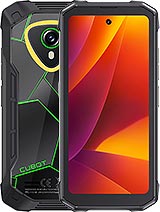
KingKong Mini 4
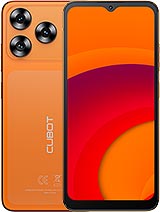
A50
P90
KingKong ES Pro
Galaxy M17e