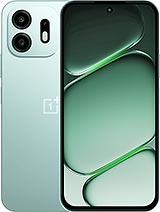
Cubot A50 review
The A50 suits users who make calls, send messages, and need a phone that will last two days on a single charge without any pretense to gaming or media consumption. Anyone else should look at what mid-range alternatives cost in their market; the T620 will feel old very quickly if you use your phone for anything beyond the basics.
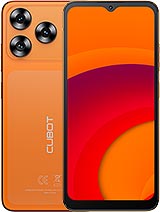
This review is written with AI assistance from Cubot’s published specifications and public benchmark data for the Cubot A50, and the rating is spec-based. GoSolo does not physically test devices; where we estimate real-world behaviour such as battery life or charge time, we say so. How we rate phones.
Overview
The Cubot A50 is a straightforward entry-level Android phone with a large screen, decent battery, and enough RAM for everyday tasks, but its aging chipset and modest camera performance make it feel more like a 2024 device than something launching in late 2026. For the price it likely asks, it is a functional option for basic smartphone use if you need a long-battery device, but it does not punch above its weight.
Design & Build
At 215g and 9.6mm thick, the A50 sits squarely in the middle of the budget space: not light, but not a brick. The dimensions are standard for a 6.5-plus-inch phone, and the Mohs level 6 display protection is basic—it'll resist scratches but any real drop will be your phone's last. Dual Nano-SIM is helpful in markets where that matters, and the microSD slot shared with one SIM slot is a real advantage over rivals that ditch expansion altogether. Build quality is what you'd expect at this price: plastic, forgettable, functional.
Display
The 6.58-inch IPS LCD hits 1080 x 2408 pixels, which works out to 401 ppi—enough density that text and icons stay crisp at normal viewing distance. IPS is not trendy in 2026, but it means reliable viewing angles and no burn-in risk, which matters on a device people may keep for years. The 81% screen-to-body ratio is respectable for an entry phone, though rivals have pushed past 85% by this point. Colors will be accurate but not vibrant; brightness specs are not stated, which usually means it struggles in direct sunlight. For everyday browsing and messaging, this display is adequate.
Performance
The Unisoc T620 is entry-level silicon, plain and simple. Two Cortex-A75 cores clocked at 2.2 GHz handle peak tasks, but the six A55 efficiency cores are the real workhorse, and they are well behind what you get even in mid-range chips. This processor powered budget phones in 2024 and has not aged well. Expect smooth scrolling through your home screen and messaging apps, but opening heavy social media feeds, streaming video, or playing anything beyond casual games will cause visible pause. The 4GB and 6GB RAM options do help the 6GB variant edge ahead for multitasking, but neither will make a T620 feel snappy. If you mostly text, call, and browse light content, you'll notice little friction. If you expect to run Instagram, TikTok, or Spotify without delays, you will be disappointed.
Software
Android 16 is current for 2026, and Cubot's track record with updates is spotty at best. You can expect one or two years of security patches if you are lucky, and a major version bump is unlikely. The OS itself will be bloated with pre-installed apps you cannot remove, a near-universal sin on budget devices. That said, Android 16's base performance is stable, and the interface is familiar. You are buying this phone as a tool, not a platform.
Camera
The 48MP main sensor is spec-sheet padding. In practice, 48MP on a budget sensor with no optical stabilization means a lot of noise in low light and a mushy macro performance. The 2MP macro lens is essentially a gimmick; most phones have abandoned dedicated macro in favor of crop tricks on the main sensor. There is no ultrawide, no telephoto, and no real depth of field sensing, so your photo range is genuinely limited. The 16MP front camera is adequate for video calls. Video recording is listed as available but frame rate and bitrate are not specified, which suggests 1080p at 30fps at best. In daylight you will get usable shots, but anything beyond daylight and you are fighting the hardware. For a phone at this price, the camera is ordinary, not impressive.
Battery & Charging
The 5000 mAh battery is the A50's strongest point. On moderate use—light browsing, messaging, some video—you are looking at two full days or even more. Leave it idle or use it for calling and light texting, and you could stretch it closer to three days. On heavy use, expect a single full day. The spec sheet does not list charging wattage, which is always a red flag on budget phones. Cubot typically ships 5W to 10W charging, which means a 5000 mAh battery takes 10-20 hours to fully charge from empty. This hurts the phone's practicality if you need it quickly, but if you can charge overnight, the marathon battery life may outweigh that friction.
Value & Verdict Context
In 2026, the budget phone space has consolidated around three points: fast-enough chips (MediaTek Helio G or better), quick charging (30W minimum), and value for money. The A50 hits only the third point and only partially. Its T620 feels behind the curve, there is no charging speed story, and the camera system is visibly limited. The real question is price. If this phone costs $100 to $130 locally, it is a reasonable option for basic users who care more about battery endurance and the microSD slot than smooth app performance. If it is $150 or more, rivals at that tier offer noticeably faster chips and quicker charging. For global-south buyers in markets where this phone is actually sold, check what local alternatives offer at the same cost; the A50 is a budget device, not a smart value.
Verdict
The A50 suits users who make calls, send messages, and need a phone that will last two days on a single charge without any pretense to gaming or media consumption. Anyone else should look at what mid-range alternatives cost in their market; the T620 will feel old very quickly if you use your phone for anything beyond the basics.
- 5000 mAh battery will deliver solid multi-day endurance on light to moderate use
- Large 6.58-inch display with acceptable 401 ppi clarity and reasonable 81% screen-to-body ratio for the segment
- Dual SIM and microSD slot expansion on the 128GB base storage
- Side-mounted fingerprint sensor works faster and more reliably than on-display alternatives at this price tier
- Unisoc T620 is an entry-level chip even by 2026 standards, meaning stuttering in heavy apps and gaming is a given
- No charging specs listed, which usually signals slow 5W or 10W charging on budget phones
- 48MP camera sounds respectable until you realize it pairs with only a macro lens and no ultrawide or telephoto
Cubot A50 Key Specifications
The essentials at a glance. See the full spec sheet.
| Released | 2026, August |
|---|---|
| Display | 6.58 inches, 104.3 cm2 (~81.1% screen-to-body ratio), IPS LCD |
| Resolution | 1080 x 2408 pixels, 20:9 ratio (~401 ppi density) |
| Chipset | Unisoc T620 (12 nm) |
| RAM & storage | 128GB 4GB RAM, 128GB 6GB RAM |
| Main camera | 48 MP, (wide), PDAF 2 MP, (macro) Auxiliary lens |
| Selfie camera | 16 MP |
| Battery | 5000 mAh |
| Software | Android 16 |
| Dimensions | 167.5 x 76.8 x 9.6 mm (6.59 x 3.02 x 0.38 in) |
| Weight | 215 g (7.58 oz) |
| Network | GSM / HSPA / LTE |
| NFC | Yes |
| USB | USB Type-C, OTG |
Cubot A50 FAQ
Common questions, answered from the spec sheet.
Does the A50 support 5G?
No. The A50 tops out at GSM / HSPA / LTE, without 5G.
What chipset does the A50 use?
The A50 runs on the Unisoc T620 (12 nm).
What display does the A50 have?
A 6.58 inches, 104.3 cm2 (~81.1% screen-to-body ratio) IPS LCD, 1080 x 2408 pixels, 20:9 ratio (~401 ppi density).
How big is the A50 battery?
The A50 has a 5000 mAh battery.
Does the A50 have NFC?
Yes, the A50 has NFC.
Does the A50 support a microSD card?
Yes, the A50 supports expandable storage (microSDXC (uses shared SIM slot)).
Alternatives to consider
If the A50 isn’t quite right, these are the closest calls.
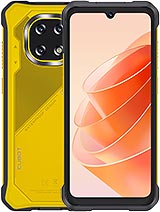
KingKong ES5
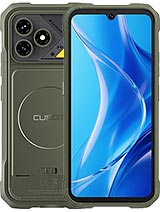
KingKong Dura
KingKong ES Pro
A40
Galaxy M17e