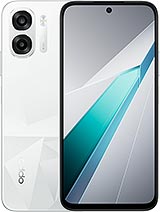
Cubot KingKong 12 review
The KingKong 12 is for someone who needs a phone that survives drops, dust, and water and won't die before dark—not for someone who wants a pretty screen, fast processor, or impressive camera. If your daily life includes outdoor work, remote travel, or a track record of phone accidents, it is worth the compromise. Everyone else should pass.
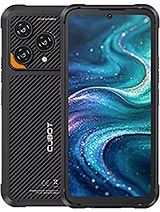
This review is based on Cubot’s published specifications and public benchmark data for the Cubot KingKong 12, and the rating is spec-based. GoSolo does not physically test devices; where we estimate real-world behaviour such as battery life or charge time, we say so. How we rate phones.
Overview
The KingKong 12 is a rugged workhorse with a 10,200 mAh battery and military-grade durability, but it's held back by a low-res 720p display and weak midrange performance that feels dated for 2026. It's honest value for people who need toughness over speed, but the specs scream budget not functionality.
Design & build
At 176.5 x 84.6 x 15.3 mm, the KingKong 12 is a brick—noticeably larger and thicker than a standard phone in 2026. That size is not accident; it houses a 10,200 mAh battery and MIL-STD-810H compliance. The IP68/IP69K rating is the real story: it survives pressurised water jets and 1.5m submersion for 30 minutes, not just splash resistance. That matters if you work outdoors, travel remote, or simply drop phones in water more than you'd admit. The body feels industrial. Weight is listed missing in the spec sheet, but a phone this size and rating almost certainly tips 250g or more. For someone buying durability as a feature, that heft is not a drawback; it signals substance. For someone wanting a pocket phone, it is a deal-breaker.
Display
Here is where the KingKong 12 stumbles hardest. A 720 x 1600 pixel IPS LCD on a 6.75-inch screen yields 260 ppi—a figure that felt acceptable in 2020, not 2026. Text is visibly pixelated, edges soften, and scrolling shows the screen's age. The 120Hz refresh helps smooth motion slightly, but cannot hide the underlying resolution gap. Most midrange rivals by now hit 1080p or better. Even rugged phones from other makers squeeze sharper displays into the same durability envelope. The 73.7% screen-to-body ratio means chunky bezels, a consequence of the tough build. You are not buying this phone for a beautiful screen; you are buying it despite the screen, because the durability matters more.
Performance
The Dimensity 6300 is a mainstream entry-midrange processor. It runs Android 17 adequately and handles everyday tasks—messaging, light browsing, media—without freezing. But open a large app, switch rapidly between multiple tasks, or run a demanding game, and you will feel the limits. The GPU is Mali-G57 MC2, two cores, which is modest by design. 6GB of RAM pairs with 128GB storage and a microSDXC slot for expansion; storage is not a constraint, but the chip is. If you rely heavily on productivity or expect fast load times, this will frustrate you. For a phone marketed as rugged and outdoor-focused, the chip is fit for purpose: it sips power, runs cool, and keeps costs down. But call it smooth or snappy and you are overselling.
Software
Android 17 is current and expected on a 2026 device. Cubot typically keeps customisation light on rugged lines, focusing on stability over UI flair. No sign of bloatware in the spec sheet, which is a relief. The side-mounted fingerprint sensor and NFC support smooth unlocking and contactless payments. For field work and outdoor use, software simplicity is an asset; fewer features mean fewer things to crash under dust, mud, or cold.
Camera
A 48MP primary sensor with PDAF is the headliner, but megapixels tell half the story. No lens details are given—aperture, focal length, sensor size all hidden. The 2MP macro auxiliary is filler; it exists to pad the spec, not to deliver usable shots. The 16MP selfie camera is respectable for video calls and outdoor selfies. Without real-world samples or detail on the main sensor, judging image quality is impossible from specs alone, but the setup suggests this is not a camera phone. It is a rugged phone with cameras attached. For everyday use, the 48MP likely binned down to 12MP will be competent in good light and weak in dim conditions; that is the typical budget formula. Video capture is listed but frame rate is missing. If your primary need is photography, look elsewhere.
Battery & charging
The 10,200 mAh battery is the KingKong 12's clearest win. At that capacity, you will comfortably hit two full days of moderate use, and easily a full day of heavy use. For someone working outdoors or traveling to places without reliable charging, this is a genuine advantage. The spec sheet lists 33W charging, which is slower than flagship norms but acceptable for a battery this size. Expect about 90–120 minutes to full charge, depending on adapter. No fast charging spec means you will not top up in 30 minutes; plan accordingly. The sheer battery size compensates by reducing how often you need to charge at all.
Value & verdict-context
The KingKong 12 is a niche phone for a specific buyer. It trades flashiness, speed, and display quality for durability and endurance. If you work in construction, agriculture, remote fieldwork, or simply have a habit of losing phones to water and drops, the IP68/IP69K rating and 10,200 mAh battery solve real problems. The 5G connectivity and NFC add practical touches. The 720p display, entry-level chip, and workmanlike camera are not oversights—they are deliberate cost and power trades to fund durability and battery capacity. For a rugged phone, it delivers on its promise. For anyone expecting flagship polish at a midrange price, it delivers disappointment. The design is bold; the execution is honest.
Verdict
The KingKong 12 is for someone who needs a phone that survives drops, dust, and water and won't die before dark—not for someone who wants a pretty screen, fast processor, or impressive camera. If your daily life includes outdoor work, remote travel, or a track record of phone accidents, it is worth the compromise. Everyone else should pass.
- Genuine IP68/IP69K + MIL-STD-810H rating means it handles high-pressure jets and 1.5m submersion—not marketing theatre, actual toughness.
- 10,200 mAh battery delivers all-day endurance and stands out even in rugged phones; real gain for field work or remote areas.
- 5G connectivity across all major bands including sub-6 and millimetre-wave, plus solid band support for LTE fallback worldwide.
- Side-mounted fingerprint and NFC add convenience touches you do not always see at this price on a rugged device.
- 720p IPS LCD is a painful compromise—260 ppi in 2026 means blurry text and dated visuals, especially on a 6.75-inch screen.
- Dimensity 6300 is entry-midrange; real-world lag will show in multitasking and heavier apps, not a chip for someone who wants smooth performance.
- 48MP camera with just a 2MP macro auxiliary tells you nothing about practical image quality or low-light performance; spec does not equal sharpness or colour accuracy.
Cubot KingKong 12 Key Specifications
The essentials at a glance. See the full spec sheet.
| Released | 2026, November |
|---|---|
| Display | 6.75 inches, 110.0 cm2 (~73.7% screen-to-body ratio), IPS LCD, 120Hz |
| Resolution | 720 x 1600 pixels, 20:9 ratio (~260 ppi density) |
| Chipset | Mediatek Dimensity 6300 (6 nm) |
| RAM & storage | 128GB 6GB RAM |
| Main camera | 48 MP, (wide), PDAF 2 MP (macro) Auxiliary lens |
| Selfie camera | 16 MP |
| Battery | 10200 mAh |
| Software | Android 17 |
| Dimensions | 176.5 x 84.6 x 15.3 mm (6.95 x 3.33 x 0.60 in) |
| Durability | IP68/IP69K dust tight and water resistant (high pressure water jets; immersible up to 1.5m for 30 min) MIL-STD-810H compliant |
| Network | GSM / HSPA / LTE / 5G |
| NFC | Yes |
| USB | USB Type-C, OTG |
Cubot KingKong 12 FAQ
Common questions, answered from the spec sheet.
Does the KingKong 12 support 5G?
Yes. The KingKong 12 supports 5G networks.
What chipset does the KingKong 12 use?
The KingKong 12 runs on the Mediatek Dimensity 6300 (6 nm).
What display does the KingKong 12 have?
A 6.75 inches, 110.0 cm2 (~73.7% screen-to-body ratio) IPS LCD, 120Hz, 720 x 1600 pixels, 20:9 ratio (~260 ppi density).
How big is the KingKong 12 battery?
The KingKong 12 has a 10200 mAh battery.
Does the KingKong 12 have NFC?
Yes, the KingKong 12 has NFC.
Is the KingKong 12 water resistant?
The KingKong 12 carries a IP68/IP69K dust tight and water resistant (high pressure water jets; immersible up to 1.5m for 30 min) MIL-STD-810H compliant rating.
Does the KingKong 12 support a microSD card?
Yes, the KingKong 12 supports expandable storage (microSDXC).
Alternatives to consider
If the KingKong 12 isn’t quite right, these are the closest calls.
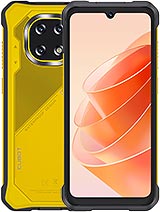
KingKong ES5
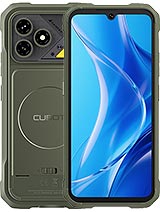
KingKong Dura
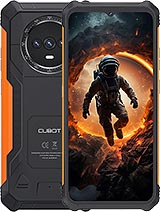
KingKong ES Pro
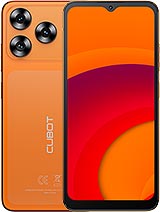
A50
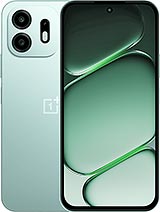
N6