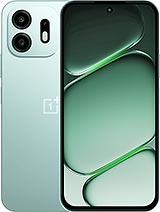
Cubot KingKong ES5 review
This phone suits workers and outdoor enthusiasts who prioritize durability and battery life over performance and screen quality. If you spend your day on a construction site or in remote areas and your phone needs to survive drops and water, the KingKong ES5 delivers. Everyone else should pick a mainstream phone; the slow processor and blurry display will wear on you fast.
This review is written with AI assistance from Cubot’s published specifications and public benchmark data for the Cubot KingKong ES5, and the rating is spec-based. GoSolo does not physically test devices; where we estimate real-world behaviour such as battery life or charge time, we say so. How we rate phones.
Overview
The KingKong ES5 is a rugged, no-nonsense phone built to survive hard work and outdoors use, with a massive 7000 mAh battery and IP68/IP69K durability. The weak processor and low-res display are intentional trade-offs for a device aimed at workers and outdoor enthusiasts who need toughness over performance, not a fashion statement.
Design & build
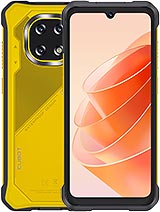
At 301 grams and 11.4 mm thick, the KingKong ES5 is properly heavy and chunky, the way a phone designed to withstand dropping and water immersion should be. The body lives up to its mission: IP68/IP69K durability rated for immersion to 1.5 meters for 30 minutes and high-pressure water jets, plus MIL-STD-810H compliance covering shock, vibration, and thermal stress. A dedicated physical flashlight is a field-worker detail that outsmarts software. The four colour options—grey, orange, yellow, green—hint at the outdoor use case without pretension. This is not a phone for your pocket on a Friday night; it is a tool.
Display
The 6.88-inch IPS LCD with 120Hz refresh is a mismatch of aims. A 120Hz refresh on a 720p panel at 260 ppi reads as a cost-cutting gesture, not a feature, in 2026. The screen is dim and blurry for text and photos, a real frustration on such a large display. Mohs level 6 protection is adequate but not class-leading for a rugged phone; gorilla glass standards have moved past this. For a device aimed at outdoor work, you would expect at least 1080p resolution to read small text in sunlight, or accept the lower res and shrink the display size instead.
Performance
The Unisoc T620 is an entry-level chip even by 2026 standards, and it will show under load. Multitasking is sluggish, and anything beyond mail, messaging, and basic browsing will trigger lag. A 6 GB RAM pairing does not change the math; the CPU is the bottleneck. For workers who need a phone to stay durable through a shift and handle simple tasks without crashing, this is workable. For anyone expecting snappy app performance or light gaming, expect frustration. Android 16 will run, but not smoothly on this silicon.
Camera
The 64 MP main sensor with PDAF is a modest spec that reads better in marketing than in actual use. A 2 MP macro lens is obligatory padding. The 16 MP selfie camera is similarly ordinary. No depth sensors, no ultrawide—just straight-line specs that suggest capable-enough daytime shots without any standout strengths. Low-light performance will be soft. This is a camera for documenting site progress or snapping evidence photos, not for photography enthusiasts.
Battery & charging
The 7000 mAh battery is the phone's backbone. In a rugged device running on an entry-level CPU, genuine two-day battery life is plausible in light use, and even a full day of heavy field work should be within reach. The lack of any stated charging wattage is troubling; without fast charging specs, recharging a 7000 mAh battery will stretch into many hours. No wireless charging is expected at this price and use case. USB Type-C 2.0 is standard, at least, though it limits data transfer speeds if you ever need to offload photos.
Software & connectivity
Android 16 launches on this device, which is current, but performance will be hampered by the T620 chipset. Dual nano-SIM with microSDXC support (shared slot) is practical for field workers who travel or need redundancy. Wi-Fi 802.11ac, Bluetooth 5.2, and GPS with four positioning systems (GPS, GALILEO, GLONASS, BDS) cover the essentials. NFC is present for contactless payments. The omission of FM radio is moot for a 2026 device. Side-mounted fingerprint is the expected authentication method.
Value & verdict
The KingKong ES5 is honest in its compromises: durability, battery life, and ruggedness come first. The weak processor and poor display are the price of a 301-gram frame that survives high-pressure jets and drops. For construction workers, outdoor guides, or delivery couriers who need a phone that will not break under stress and can go two days between charges, this phone makes sense. The missing spec is charging speed, which will determine whether the battery advantage is negated by hours spent tethered to a wall socket. Anyone else—anyone wanting responsive performance, a sharp screen, or a phone that fits in a normal pocket—should look elsewhere.
Verdict
This phone suits workers and outdoor enthusiasts who prioritize durability and battery life over performance and screen quality. If you spend your day on a construction site or in remote areas and your phone needs to survive drops and water, the KingKong ES5 delivers. Everyone else should pick a mainstream phone; the slow processor and blurry display will wear on you fast.
- Enormous 7000 mAh battery promises genuine all-day endurance in a robust form factor
- IP68/IP69K rating plus MIL-STD-810H means this can withstand high-pressure water jets and drops
- Dedicated flashlight is actually useful on job sites or off-grid use
- Solid dual-SIM support and microSDXC expansion for field workers who need both
- Unisoc T620 is underpowered for daily multitasking; apps will stutter under load
- 720p screen at 6.88 inches is cramped and blurry by 2026 standards, even for a rugged phone
- No charging speed listed and no wireless charging—recharging a 7000 mAh battery will take hours
Cubot KingKong ES5 Key Specifications
The essentials at a glance. See the full spec sheet.
| Released | 2026, June |
|---|---|
| Display | 6.88 inches, 112.4 cm2 (~74.1% screen-to-body ratio), IPS LCD, 120Hz |
| Resolution | 720 x 1640 pixels (~260 ppi density) |
| Chipset | Unisoc T620 (12 nm) |
| RAM & storage | 128GB 6GB RAM |
| Main camera | 64 MP, (wide), PDAF 2 MP (macro) Auxiliary lens |
| Selfie camera | 16 MP |
| Battery | 7000 mAh |
| Software | Android 16 |
| Dimensions | 182.5 x 83.1 x 11.4 mm (7.19 x 3.27 x 0.45 in) |
| Weight | 301 g (10.62 oz) |
| Durability | IP68/IP69K dust tight and water resistant (high pressure water jets; immersible up to 1.5m for 30 min) MIL-STD-810H compliant Dedicated flashlight |
| Network | GSM / HSPA / LTE |
| NFC | Yes |
| USB | USB Type-C 2.0, OTG |
Cubot KingKong ES5 FAQ
Common questions, answered from the spec sheet.
Does the KingKong ES5 support 5G?
No. The KingKong ES5 tops out at GSM / HSPA / LTE, without 5G.
What chipset does the KingKong ES5 use?
The KingKong ES5 runs on the Unisoc T620 (12 nm).
What display does the KingKong ES5 have?
A 6.88 inches, 112.4 cm2 (~74.1% screen-to-body ratio) IPS LCD, 120Hz, 720 x 1640 pixels (~260 ppi density).
How big is the KingKong ES5 battery?
The KingKong ES5 has a 7000 mAh battery.
Does the KingKong ES5 have NFC?
Yes, the KingKong ES5 has NFC.
Is the KingKong ES5 water resistant?
The KingKong ES5 carries a IP68/IP69K dust tight and water resistant (high pressure water jets; immersible up to 1.5m for 30 min) MIL-STD-810H compliant Dedicated flashlight rating.
Does the KingKong ES5 support a microSD card?
Yes, the KingKong ES5 supports expandable storage (microSDXC (uses shared SIM slot)).
Alternatives to consider
If the KingKong ES5 isn’t quite right, these are the closest calls.
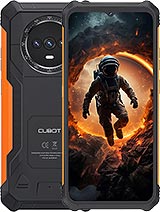
KingKong ES Pro
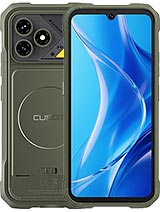
KingKong Dura
A50
KingKong Power 5
Galaxy M17e