Cubot KingKong Mini 4 review
The KingKong Mini 4 suits people who work outdoors or in harsh conditions and need a phone tough enough not to break. If you want a fast phone with a good screen, or care about charging speed, pick something else.
This review is written with AI assistance from Cubot’s published specifications and public benchmark data for the Cubot KingKong Mini 4, and the rating is spec-based. GoSolo does not physically test devices; where we estimate real-world behaviour such as battery life or charge time, we say so. How we rate phones.
Overview
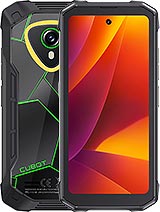
The KingKong Mini 4 is a pocket-sized rugged phone built for drops and water rather than speed or modern screen quality. It survives where ordinary phones break, but the 10W charging and entry-level processor make it feel sluggish by 2025 standards.
Design & Build
The KingKong Mini 4 is built like a tool. At 128.7 x 61 x 16.9mm and 192g, it fits one-handed and sits comfortably in a pocket—a rarity now. The IP68/IP69 rating means it survives dust, salt spray, and high-pressure water jets, while MIL-STD-810H certification covers drops from 1.2m, extreme temperatures (−25 to 60°C), and humidity extremes that would bench most phones. There's a dedicated hardware flashlight, genuinely useful on job sites. The build is less about slick finishes and more about functional toughness; if you work outdoors, in construction, mining, or agriculture, or live where you can't replace a phone easily, this is the point. For urban professionals expecting a thin, light device, the 16.9mm thickness and chunky durability will feel dated.
Display
The 4.7-inch IPS LCD runs 720 x 1600 pixels at 373ppi, a density squarely entry-level for 2025. The 90Hz refresh rate helps scrolling feel fluid despite the modest fill. Brightness is sufficient for outdoor readiness but doesn't approach the vivid output of even mid-range rivals; corners and angles show color shift typical of budget LCD panels. If you're checking messages, maps, and weather, it's fine. If you watch video or edit photos, the small size and lower definition will frustrate.
Performance
The Unisoc Tiger T616 is a 2023-era octa-core processor that handles messaging, browsing, and light social media without stalling. Switching between a few apps is smooth. But gaming beyond casual puzzlers hits frame drops, and opening large documents or multiple heavy apps invites lag. The Mali-G57 GPU is modest; demanding 3D workloads are off limits. The 6GB and 8GB RAM variants both feel adequate for this chipset, but the processor itself is the bottleneck. Rivals at similar price points now ship 2024–2025 chipsets that feel noticeably snappier. You trade speed for durability here, and that trade is explicit.
Software
Android 15 ships fresh, and Cubot's overlay is light. Updates and long-term support are unknowns; Cubot's track record on security patches is mixed, so factor in potential delays. The OS runs clean without bloat, and day-to-day use doesn't feel hampered by software cruft. For basic connectivity and utilities, it works. For users who update regularly and care deeply about monthly patches, investigate Cubot's actual support promise before buying.
Camera
The 48MP main camera captures daylight stills with decent detail and autofocus, but 1080p video and a single focal length mean no zoom or ultra-wide creativity. The 16MP selfie is adequate for video calls. Low light is where the phone falters: the sensor is small and the processing noise-prone, so evening and indoor shots look grainy. No night mode, no computational help. The 48MP is larger on paper than practice; the daily output lands squarely ordinary. If photography matters to you, look elsewhere.
Battery & Charging
The 4700mAh battery sustains a day of typical use—calls, texts, browsing, social media—without strain. Heavy video or gaming drains it by evening. At 10W, charging is painfully slow. A full charge takes about 1.5 to 2 hours; there's no fast-charging variant. This is among the slowest wired speeds on any 2025 phone, even budget ones. Plan to charge overnight. The slow top-up is a deliberate choice by Cubot to prioritize ruggedness and heat management, not a compromise imposed by cost.
Value & Verdict Context
The KingKong Mini 4 is not a phone for everyone. It's for people who work in harsh conditions, need rugged connectivity, or prefer a pocket-sized device over a 6-inch slab. The durability is genuine and rare. But the 10W charging, mid-2023 processor, modest battery, and entry-level display are real constraints in 2025. Casual users and anyone who values speed or screen quality should look at mainstream budget phones. For construction workers, field engineers, or anyone in a climate where a phone gets wet, sand-blasted, or dropped regularly, the ruggedness justifies the slowness and small screen. For everyone else, there are faster, more capable phones at the same price.
Verdict
The KingKong Mini 4 suits people who work outdoors or in harsh conditions and need a phone tough enough not to break. If you want a fast phone with a good screen, or care about charging speed, pick something else.
- MIL-STD-810H military rating plus IP68/IP69 durability; survives high-pressure jets, submersion to 1.5m, and extreme temperature and shock that would kill mainstream phones
- Genuinely small (4.7 inches, 192g) with a dedicated flashlight and dual-SIM, making it practical for rural connectivity or sites where bigger phones are impractical
- 90Hz display refresh and side-mounted fingerprint sensor keep daily navigation smooth despite the modest hardware
- 10W charging takes 1.5–2 hours and is among the slowest on the market in 2025; no fast-charging option at any variant
- Unisoc T616 from 2023 leaves noticeable lag in multitasking and any game beyond casual titles; feels slow compared to what budget rivals offer
- 4700mAh battery yields only a day of typical use, and less with any heavy activity
Cubot KingKong Mini 4 Key Specifications
The essentials at a glance. See the full spec sheet.
| Released | 2025, August |
|---|---|
| Display | 4.7 inches, 53.3 cm2 (~67.9% screen-to-body ratio), IPS LCD, 90Hz |
| Resolution | 720 x 1600 pixels, 20:9 ratio (~373 ppi density) |
| Chipset | Unisoc Tiger T616 (12 nm) |
| RAM & storage | 128GB 6GB RAM, 256GB 8GB RAM |
| Main camera | 48 MP, (wide), AF |
| Selfie camera | 16 MP |
| Battery | 4700 mAh |
| Charging | 10W wired |
| Software | Android 15 |
| Dimensions | 128.7 x 61 x 16.9 mm (5.07 x 2.40 x 0.67 in) |
| Weight | 192 g (6.77 oz) |
| Durability | IP68/IP69 dust tight and water resistant (high pressure water jets; immersible up to 1.5m for 30 min) MIL-STD-810H compliant Dedicated flashlight |
| Network | GSM / HSPA / LTE |
| NFC | Yes |
| USB | USB Type-C 2.0, OTG |
Cubot KingKong Mini 4 FAQ
Common questions, answered from the spec sheet.
Does the KingKong Mini 4 support 5G?
No. The KingKong Mini 4 tops out at GSM / HSPA / LTE, without 5G.
What chipset does the KingKong Mini 4 use?
The KingKong Mini 4 runs on the Unisoc Tiger T616 (12 nm).
What display does the KingKong Mini 4 have?
A 4.7 inches, 53.3 cm2 (~67.9% screen-to-body ratio) IPS LCD, 90Hz, 720 x 1600 pixels, 20:9 ratio (~373 ppi density).
How big is the KingKong Mini 4 battery?
The KingKong Mini 4 has a 4700 mAh battery. Charging is rated at 10W wired.
Does the KingKong Mini 4 have NFC?
Yes, the KingKong Mini 4 has NFC.
Is the KingKong Mini 4 water resistant?
The KingKong Mini 4 carries a IP68/IP69 dust tight and water resistant (high pressure water jets; immersible up to 1.5m for 30 min) MIL-STD-810H compliant Dedicated flashlight rating.
Does the KingKong Mini 4 support a microSD card?
Yes, the KingKong Mini 4 supports expandable storage (microSDXC (uses shared SIM slot)).
Does the KingKong Mini 4 have a headphone jack?
No, the KingKong Mini 4 does not have a 3.5mm headphone jack.
Alternatives to consider
If the KingKong Mini 4 isn’t quite right, these are the closest calls.
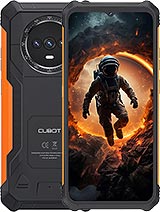
KingKong ES Pro
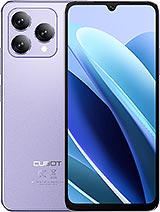
A40
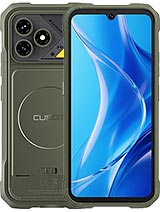
KingKong Dura
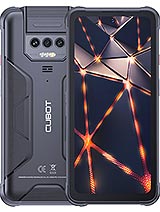
KingKong Power 5
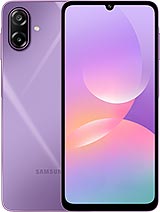
Galaxy M17e