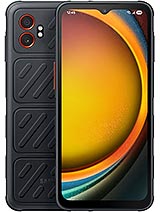
Cubot Max 5 review
The Max 5 suits users in 5G/Wi-Fi 6 markets who want a genuinely large screen and all-day battery without flagship pricing. It's less appealing if you prioritize fast charging, camera versatility, or crisp text on the display itself.

This review is based on Cubot’s published specifications and public benchmark data for the Cubot Max 5, and the rating is spec-based. GoSolo does not physically test devices; where we estimate real-world behaviour such as battery life or charge time, we say so. How we rate phones.
Overview
The Cubot Max 5 is a large-screen mid-ranger with a Dimensity 8200 chipset, 144Hz display, and 5G that costs around 300 EUR. It delivers solid everyday performance and a genuinely useful screen size, but the 1080p resolution and modest camera setup mean you're trading sharpness and zoom for screen real estate and battery life.
Design & build
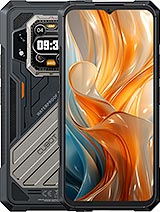
At 223g and 9.2mm thick, the Max 5 feels weighty without being unwieldy. The dimensions (173.9 x 78.9mm) put it firmly in phablet territory—tall and a bit wider than many will want in one hand, but still navigable for two-handed use. Mohs hardness 6 on the display is the baseline for phones now; it will scratch with keys in a pocket but won't crumble. The side-mounted fingerprint scanner is reliable, and dual nano-SIM support means dual standby or regional flexibility. There is no microSD slot, so you are locked into 256GB, which is adequate for most but limits offline media if you download heavily. Build quality feels solid for the price, though materials (plastic or composite body) are not announced, so expect typical budget smartphone durability.
Display
The 6.95-inch IPS LCD with 144Hz refresh and 1080 x 2460 resolution is the phone's headliner. The high refresh makes scrolling through social media and web pages noticeably smoother than a 60Hz phone, and at 387 ppi, sharpness is acceptable for most tasks. However, 1080p on a screen this size is a compromise: text and UI icons are softer than on 1440p displays at the same physical size, and if you set brightness high, the trade-off becomes visible. For videos, games, and casual browsing, the size advantage and 144Hz smoothness outweigh the resolution penalty. This is not a display for reading dense text for hours, but it excels at what a 7-inch screen does best—showing more at once.
Performance
The Dimensity 8200 on 4nm with Mali-G610 GPU and 12GB RAM is a tier above budget chips like the Snapdragon 680. It handles mid-range gaming (Genshin Impact, Honkai Star Rail at medium settings), video editing, and heavy multitasking without lag. Everyday apps open instantly, and you can keep a dozen background apps resident without noticeable slowdown. This chipset sits in the high-mid range, not flagship territory, so sustained maximum-setting gaming or raw single-threaded performance will not compete with the latest Snapdragon or Dimensity 9xxx. But for the price and intended use, performance is a strength. Apps rarely stutter, and the 12GB RAM keeps multitasking smooth.
Software
Android 14 out of the box is standard and current for mid-2024 phones. Cubot's skin, if any, is not detailed in the spec sheet, but Dimensity 8200 phones typically ship with light overlays. Expect two years of OS updates and a few years of security patches based on Cubot's typical support window—not Samsung or Apple length, but acceptable for a budget brand. No bloatware profile is documented, so this one likely avoids the worst of preloaded junk.
Camera
The rear setup pairs a 100MP main sensor with phase-detection autofocus and a 5MP macro lens. The high megapixel count helps with cropping and detail in daylight, and PDAF ensures quick focusing in decent light. However, the 100MP sensor is likely 0.8 micron or smaller (a trade-off between pixel count and low-light sensitivity), so night shots will be noisier than phones with larger individual pixels or dedicated low-light sensors. The 5MP macro is gimmicky for most users—it works, but a 100MP main lens can already focus close. The lack of a third telephoto or dedicated ultra-wide is notable; you get only a wide angle and macro. The 32MP selfie with autofocus is solid for video calls and group shots. Video caps out at 4K 30fps, which is standard but behind phones offering 60fps or higher. For social media, document scanning, and daylight snaps, this setup is fine. For travel photography, night shots, or distant subjects, it falls short of midrange rivals with zoom or better low-light performance.
Battery & charging
The 5100 mAh battery, combined with the relatively efficient Dimensity 8200 and 1080p display, should yield a full day of mixed use—roughly 8 to 10 hours of screen-on time depending on workload. Browsing and messaging lean toward the longer end, while gaming drains faster. On heavy use, you may see an evening power-down; on light use, you could stretch to late evening. The real weakness is charging: 33W wired takes approximately 50 to 70 minutes from zero to full, which is slow by 2024 standards. Rivals in the 300 EUR bracket now routinely offer 65W to 120W, cutting that to 30 minutes or less. There is no wireless charging, which is typical at this price, but the slow wired speed means this is not a phone you can top up quickly during a lunch break.
Value & verdict
At around 300 EUR, the Cubot Max 5 lands in a crowded mid-range market where the Dimensity 8200 is common but the 6.95-inch screen and 144Hz refresh are differentiators. You pay for screen size and smoothness, not raw power—the performance is solid, but not exceptional. The 100MP camera and 5G bands read impressive on paper but deliver modest gains in real use. The slow charging, 1080p resolution on a giant screen, and lack of zoom or night mode are honest trade-offs for the price. If you value a large, smooth display and all-day battery over snappy charging and camera range, this makes sense. If you need fast charging, a sharper display, or better low-light photos, you should cross-shop rivals with 65W+ charging, 1440p screens, or periscope zoom in the same bracket.
Verdict
The Max 5 suits users in 5G/Wi-Fi 6 markets who want a genuinely large screen and all-day battery without flagship pricing. It's less appealing if you prioritize fast charging, camera versatility, or crisp text on the display itself.
- Large 6.95-inch 144Hz display is genuinely practical for video, reading, and games—rarely found at this price
- Dimensity 8200 is capable enough for mid-range gaming and heavy multitasking without stuttering; 12GB RAM keeps apps alive
- 5100 mAh battery lasts a full day on typical mixed use, and 5G/Wi-Fi 6 future-proofs connectivity in covered areas
- 1080p resolution on a 6.95-inch screen means noticeably soft text and UI compared to 1440p rivals at similar prices
- 33W charging is slow by 2024 standards—rivals in this bracket hit 65W to 120W
- No optical zoom or dedicated night sensor limits distant and low-light photography
Cubot Max 5 Key Specifications
The essentials at a glance. See the full spec sheet.
| Released | 2024, July 03 |
|---|---|
| Display | 6.95 inches, 114.7 cm2 (~83.6% screen-to-body ratio), IPS LCD, 144Hz |
| Resolution | 1080 x 2460 pixels (~387 ppi density) |
| Chipset | Mediatek Dimensity 8200 (4 nm) |
| RAM & storage | 256GB 12GB RAM |
| Main camera | 100 MP, (wide), PDAF 5 MP (macro) |
| Selfie camera | 32 MP, AF |
| Battery | 5100 mAh |
| Charging | 33W wired |
| Software | Android 14 |
| Dimensions | 173.9 x 78.9 x 9.2 mm (6.85 x 3.11 x 0.36 in) |
| Weight | 223 g (7.87 oz) |
| Network | GSM / HSPA / LTE / 5G |
| NFC | Yes |
| USB | USB Type-C, OTG, DisplayPort |
Cubot Max 5 FAQ
Common questions, answered from the spec sheet.
Does the Max 5 support 5G?
Yes. The Max 5 supports 5G networks.
What chipset does the Max 5 use?
The Max 5 runs on the Mediatek Dimensity 8200 (4 nm).
What display does the Max 5 have?
A 6.95 inches, 114.7 cm2 (~83.6% screen-to-body ratio) IPS LCD, 144Hz, 1080 x 2460 pixels (~387 ppi density).
How big is the Max 5 battery?
The Max 5 has a 5100 mAh battery. Charging is rated at 33W wired.
Does the Max 5 have NFC?
Yes, the Max 5 has NFC.
Does the Max 5 support a microSD card?
No, the Max 5 does not support expandable storage.
Does the Max 5 have a headphone jack?
No, the Max 5 does not have a 3.5mm headphone jack.
Alternatives to consider
If the Max 5 isn’t quite right, these are the closest calls.
KingKong X
X90
Hafury Meet
KingKong X Pro

Ace 5 Racing