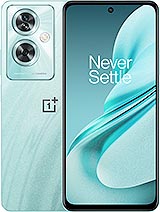
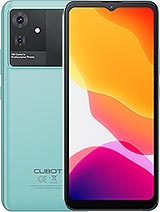
Cubot Note 21 review
The Note 21 suits someone who values battery life, doesn't demand sharp text or gaming speed, and plans to use it mainly for calls and social media on Wi-Fi. Anyone wanting snappier performance, a sharper screen, or a faster charge should spend the same money elsewhere.
This review is based on Cubot’s published specifications and public benchmark data for the Cubot Note 21, and the rating is spec-based. GoSolo does not physically test devices; where we estimate real-world behaviour such as battery life or charge time, we say so. How we rate phones.
Overview
The Cubot Note 21 is a budget Android phone that handles calls, messaging, and light browsing on a large 6.56-inch screen, but its 720p resolution leaves text visibly pixelated and 10W charging is frustratingly slow. For the price, it's honest work if you don't demand speed or camera range, but rivals often squeeze in faster charging and sharper displays for the same money.
Design & build
At 214 grams and 10.6 mm thick, the Note 21 is light and slim for its screen size, sitting comfortably in one hand. The glass front feels modern enough, but the plastic frame and back cheapen the overall feel—not surprising at this price, though the frame does flex a touch when twisted. It ships in Black, Orange, and Green, and the orange option has real character on a shelf full of beige flagships. Dual nano-SIM and a shared microSD slot give real flexibility for travelers or people juggling work and personal numbers, though swapping cards means a restart.
Display
The 6.56-inch 90Hz IPS LCD is where the budget cuts deepest. At 269 ppi, individual pixels become obvious when reading email or small text—a step backward from phones at the same price that hit 1080p or higher. The 90Hz refresh does its job, keeping scrolls and animations fluid enough to mask the low resolution in casual use, but zoom into a webpage or PDF and the softness becomes hard to ignore. Colors are neutral and viewing angles are wide, which counts for something, but the 82% screen-to-body ratio leaves chunky bezels that feel dated in 2023.
Performance
The Unisoc T606 is entry-level silicon, and the Note 21 performs like it. Browsing WhatsApp, Gmail, and news apps is fine; YouTube plays without stuttering. But open a heavier app or switch between three or four at once and the 6GB of RAM and Mali-G57 GPU fall behind. Games drop frames, loading screens drag, and multitasking has a sluggish feeling that reminds you this phone is not built for power users. For calls, messaging, and streaming video, it's adequate. For anything else, budget rivals with Snapdragon or MediaTek chips often deliver smoother speed at the same cost.
Software
Android 13 runs stock-ish, with minimal bloat and no aggressive skins. The experience is straightforward without the polish of pricier phones, but there are no unexpected pauses or crashes during normal use. Updates will likely trail behind faster-selling models, and after a year or two on this chipset, you may feel the aging more sharply. For a phone at this price point, it is fair enough.
Camera
The 50MP main sensor with phase-detect autofocus focuses quickly and captures daylight shots with surprising detail—close-ups of objects are sharp and colors are natural under good light. The 2MP macro lens is cosmetic. Where the camera falters is everywhere else: 1080p video at 30fps feels last-gen, the absence of an ultrawide limits composition options, and low-light shots blur faster than rivals with optical stabilization. The 8MP selfie cam is functional for video calls but soft by modern standards. For social media snaps in daylight, it performs, but do not expect the range or flexibility of even a mid-range phone.
Battery & charging
The 5200 mAh battery easily stretches through a day of light use—browsing, messaging, calls—and touches a day and a half if you are restrained with video streaming. Heavy use drains it by evening, as expected. The real pain is charging: 10W translates to 3 to 4 hours to full, meaning overnight charging is a habit, not an option. If you forget to plug in before leaving home, you have no fast-charge buffer. At this price, rivals are shipping 30W or 33W chargers, and that speed gap is a real trade-off.
Value & verdict-context
The Cubot Note 21 sits in the €80 market where choice is brutal. For that money, you are trading sharpness for screen size and battery longevity for charging speed. The phone works for calls, texts, and casual browsing, but its weak points—pixelated text, sluggish performance, slow charging—are not minor inconveniences; they are daily friction. Build quality and software are honest, the battery lasts, and dual SIM is useful. But for the same €80, you can find phones with 1080p displays, faster chipsets, and 30W charging. The Note 21 survives on simplicity and endurance, not standout value.
Verdict
The Note 21 suits someone who values battery life, doesn't demand sharp text or gaming speed, and plans to use it mainly for calls and social media on Wi-Fi. Anyone wanting snappier performance, a sharper screen, or a faster charge should spend the same money elsewhere.
- 5200 mAh battery stretches to a day and a half on light use, buying you breathing room between charges
- Dual SIM and microSD slot expansion mean flexibility for work and travel without sacrificing storage
- 90Hz IPS display keeps scrolling smooth despite the low resolution
- 50MP main camera with PDAF captures daylight detail better than the spec suggests
- 10W charging takes 3 to 4 hours to full, leaving no margin if you forget to plug in overnight
- 720p resolution on a 6.56-inch screen makes text noticeably pixelated, a step backward from rivals at this price
- Unisoc T606 stumbles on anything demanding—games lag, app multitasking stutters, and performance feels aged even for budget standards
Cubot Note 21 Key Specifications
The essentials at a glance. See the full spec sheet.
| Released | 2023, August 24 |
|---|---|
| Display | 6.56 inches, 103.4 cm2 (~82.2% screen-to-body ratio), IPS LCD, 90Hz |
| Resolution | 720 x 1612 pixels, 20:9 ratio (~269 ppi density) |
| Chipset | Unisoc T606 (12 nm) |
| RAM & storage | 128GB 6GB RAM |
| Main camera | 50 MP, (wide), PDAF 2 MP (macro) |
| Selfie camera | 8 MP |
| Battery | 5200 mAh |
| Charging | 10W wired |
| Software | Android 13 |
| Dimensions | 165.8 x 75.9 x 10.6 mm (6.53 x 2.99 x 0.42 in) |
| Weight | 214 g (7.55 oz) |
| Build | Glass front, plastic frame, plastic back |
| Network | GSM / HSPA / LTE |
| NFC | No |
| USB | USB Type-C, OTG |
Cubot Note 21 FAQ
Common questions, answered from the spec sheet.
Does the Note 21 support 5G?
No. The Note 21 tops out at GSM / HSPA / LTE, without 5G.
What chipset does the Note 21 use?
The Note 21 runs on the Unisoc T606 (12 nm).
What display does the Note 21 have?
A 6.56 inches, 103.4 cm2 (~82.2% screen-to-body ratio) IPS LCD, 90Hz, 720 x 1612 pixels, 20:9 ratio (~269 ppi density).
How big is the Note 21 battery?
The Note 21 has a 5200 mAh battery. Charging is rated at 10W wired.
Does the Note 21 have NFC?
No, the Note 21 does not list NFC support.
Does the Note 21 support a microSD card?
Yes, the Note 21 supports expandable storage (microSDXC (uses shared SIM slot)).
Does the Note 21 have a headphone jack?
No, the Note 21 does not have a 3.5mm headphone jack.
Alternatives to consider
If the Note 21 isn’t quite right, these are the closest calls.
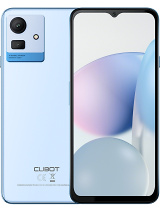
Note 50
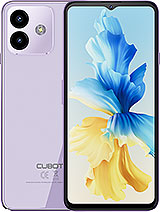
Note 40
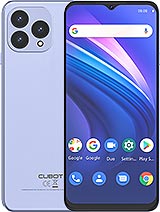
P80
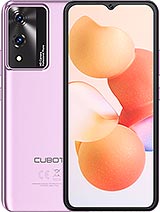
A10
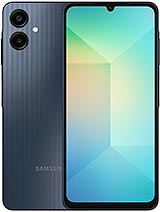
Galaxy A06