Cubot Note 40 review
The Note 40 suits buyers in emerging markets who prioritize screen size, battery life, and no-frills durability over performance, and have modest connectivity needs. Skip it if you game, multitask heavily, or expect fast charging—there are better-balanced alternatives at this price that you will not regret after a month of use.
This review is based on Cubot’s published specifications and public benchmark data for the Cubot Note 40, and the rating is spec-based. GoSolo does not physically test devices; where we estimate real-world behaviour such as battery life or charge time, we say so. How we rate phones.
Overview
The Cubot Note 40 is a large-screen budget phone with a 5200 mAh battery and 50MP camera, but its 720p display, slow 10W charging, and entry-level Unisoc chip make it a pure value play for buyers in markets where LTE is the ceiling and durability matters more than speed.
Design & build
At 222g and 10.1mm thick, the Note 40 feels solid and unremarkable in the hand. The 6.56-inch footprint is wide and tall, but the 82% screen-to-body ratio keeps bezels reasonable for a budget phone. Dual nano-SIM and a shared microSD slot give you flexibility, though the latter means you cannot use both SIMs and expand storage at once. No water resistance, no glass back—it is a plastic-and-frame phone designed for durability over prestige, which is fair at this price.
Display
The 6.56-inch IPS LCD panel with 90Hz refresh delivers smooth scrolling, a real quality-of-life gain at the budget tier. The catch is the 720p resolution (1612 × 720 pixels), which spreads pixels thin across that large diagonal. At 269 ppi density, text and icons look coarse compared to 1080p phones from similar-priced rivals. For video and casual browsing it is fine; reading small text or doing detailed work feels fuzzy. The 20:9 aspect ratio and 90Hz partially offset the sharpness deficit, but cannot erase it. If screen real estate matters more to you than pixel clarity, you will adapt quickly. If you read a lot on your phone, this may frustrate.
Performance
The Unisoc T606 is an entry-level chip—octa-core (two Cortex-A75 at 1.6 GHz plus six Cortex-A55 at the same speed) with Mali-G57 MP1 graphics. Paired with 6GB RAM, it handles everyday tasks: messaging, calls, light web browsing, video playback. Gaming and heavy app switching cause noticeable lag and frame drops, so do not expect fluid performance once you push it. The T606 lacks the efficiency of Snapdragon or MediaTek rivals, so expect thermal throttling under sustained load. For a user who keeps three apps open and checks email, this is adequate; for anyone running multiple apps, gaming, or editing, it will feel slow.
Software
Android 13 ships out of the box, which is respectable for a 2023 release. Cubot typically applies a light overlay, so you get most of AOSP without heavy bloat. Security updates are the main concern—budget brands rarely push monthly patches reliably, so budget for 1 to 2 years of consistent OS updates and hope for security patches thereafter. The 256GB storage is enough that you won't feel cramped even without aggressive uninstalling.
Camera
The 50MP main sensor is straight out of the marketing playbook—megapixels alone mean little, but here they translate to reasonable daylight stills and decent cropping room. The sensor captures detail well in good light and handles skin tones fairly. Low light is grainy and soft, typical for budget hardware. The 2MP macro lens is cosmetic; it barely works for close-up photography and will almost always disappoint. No telephoto means framing distant subjects requires walking closer. The 8MP front camera is basic but acceptable for video calls. Video tops out at 1080p, solid for a device this price.
Battery & charging
5200 mAh is respectable and should last a full day of moderate use—texting, some video, social media, and calls. Heavy users (sustained video, gaming, constant screen-on) will drain it by evening. The real weakness is the 10W charging rate. From zero to full takes roughly 2 to 2.5 hours, which feels glacial in 2026 when even budget rivals offer 30W to 65W. This is not a quick-turnaround phone; plan your charging around your schedule, not around your battery state.
Value & verdict-context
At roughly 90 EUR, the Note 40 sits firmly in the global-south entry budget tier. It competes against Redmi and Realme models that offer better charging and sharper displays, yet undercuts them on screen size and battery. The 90Hz display and 5200 mAh battery are the main draws; the 720p limitation and T606 performance are the trade-offs. For buyers in areas where LTE is the network ceiling (and 5G is not yet relevant), or for users who value battery endurance and screen size over raw speed, this phone makes sense. It is straightforward and honest about what it delivers: a large, responsive screen and reasonable all-day stamina, without expecting you to do much beyond browsing and media consumption. Expect no surprises, no flagship pretense, and a device that works best as a secondary phone or for light daily use in markets where budget and simplicity trump processing power.
Verdict
The Note 40 suits buyers in emerging markets who prioritize screen size, battery life, and no-frills durability over performance, and have modest connectivity needs. Skip it if you game, multitask heavily, or expect fast charging—there are better-balanced alternatives at this price that you will not regret after a month of use.
- 6.56-inch screen with 90Hz refresh and 82% screen-to-body ratio gives you a lot of usable display for the price
- 5200 mAh battery with modest hardware should deliver a full day of light to moderate use without needing a midday top-up
- 256GB storage and 6GB RAM are unexpectedly generous for a phone at this price point
- 50MP main camera crops and zooms well for everyday daylight shots, more practical than the sensor count suggests
- 10W charging is painfully slow in 2023—you are looking at 2+ hours to full, which ties you to a plug for far longer than rivals at this price
- 720p density (269 ppi) makes text and UI noticeably grainy on a 6.56-inch screen, so reading or fine detail work gets tiring
- Unisoc T606 stumbles with sustained heavy use—gaming and heavy multitasking will cause lag and stuttering
Cubot Note 40 Key Specifications
The essentials at a glance. See the full spec sheet.
| Released | 2023, October 16 |
|---|---|
| Display | 6.56 inches, 103.4 cm2 (~82.3% screen-to-body ratio), IPS LCD, 90Hz |
| Resolution | 720 x 1612 pixels, 20:9 ratio (~269 ppi density) |
| Chipset | Unisoc T606 (12 nm) |
| RAM & storage | 256GB 6GB RAM |
| Main camera | 50 MP, (wide) 2 MP (macro) |
| Selfie camera | 8 MP |
| Battery | 5200 mAh |
| Charging | 10W wired |
| Software | Android 13 |
| Dimensions | 165.8 x 75.8 x 10.1 mm (6.53 x 2.98 x 0.40 in) |
| Weight | 222 g (7.83 oz) |
| Network | GSM / HSPA / LTE |
| NFC | No |
| USB | USB Type-C 2.0, OTG |
Cubot Note 40 FAQ
Common questions, answered from the spec sheet.
Does the Note 40 support 5G?
No. The Note 40 tops out at GSM / HSPA / LTE, without 5G.
What chipset does the Note 40 use?
The Note 40 runs on the Unisoc T606 (12 nm).
What display does the Note 40 have?
A 6.56 inches, 103.4 cm2 (~82.3% screen-to-body ratio) IPS LCD, 90Hz, 720 x 1612 pixels, 20:9 ratio (~269 ppi density).
How big is the Note 40 battery?
The Note 40 has a 5200 mAh battery. Charging is rated at 10W wired.
Does the Note 40 have NFC?
No, the Note 40 does not list NFC support.
Does the Note 40 support a microSD card?
Yes, the Note 40 supports expandable storage (microSDXC (uses shared SIM slot)).
Does the Note 40 have a headphone jack?
No, the Note 40 does not have a 3.5mm headphone jack.
Alternatives to consider
If the Note 40 isn’t quite right, these are the closest calls.
Note 50
Note 21
P80
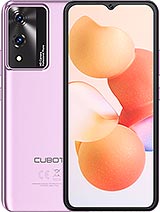
A10
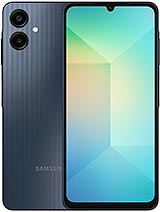
Galaxy A06