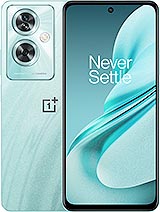
Cubot Note 50 review
The Note 50 is built for people who want a large screen for video and reading and don't mind waiting for apps to respond. Anyone who plans to use this phone for real work, gaming, or expects snappy performance should look elsewhere—even budget rivals offer faster chipsets these days.
This review is based on Cubot’s published specifications and public benchmark data for the Cubot Note 50, and the rating is spec-based. GoSolo does not physically test devices; where we estimate real-world behaviour such as battery life or charge time, we say so. How we rate phones.
Overview
The Cubot Note 50 is a budget large-screener built for messaging and casual browsing rather than gaming or productivity. For 130 EUR it delivers a tall 6.56-inch display and three-day battery endurance, but the 720p resolution feels coarse at this size and the entry-level T606 chipset stumbles under any real load.
Design & build
At 233g and 10.1mm thick, the Note 50 feels weighty and blocky in hand—not quite pocketable without bulk. The glass front scratches easily without protection, and the plastic frame and back are thin enough that you'll want a case to avoid damage. The side-mounted fingerprint reader is reliable, and dual SIM support with a shared microSD slot is practical for regions where it matters. The industrial design is purely functional; there's nothing polished here, but it's honest about being a budget device.
Display
The 6.56-inch IPS LCD with 90Hz refresh is the phone's strongest feature. Scrolling through news feeds and social apps is visibly smoother than budget 60Hz phones, and the tall 20:9 aspect ratio suits browsing and reading. The problem is the 720p resolution at this size; individual pixels are obvious if you look closely, and text rendering feels coarse compared to even mid-range rivals. For consuming video and social content, the extra screen real estate wins out over sharpness, but this is a compromise worth acknowledging.
Performance
The Unisoc T606 is entry-level silicon from 2023, and it shows. Messaging, email, and basic social apps run without stuttering, and light web browsing is tolerable. The moment you open a second app or try to juggle multiple tasks, the phone slows down—app switching takes noticeably longer than you'd expect, and opening heavier apps from standby can feel sluggish. Gaming is off the table entirely; even casual titles stumble. The 8GB of RAM helps but can't overcome the chipset's inherent ceiling. If your day is texts, calls, and reading, this processor is sufficient. Anything else frustrates.
Software
Android 13 ships stock and reasonably clean, with minimal bloatware. Updates are unlikely to arrive regularly given Cubot's service record, so you're not expecting a long support lifespan. The experience is functional rather than smooth; the OS itself is fine, but the T606 means animations and transitions sometimes hiccup. Side-mounted fingerprint unlocking works reliably enough.
Camera
The 50MP main sensor captures decent detail in strong daylight and benefits from phase-detect autofocus, but the pixel density doesn't translate to real-world sharpness—photos lack the crispness of phones with better optics and processing. There's no telephoto or wide-angle lens, so framing is entirely on you; distant subjects stay small, and the 2MP macro camera is too narrow to be useful for most things. The 1080p video at 30fps is passable for social clips but noticeably soft compared to class leaders. The 8MP selfie camera handles video calls adequately. For casual snaps in daylight, it's acceptable; for anything demanding, you'll be disappointed.
Battery & charging
The 5200 mAh capacity is genuinely impressive for a 130 EUR phone. Moderate use—messaging, browsing, some social media—stretches the battery to two full days, and even heavier users can usually reach a full day before the red line. The spec sheet omits charging speed, but lack of a charger in the box and the reliance on USB Type-C suggest slow charging is a real possibility; a quick power session in the morning may not fully replenish the phone for heavy users. The longevity is the highlight of this device.
Value & verdict-context
At 130 EUR, the Note 50 occupies a strange space: it's too slow for someone who needs a working Android phone for productivity or apps, but too expensive for someone who just wants a basic call-and-text handset. The 6.56-inch screen and multi-day battery are genuine selling points for people who primarily consume media and chat. Rivals at this price usually trade display size for processing power or charging speed, so the choice boils down to your priorities. If you value big-screen endurance and can tolerate lag, it's a reasonable budget pick. If you value responsiveness or expect to do anything more than casual use, save a little more.
Verdict
The Note 50 is built for people who want a large screen for video and reading and don't mind waiting for apps to respond. Anyone who plans to use this phone for real work, gaming, or expects snappy performance should look elsewhere—even budget rivals offer faster chipsets these days.
- 5200 mAh battery easily lasts two days on light use, a rarity at this price
- 6.56-inch 90Hz display is excellent for reading and streaming despite the low pixel density
- 8GB RAM and 256GB storage with microSD expansion removes the usual storage panic
- NFC and dual-band Wi-Fi bring modern conveniences to a budget phone
- 720p resolution at 6.56 inches shows visible pixelation; text reads grainy unless you hold it at arm's length
- Unisoc T606 is slow by 2024 standards—basic tasks are fine, but app switching and any real multitasking lag noticeably
- 50MP camera lacks optical zoom and delivers soft detail beyond a few meters; 1080p video only
Cubot Note 50 Key Specifications
The essentials at a glance. See the full spec sheet.
| Released | 2023, July |
|---|---|
| Display | 6.56 inches, 103.4 cm2 (~82.3% screen-to-body ratio), IPS LCD, 90Hz |
| Resolution | 720 x 1612 pixels, 20:9 ratio (~269 ppi density) |
| Chipset | Unisoc T606 (12 nm) |
| RAM & storage | 256GB 8GB RAM |
| Main camera | 50 MP, (wide), PDAF 2 MP (macro) |
| Selfie camera | 8 MP |
| Battery | 5200 mAh |
| Software | Android 13 |
| Dimensions | 165.8 x 75.8 x 10.1 mm (6.53 x 2.98 x 0.40 in) |
| Weight | 233 g (8.22 oz) |
| Build | Glass front, plastic frame, plastic back |
| Network | GSM / HSPA / LTE |
| NFC | Yes |
| USB | USB Type-C, OTG |
Cubot Note 50 FAQ
Common questions, answered from the spec sheet.
Does the Note 50 support 5G?
No. The Note 50 tops out at GSM / HSPA / LTE, without 5G.
What chipset does the Note 50 use?
The Note 50 runs on the Unisoc T606 (12 nm).
What display does the Note 50 have?
A 6.56 inches, 103.4 cm2 (~82.3% screen-to-body ratio) IPS LCD, 90Hz, 720 x 1612 pixels, 20:9 ratio (~269 ppi density).
How big is the Note 50 battery?
The Note 50 has a 5200 mAh battery.
Does the Note 50 have NFC?
Yes, the Note 50 has NFC.
Does the Note 50 support a microSD card?
Yes, the Note 50 supports expandable storage (microSDXC (uses shared SIM slot)).
Does the Note 50 have a headphone jack?
No, the Note 50 does not have a 3.5mm headphone jack.
Alternatives to consider
If the Note 50 isn’t quite right, these are the closest calls.
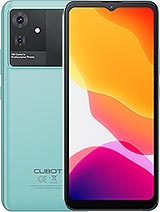
Note 21
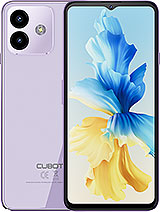
Note 40
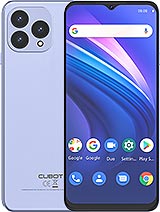
P80
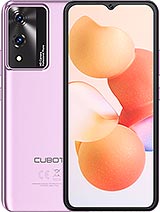
A10
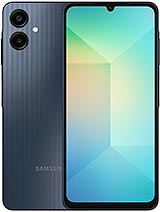
Galaxy A06