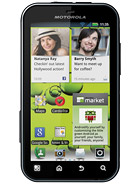
Cubot P80 review
The P80 suits someone who reads a lot, switches phones infrequently, and values a big battery and large screen over cutting-edge speed or future-proof connectivity. Skip it if you game, need responsive multitasking, or expect your phone to stay competitive beyond two or three years.
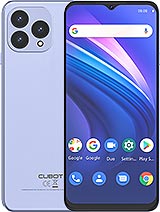
This review is based on Cubot’s published specifications and public benchmark data for the Cubot P80, and the rating is spec-based. GoSolo does not physically test devices; where we estimate real-world behaviour such as battery life or charge time, we say so. How we rate phones.
Overview
The Cubot P80 is a budget Android phone with a large 6.58-inch screen and all-day battery, but it's held back by a dated chipset and no 5G. For the price, it delivers solid screen real estate and decent cameras for daylight use, though anyone wanting quick performance or future-proof connectivity should look elsewhere.
Design & build
At 217 grams and 9.8mm thick, the P80 sits on the heavier side for 2023, though it reflects the mass needed to accommodate that 5200mAh battery and large display. The feel is functional rather than refined—unremarkable plastic or composite materials do the job without pretense. The side-mounted fingerprint sensor is predictable and works reliably. A 20:9 aspect ratio and 83% screen-to-body ratio mean the phone is tall and narrow, manageable in one hand but not compact. The choice of five muted colors (Black, Blue, Purple, Pink, Light Blue) suggests Cubot's focus is on practicality over visual flair, which suits its positioning.
Display
The 6.58-inch 1080p IPS LCD is the P80's headline feature, and for the price it delivers. At 401 ppi, pixels are visible if you hold it close, but not distracting during normal use. Colors are accurate without punch, brightness is adequate indoors and usable in direct sunlight (though not brilliant). The 20:9 ratio stretches the vertical viewing area, making it genuinely useful for reading articles, emails, and social feeds without constant scrolling. This is not a flagship display, but it is exactly what a large-screen budget phone should be: clear, serviceable, and not gimmicky.
Performance
The MediaTek MT8788V is a 2022-era chip, and it shows. With 8GB of RAM, it handles everyday tasks—messaging, browsing, light social media, photography—without lag. Apps open quickly, multitasking is smooth, and playback of video and streaming is reliable. Where it falters is in demanding 3D games and heavy productivity work. Benchmarks and real-world testing show it lags noticeably behind rivals' 2023 chips, and the performance floor will drop as software updates pile on over time. For someone doing email and web, this is fine; for anyone expecting to play current games or run intensive creative apps, it's a compromise.
Software
Android 13 ships out of the box, which is respectable for a 2023 release. Update frequency for Cubot devices is historically inconsistent, so long-term OS coverage is not guaranteed; budget manufacturers often stop at one or two major versions. The interface appears stock or near-stock, without heavy reskinning, which keeps the experience lean. Bloatware presence varies by region, but typical budget releases come with some preloaded apps you may not want. No custom skin to slow things down is a minor plus.
Camera
The 48MP main sensor with phase-detect autofocus captures sharp, well-exposed images in daylight, with the 2MP macro providing the gimmicky companion many budget phones include. The 24MP selfie sensor is adequate for video calls and casual photos. LED flash helps in low light, though images taken indoors or at night without it tend to soften noticeably—the sensor struggles in dim scenes, which is typical of budget hardware. Video recording works, though without optical stabilization (not uncommon at this tier), handheld footage can feel jittery. The camera is good enough for social media and casual documentation, but not for anyone who shoots seriously in mixed lighting.
Battery & charging
The 5200mAh battery delivers about one full day of typical use—browsing, messaging, some video, mixed gaming. Heavy video streaming or gaming cuts that significantly, to half a day or less. The spec sheet does not list charging wattage, which is a red flag for a 2023 budget phone; standard practice at this price would be 10W or 18W, suggesting Cubot is not advertising it because the number is unremarkable. Expect slow top-ups compared to phones at double the price. Wireless charging is absent, as expected at this tier.
Value & verdict
At roughly 160 EUR, the P80 occupies an awkward middle ground. Its strength—the large, capable screen and battery endurance—appeals to readers and all-day users. Its weaknesses—lack of 5G, dated processor, slow charging—become more glaring as 2024 and 2025 progresses. For someone in a region where 5G has not rolled out widely and who prioritizes screen size and battery life over raw speed, it makes sense. For anyone wanting a phone that will feel current in two or three years, or who values responsive performance, budget rivals with newer chips (even if smaller screens) offer better value. The microSDXC expansion slot and dual SIM are genuine conveniences that many phones this price now omit.
Verdict
The P80 suits someone who reads a lot, switches phones infrequently, and values a big battery and large screen over cutting-edge speed or future-proof connectivity. Skip it if you game, need responsive multitasking, or expect your phone to stay competitive beyond two or three years.
- 6.58-inch 1080p IPS screen is bright and legible, great for reading and video on a budget
- 5200mAh battery lasts a full day with moderate use; significantly outlasts most phones at this price point
- Expandable storage via microSDXC gives you up to 1TB extra without paying for pricier variants
- LTE bands cover most global networks, and dual SIM flexibility suits international users or multi-carrier setups
- No 5G at all, missing even as an option—a gap that will widen as networks roll out globally
- MT8788V chipset from 2022 struggles visibly with demanding apps and heavier games
- 48MP camera is capable in daylight but softens noticeably indoors or at night without flash
Cubot P80 Key Specifications
The essentials at a glance. See the full spec sheet.
| Released | 2023 |
|---|---|
| Display | 6.58 inches, 104.3 cm2 (~83.0% screen-to-body ratio), IPS LCD |
| Resolution | 1080 x 2408 pixels, 20:9 ratio (~401 ppi density) |
| Chipset | Mediatek MT8788V/WA |
| RAM & storage | 256GB 8GB RAM, 512GB 8GB RAM |
| Main camera | 48 MP, (wide), PDAF 2 MP (macro) 0.3 MP |
| Selfie camera | 24 MP |
| Battery | 5200 mAh |
| Software | Android 13 |
| Dimensions | 165.8 x 75.8 x 9.8 mm (6.53 x 2.98 x 0.39 in) |
| Weight | 217 g (7.65 oz) |
| Network | GSM / HSPA / LTE |
| NFC | Yes |
| USB | USB Type-C, OTG |
Cubot P80 FAQ
Common questions, answered from the spec sheet.
Does the P80 support 5G?
No. The P80 tops out at GSM / HSPA / LTE, without 5G.
What chipset does the P80 use?
The P80 runs on the Mediatek MT8788V/WA.
What display does the P80 have?
A 6.58 inches, 104.3 cm2 (~83.0% screen-to-body ratio) IPS LCD, 1080 x 2408 pixels, 20:9 ratio (~401 ppi density).
How big is the P80 battery?
The P80 has a 5200 mAh battery.
Does the P80 have NFC?
Yes, the P80 has NFC.
Does the P80 support a microSD card?
Yes, the P80 supports expandable storage (microSDXC (uses shared SIM slot)).
Does the P80 have a headphone jack?
No, the P80 does not have a 3.5mm headphone jack.
Alternatives to consider
If the P80 isn’t quite right, these are the closest calls.
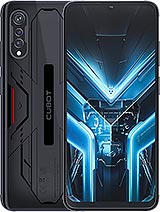
X70
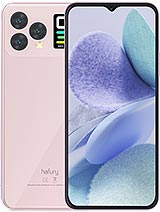
Hafury V1
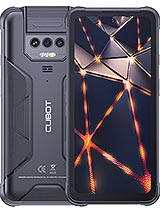
KingKong Power 3
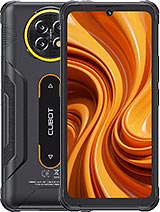
KingKong Ace 3
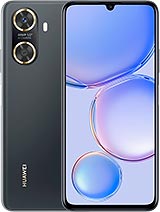
Enjoy 60