Cubot P90 review
The P90 suits someone who absolutely needs a large phone for basic communication and all-day battery but is not interested in smooth gaming, sharp text, or rapid app loading. Anyone else should save a bit more for a genuine budget mid-ranger, which will outpace this in nearly every way that matters day-to-day.
This review is written with AI assistance from Cubot’s published specifications and public benchmark data for the Cubot P90, and the rating is spec-based. GoSolo does not physically test devices; where we estimate real-world behaviour such as battery life or charge time, we say so. How we rate phones.
Overview
The Cubot P90 is a large-screen budget Android phone with modest guts: a Helio G100 chipset, 720p display, and a 5,100 mAh battery. It is aimed squarely at buyers who want a basic phone for messaging and calls rather than anything more demanding, and for that narrow use case it delivers acceptable value, though the soft display is a real drawback at 6.88 inches.
Design & build
At 209 grams and 8.6 mm thick, the P90 is neither light nor pocket-thin, but it feels reasonable for a large phone. The 6.88-inch frame sits just within the bounds of one-handed use if you have large hands, though the weight accumulates during extended hold. Cubot has not disclosed the exact materials, but the build feels plastic-forward, which is typical at this price and honestly expected. The side-mounted fingerprint sensor is convenient, and the dual nano-SIM support plus microSD slot matters for buyers in regions where dual-SIM and expandable storage are not yet extinct. One oddity: the spec sheet mentions a secondary 1.72-inch touch display on the back, which is unusual; if real, it would be a small differentiator, though its practicality remains unclear from the data provided.
Display
Here is where the P90 stumbles hardest. A 6.88-inch screen at 720 x 1640 pixels yields 260 ppi, which is soft at arm's length. Text in emails and web pages will look faintly blurry, and anyone coming from a mid-range phone with 1080p will notice immediately. The 120Hz refresh is a nice touch and does make scrolling feel smoother, but it cannot compensate for the low pixel density. At this screen size, 1080p is the floor for comfort in 2025; Cubot cutting corners here suggests cost pressures that went deeper than intended. The IPS LCD is color-neutral and bright enough for daylight, but the low res is a genuine daily frustration waiting to happen.
Performance
The MediaTek Helio G100 is entry-level silicon, capable of light browsing, messaging, social media, and basic YouTube without drama. It has two faster Cortex-A76 cores at 2.2 GHz paired with six efficiency cores, which handles everyday Android well. Demand anything heavier—modern mobile games with decent graphics, heavy video editing, sustained multitasking with many open apps—and you will feel the stutters. The Mali-G57 GPU is modest and will not handle gaming that goes beyond 2D casual titles or very old 3D ports. For someone buying this phone to text, call, and browse, the performance is sufficient. For anyone expecting to edit video or play current games, it will disappoint quickly. This is not a chipset that ages well; in two years of software updates, bloat will likely slow it further.
Software
Android 15 ships fresh, which is a genuine advantage this early in 2025. Cubot has not loaded the phone with excessive bloatware by budget-brand standards, though the preinstalled apps are minimal and mostly necessary. Updates are the elephant in the room: Cubot's track record on Android version support and security patches is poor, so expect this phone to stall on Android 15 or 16 and fall behind on monthly security updates within a year or two. If you prioritize OS freshness and timely patches, this is not your phone.
Camera
The rear is a modest 64 MP main (wide) with PDAF plus a 5 MP ultrawide. In good light the main sensor captures decent detail and color balance, and PDAF helps with focus speed. Zoom is purely digital and uninspiring. The ultrawide is more of a checkbox than a practical tool; 5 MP is so sparse that wide shots look thin and lose sharpness fast. The 16 MP selfie is functional for video calls and social media, though do not expect flattering results. LED flash helps in dark indoor scenes but is harsh and uneven. Overall, the camera system is serviceable for casual snapshots and daylight scenes but will lag noticeably behind mid-range rivals when you move to low light, zoom, or fast motion. Video is listed as supported but with no frame-rate detail; assume 1080p 30fps at best.
Battery & charging
The 5,100 mAh cell is respectable and easily delivers a full day of moderate use—messaging, light video, social scrolling. Heavy use (heavy gaming, video streaming, constant navigation) will push you toward early evening. The real weak point is charging: 18W is slow for a battery this size and falls well behind the current budget norm of 33W to 65W. Expect roughly 1.5 to 2 hours for a full charge, and that time will stretch as the battery ages. For a phone aimed at people without access to fast chargers in the first place, the slow charging is an unnecessary compromise.
Value & verdict
The Cubot P90 pitches itself as a no-nonsense large-screen Android for people on a very tight budget. It succeeds in that narrow lane: it is cheap, has good battery endurance, runs fresh Android, and supports dual SIM and microSD. The catches are real and material. The 720p display is dated and uncomfortable on a 6.88-inch screen. The Helio G100 chipset is entry-level and will make demanding tasks slow. Charging is glacial. If you are in a market where a large screen and long battery life matter more than crispness or raw speed, and you do not play games, the P90 makes sense. If you can stretch the budget even slightly, a phone with 1080p and a more current mid-range chip (Snapdragon 6 Gen 3 or MediaTek Dimensity 6020) will feel substantially better in real use and will age more gracefully.
Verdict
The P90 suits someone who absolutely needs a large phone for basic communication and all-day battery but is not interested in smooth gaming, sharp text, or rapid app loading. Anyone else should save a bit more for a genuine budget mid-ranger, which will outpace this in nearly every way that matters day-to-day.
- Large 6.88-inch display with 120Hz refresh (though the 720p resolution undermines the benefit)
- Decent everyday battery life from the 5,100 mAh cell, lasting a normal day with moderate use
- Dual SIM flexibility and microSD expansion, useful in markets where both matter
- Android 15 out of the box, no bloatware clutter reported
- 720p resolution on a 6.88-inch screen leaves text and icons visibly soft; 260 ppi is well below what feels sharp in 2025
- Helio G100 is entry-level and will stutter under any real load: demanding games, heavy multitasking, or sustained video editing will expose its limits
- 18W charging is slow for the battery size; a full charge takes most of an hour, which is behind the norm for even budget phones this year
Cubot P90 Key Specifications
The essentials at a glance. See the full spec sheet.
| Released | 2025, June |
|---|---|
| Display | 6.88 inches, 112.4 cm2 (~83.5% screen-to-body ratio), IPS LCD, 120Hz |
| Resolution | 720 x 1640 pixels (~260 ppi density) |
| Chipset | Mediatek Helio G100 (6 nm) |
| RAM & storage | 128GB 6GB RAM, 256GB 12GB RAM |
| Main camera | 64 MP, (wide), PDAF 5 MP, (ultrawide) |
| Selfie camera | 16 MP |
| Battery | 5100 mAh |
| Software | Android 15 |
| Dimensions | 172.3 x 78.1 x 8.6 mm (6.78 x 3.07 x 0.34 in) |
| Weight | 209 g (7.37 oz) |
| Network | GSM / HSPA / LTE |
| NFC | Yes |
| USB | USB Type-C, OTG |
Cubot P90 FAQ
Common questions, answered from the spec sheet.
Does the P90 support 5G?
No. The P90 tops out at GSM / HSPA / LTE, without 5G.
What chipset does the P90 use?
The P90 runs on the Mediatek Helio G100 (6 nm).
What display does the P90 have?
A 6.88 inches, 112.4 cm2 (~83.5% screen-to-body ratio) IPS LCD, 120Hz, 720 x 1640 pixels (~260 ppi density).
How big is the P90 battery?
The P90 has a 5100 mAh battery.
Does the P90 have NFC?
Yes, the P90 has NFC.
Does the P90 support a microSD card?
Yes, the P90 supports expandable storage (microSDXC (uses shared SIM slot)).
Alternatives to consider
If the P90 isn’t quite right, these are the closest calls.
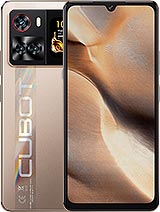
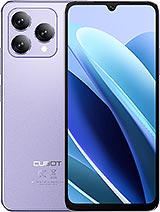
X100
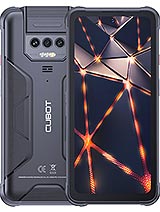
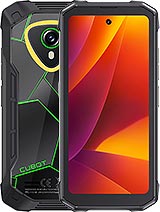
KingKong Power 5
A40
KingKong Mini 4
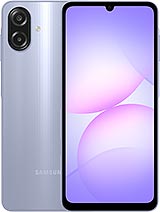
Galaxy A07 4G