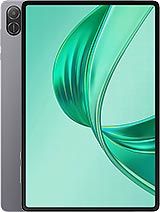
Cubot Tab 20 review
This tablet suits someone who primarily reads, watches video, and handles email on a large screen without demanding performance or cutting-edge specs. Anyone expecting gaming, photo work, or a modern wireless setup should look at midrange competitors that offer sharper displays and faster processors for only slightly more.
This review is based on Cubot’s published specifications and public benchmark data for the Cubot Tab 20, and the rating is spec-based. GoSolo does not physically test devices; where we estimate real-world behaviour such as battery life or charge time, we say so. How we rate phones.
Overview
The Cubot Tab 20 is a budget 10.1-inch tablet aimed at reading, email, and casual video rather than gaming or creative work. Its soft 149-ppi display, entry-level Unisoc chip, and 6000 mAh battery deliver a workable all-day device for light use, but corners cut on the processor and screen resolution show clearly in daily use.
Design & build
At 530 grams and 8.3 mm thick, the Tab 20 is slim and reasonably light for a 10.1-inch slate. The dimensions (241 × 160 mm) fit most tablet bags without complaint. Dual Nano-SIM slots suggest versatility for travel or regional switching, though the microSD slot shares the SIM tray, forcing a trade-off if you want both expanded storage and dual connectivity. The build materials and finish are not detailed in the spec, which is typical of budget tablets; expect plastic and modest durability rather than glass or metal.
Display
The 800 × 1280 IPS LCD panel is the tablet's weakest link. At 149 ppi, text and icons render noticeably soft—fine for video playback or casual reading, but not sharp enough for detailed work or reading fine print for hours. The 10.1-inch size compensates somewhat; the lower density is more forgiving on a larger screen than it would be on a phone. The 16:10 aspect ratio favours widescreen content. There is no specification of refresh rate, which usually means a standard 60Hz panel. For a 2023 release at this price, the resolution choice feels conservative; midrange competitors at the same cost offer 1920 × 1200 or better.
Performance
The Unisoc SC9863A is an entry-level octa-core processor from 2021. Paired with 4 GB of RAM, it handles daily tasks—browsing, email, document editing, video calls—without noticeable lag. Scrolling through apps and web pages remains smooth. However, demanding mobile games, heavy photo or video editing, and sustained multitasking expose its limits quickly. This is not a device for power users; it is built for people who read email, watch YouTube, and occasionally open a productivity app. The GPU (IMG8322) is modest and does not accelerate graphics work. By 2023 standards, even budget tablets typically paired more capable mid-range chips with their entry-level designs; the SC9863A represents an older, lower-power tier.
Software
The tablet ships with Android 13, which is current for 2023. The absence of details on customization, bloatware, or update guarantee suggests this is stock or lightly skinned Android. No promise of future upgrades is mentioned, which is common for budget hardware; assume security updates only and plan accordingly. The OS itself is responsive enough for the hardware, though RAM pressure will mount as you accumulate apps.
Camera
The 13 MP main camera with autofocus and LED flash is adequate for daylight snaps and casual documentation. Expect acceptable colour and exposure in bright conditions; shadow and low-light detail will be thin. The LED flash is useful for video calls or dimly lit rooms but adds little to still photography on a tablet. The 5 MP front camera suffices for calls and conference work. Neither sensor will impress, but for a tablet priced as a secondary device for video consumption, not photography, they check the box.
Battery & charging
The 6000 mAh cell delivers about 8 to 10 hours of mixed use (reading, video, light work) on one charge, which comfortably covers a day without hunting for a plug. Standby longevity should be strong given the modest power draw of the chipset. Charging speed is not specified, which typically means a standard 5W or 10W adapter; this will be slow compared to modern standards, but acceptable for a device you charge overnight. For a device in this class, battery endurance is a genuine strength.
Connectivity & value
LTE connectivity covers most regions where this tablet will sell. Wi-Fi support is limited to 802.11 b/g/n (2.4 GHz), missing the 5 GHz bands that faster home networks now standard—a notable gap for a 2023 device. Bluetooth 4.0 is three generations old; compatibility with newer wireless speakers and earbuds is not guaranteed. Storage maxes out at 64 GB internal, expandable via microSD, but the shared SIM slot forces a choice. For the price, the Tab 20 delivers a large, functional screen and enough processor muscle for office work and media consumption. However, the display resolution, older wireless standards, and entry-level chipset reflect cost-cutting that more aggressive competitors have avoided. If you need an affordable tablet for reading and video, it suffices; if you expect a modern feature set or performance headroom, you will find the corners cut.
Verdict
This tablet suits someone who primarily reads, watches video, and handles email on a large screen without demanding performance or cutting-edge specs. Anyone expecting gaming, photo work, or a modern wireless setup should look at midrange competitors that offer sharper displays and faster processors for only slightly more.
- 6000 mAh battery lasts a full day of mixed use without needing a charge mid-afternoon
- 10.1-inch screen large enough for reading and video without constant zooming, slim form factor travels well
- Handles email, browsing, and light multitasking smoothly; no daily-use slowdown for office tasks
- 149 ppi display is noticeably soft for text; corners cut on resolution that midrange tablets at the same price have moved past
- Wi-Fi limited to 2.4 GHz only; no 5 GHz band means slower speeds on modern routers and networks
- SC9863A chipset is entry-level and aging; struggles with games, photo editing, or heavy multitasking
Cubot Tab 20 Key Specifications
The essentials at a glance. See the full spec sheet.
| Released | 2023 |
|---|---|
| Display | 10.1 inches, 295.8 cm2 (~76.5% screen-to-body ratio), IPS LCD |
| Resolution | 800 x 1280 pixels, 16:10 ratio (~149 ppi density) |
| Chipset | Unisoc SC9863A (28 nm) |
| RAM & storage | 64GB 4GB RAM |
| Main camera | 13 MP, AF |
| Selfie camera | 5 MP |
| Battery | 6000 mAh |
| Software | Android 13 |
| Dimensions | 241.4 x 160.2 x 8.3 mm (9.50 x 6.31 x 0.33 in) |
| Weight | 530 g (1.17 lb) |
| Network | GSM / HSPA / LTE |
| NFC | No |
| USB | USB Type-C |
Cubot Tab 20 FAQ
Common questions, answered from the spec sheet.
Does the Tab 20 support 5G?
No. The Tab 20 tops out at GSM / HSPA / LTE, without 5G.
What chipset does the Tab 20 use?
The Tab 20 runs on the Unisoc SC9863A (28 nm).
What display does the Tab 20 have?
A 10.1 inches, 295.8 cm2 (~76.5% screen-to-body ratio) IPS LCD, 800 x 1280 pixels, 16:10 ratio (~149 ppi density).
How big is the Tab 20 battery?
The Tab 20 has a 6000 mAh battery.
Does the Tab 20 have NFC?
No, the Tab 20 does not list NFC support.
Does the Tab 20 support a microSD card?
Yes, the Tab 20 supports expandable storage (microSDXC (uses shared SIM slot)).
Does the Tab 20 have a headphone jack?
No, the Tab 20 does not have a 3.5mm headphone jack.
Alternatives to consider
If the Tab 20 isn’t quite right, these are the closest calls.
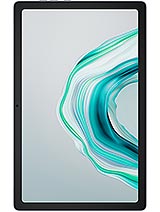
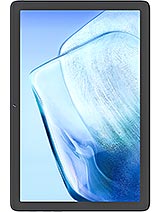
Tab 40
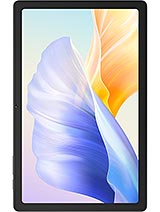
Tab 50
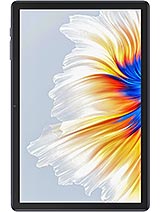
Tab 30
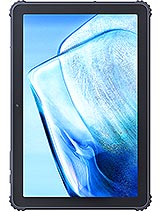
Tab KingKong
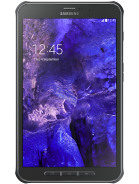
Galaxy Tab Active 5