Cubot X70 review
This phone suits someone who prioritizes a large screen and all-day battery over flagship speed or camera prowess, and who lives in a region with strong LTE coverage. Skip it if you're a gamer, a mobile photographer, or need 5G connectivity.
This review is based on Cubot’s published specifications and public benchmark data for the Cubot X70, and the rating is spec-based. GoSolo does not physically test devices; where we estimate real-world behaviour such as battery life or charge time, we say so. How we rate phones.
Overview
The Cubot X70 is a big-screen budget phone from 2023 with a 5200 mAh battery and 12GB RAM that delivers a full day of mixed use without pretending to be a gaming machine. At around €200, it's honest about what it is: a practical workhorse for messaging, video, and browsing, not a flagship pretender.
Design & build
At 220 grams and 10.2 mm thick, the X70 feels solid and substantial without being a brick. The size is a commitment—6.58 inches is genuinely large—but the form factor doesn't fight you; it sits well in one hand if your palm is used to it. No mention of Gorilla Glass or water resistance in the spec, which for a €200 phone is normal, so treat the screen with the usual care and avoid puddles. The fingerprint sensor lives on the side, which is practical and faster than in-display alternatives at this price. Nano-SIM and microSD share a slot, so you're choosing between dual SIM or expandable storage, not having both at once.
Display
The 6.58-inch IPS LCD with 120Hz refresh is the standout for the money. Text at 401 ppi is crisp enough; scrolling and swiping feel smooth compared to cheaper 60Hz alternatives you might cross-shop. The 20:9 aspect ratio is narrow and tall, useful for one-handed navigation on video content. Don't expect flagship vibrancy: IPS panels here wash out noticeably in bright sunlight, and color accuracy matters less than the fact it works. For everyday email, messaging, and video streaming, this screen does the job well. Gaming at high refresh will drain battery faster, so expect the smoothness to cost you runtime in demanding sessions.
Performance
The Helio G99 is built for endurance, not peak speed. Everyday tasks—email, maps, social media, YouTube—run without hiccup. Light games like Candy Crush or older mobile titles run fine. Demanding 3D games like Genshin Impact or PUBG will force low-to-medium graphical settings to keep frame rates steady; high settings bring stuttering. The 12GB RAM helps manage app switching, so you won't feel constant app reloading if you jump between five apps at once. This is not a phone for mobile esports or competitive gaming, but it's honest about its limits and doesn't pretend otherwise.
Software
Android 13 ships clean, which is rare for budget phones. Cubot doesn't load the device with bloatware, so you get near-stock Android with room to breathe. Security patches are the unknown; a 2023 phone at €200 may or may not see regular updates, so assume you'll get a year or so of patches and then check for your region. No mention of an ultra-power-saving mode, but the battery capacity should speak for itself.
Camera
The 100MP main sensor is the headline, but megapixels alone don't make photos. Real-world output depends on lens quality and processing, neither of which is captured in a spec sheet. The 5MP macro lens is a gimmick for close-ups that most users will ignore. The 32MP front camera is more than adequate for video calls and selfies. There's no ultra-wide camera, so you can't capture broad landscapes without stepping back. LED flash helps in dim light but won't match the results of phones with larger apertures. For casual photos in daylight, this will work; for low-light or fast action, expect the same compromises as any phone at this price.
Battery & charging
The 5200 mAh battery is genuinely large and achieves a full day with normal use: calls, messages, social media, some video. Heavy video streaming or gaming will eat through it by evening. Charging speed is unspecified, which is a red flag; budget phones at €200 often charge at 10W or 18W, which means 1.5 to 2 hours on a cable. Fast charging is absent, so plan accordingly. The upside is that large capacity means you're not reaching for the charger multiple times a day in typical use.
Value & verdict
At €200, the X70 competes with phones that cost half as much in some markets but twice as much in others; context depends on your region and what's available locally. For the price, you're getting a large screen, a roomy battery, and enough RAM and storage to not feel throttled. The trade-off is no 5G, a mid-tier processor, and a camera that's competent but not exciting. If you spend most of your time reading, messaging, and browsing, and your gaming is casual, this phone works. If you need reliable low-light photos, smooth high-refresh gaming, or future-proofed connectivity, look elsewhere or spend more.
Verdict
This phone suits someone who prioritizes a large screen and all-day battery over flagship speed or camera prowess, and who lives in a region with strong LTE coverage. Skip it if you're a gamer, a mobile photographer, or need 5G connectivity.
- Generous 6.58-inch display with 120Hz refresh feels noticeably smoother for scrolling than standard 60Hz rivals in this price band
- 5200 mAh battery realistically reaches a full day with moderate use; no need to find a charger by afternoon
- 12GB RAM and 256GB storage are substantial for €200, and the microSD slot lets you expand media without compromise
- Dual nano-SIM means you can juggle two networks, essential in regions where carrier coverage is patchy
- Helio G99 chipset is tuned for efficiency, not speed; demanding games like Genshin Impact will force you to low or medium settings
- 100MP main camera is a spec headline that doesn't translate to better shots than phones half the megapixel count; execution matters more than the number
- No charging wattage listed and likely slow by modern standards, so even with a big battery you may spend 1.5 to 2 hours tethered to a charger
Cubot X70 Key Specifications
The essentials at a glance. See the full spec sheet.
| Released | 2023 |
|---|---|
| Display | 6.58 inches, 104.3 cm2 (~83.9% screen-to-body ratio), IPS LCD, 120Hz |
| Resolution | 1080 x 2408 pixels, 20:9 ratio (~401 ppi density) |
| Chipset | Mediatek Helio G99 (6 nm) |
| RAM & storage | 256GB 12GB RAM |
| Main camera | 100 MP, (wide), PDAF 5 MP (macro) Auxiliary lens |
| Selfie camera | 32 MP |
| Battery | 5200 mAh |
| Software | Android 13 |
| Dimensions | 165.1 x 75.3 x 10.2 mm (6.5 x 2.96 x 0.40 in) |
| Weight | 220 g (7.76 oz) |
| Network | GSM / CDMA / HSPA / LTE |
| NFC | Yes |
| USB | USB Type-C, OTG |
Cubot X70 FAQ
Common questions, answered from the spec sheet.
Does the X70 support 5G?
No. The X70 tops out at GSM / CDMA / HSPA / LTE, without 5G.
What chipset does the X70 use?
The X70 runs on the Mediatek Helio G99 (6 nm).
What display does the X70 have?
A 6.58 inches, 104.3 cm2 (~83.9% screen-to-body ratio) IPS LCD, 120Hz, 1080 x 2408 pixels, 20:9 ratio (~401 ppi density).
How big is the X70 battery?
The X70 has a 5200 mAh battery.
Does the X70 have NFC?
Yes, the X70 has NFC.
Does the X70 support a microSD card?
Yes, the X70 supports expandable storage (microSDXC (uses shared SIM slot)).
Alternatives to consider
If the X70 isn’t quite right, these are the closest calls.

X90
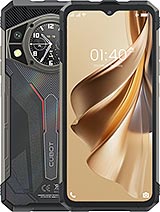
KingKong AX

Hafury Meet
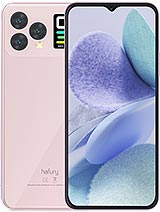
Hafury V1
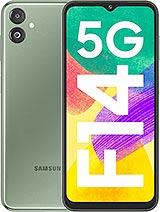
Galaxy F14