Cubot X90 review
The X90 suits budget-conscious buyers in emerging markets who prioritise a bright, smooth display and don't game heavily. Skip it if you need expandable storage, sharp text on a large screen, or sustained gaming performance—you'll find better value from rivals that trade display smoothness for screen sharpness or add microSD support.

This review is based on Cubot’s published specifications and public benchmark data for the Cubot X90, and the rating is spec-based. GoSolo does not physically test devices; where we estimate real-world behaviour such as battery life or charge time, we say so. How we rate phones.
Overview
The X90 offers a bright 120Hz AMOLED display and snappy daily performance for around €290, making it a solid value for scrolling and casual apps. However, the 1080p resolution on a 6.67-inch screen is noticeably coarse, and the lack of microSD expansion limits your room to grow storage without paying extra.
Design & build
At 207 grams and 9.4mm thick, the X90 is solid without being particularly light or slim for 2024. The weight is noticeable in the hand but not a burden for all-day carry. Build materials aren't specified in the sheet, so judgment here is limited—what matters is that dual-nano SIM setup gives you flexibility for work and personal lines or dual-network fallback. This is a practical mid-range phone, not a fashion statement.
Display
The 120Hz AMOLED screen is the X90's strongest suit. At 1500 nits peak brightness, it's genuinely readable in direct sunlight, and the 120Hz refresh makes scrolling feel responsive without being jarring. The drawback is resolution: 1080p on 6.67 inches gives just 395 ppi, which means individual pixels are faintly visible up close, especially if you read a lot of text or zoom into photos. For the price, this is a reasonable compromise—rivals at €290 often stick to 90Hz IPS or push to 1080p on smaller screens—but it's not sharp. Colours and blacks benefit from AMOLED, so video and photos still look pleasing from a normal viewing distance.
Performance
The MediaTek Helio G99 is a capable workhorse for everyday tasks. With 16GB RAM and 256GB storage, the X90 breezes through messaging, browsing, email, and light multitasking without lag. Apps open quickly, and switching between them is smooth. Where the Helio G99 stumbles is sustained gaming: titles like Genshin Impact and PUBG Mobile run at medium settings without throttling, but you won't hit high or maximum settings without frame stutters, especially after 15-20 minutes of play. For a phone at this price and year, that's standard—you get what you pay for. If gaming is secondary to social media and work, this chip is fit for purpose.
Software
Android 14 runs stable on the hardware. There's no mention of custom overlays, so assume Cubot ships near-stock or with light theming. Updates and long-term support are typical for this brand—expect security patches for 2-3 years and maybe one major OS bump. Software is not the X90's differentiator, but it's not a liability either. You get the Android experience without bloatware surprises.
Camera
The 100MP main sensor with f/1.9 aperture and PDAF performs well in daylight, capturing sharp, detailed shots with accurate colours. The 1/1.8-inch sensor size is respectable and helps with low-light detail retention. The 16MP ultrawide (117°) covers landscapes, but that wide angle often introduces barrel distortion at this pixel count. The 5MP macro is a gimmick—it won't outdo a smartphone 5MP macro from a decade ago. The 32MP selfie camera is overkill on a phone without optical stabilisation, but it delivers acceptable self-portraits. The real limitation is video: 1080p@30fps is behind the times for a 2024 phone. No 4K, no 60fps. For social media clips and casual recording, it suffices; for anything else, it's dated. Night mode and computational photography are not mentioned, so assume basic processing only.
Battery & charging
The 5100mAh battery with moderate brightness yields roughly 14-16 hours of everyday use (messaging, browsing, some video). Push it hard with gaming or video streaming, and you'll drain it to 10-12 hours. That's one full day for most users, not two. The 33W charging is respectable for 2024 mid-range; rivals in this price bracket often match it. Expect roughly 45 to 60 minutes from empty to 100%, which is competitive and won't leave you waiting long. No wireless charging, which is standard to omit at this tier.
Value & verdict
At €290, the X90 straddles budget and mid-range. The 120Hz AMOLED display and 16GB RAM justify the price against cheaper alternatives, but the lack of microSD storage, 1080p resolution, and mid-tier gaming limits its appeal to power users. You're paying for everyday usability and display quality, not longevity or performance headroom. For someone who needs a dependable phone for calls, messages, social media, and casual content without fiddling, this works. If you plan to keep it for three years or play anything demanding, look at competitors with better thermals or storage expandability.
Verdict
The X90 suits budget-conscious buyers in emerging markets who prioritise a bright, smooth display and don't game heavily. Skip it if you need expandable storage, sharp text on a large screen, or sustained gaming performance—you'll find better value from rivals that trade display smoothness for screen sharpness or add microSD support.
- 120Hz AMOLED display at 1500 nits brightness—readable in sunlight and smooth for everyday scrolling
- 16GB RAM and 256GB storage handle multitasking and app hoarding without stuttering
- 33W charging fills the 5100mAh battery in about 45-60 minutes, decent for the price tier
- 100MP main camera with f/1.9 aperture captures detail in good light
- 395 ppi pixel density means text and icons lack sharpness on a 6.67-inch screen
- No microSD slot forces you to stick with 256GB or buy a higher-cost variant
- Helio G99 can't sustain demanding games (Genshin Impact, PUBG) at high settings without frame drops
Cubot X90 Key Specifications
The essentials at a glance. See the full spec sheet.
| Released | 2024, May |
|---|---|
| Display | 6.67 inches, 107.4 cm2 (~89.5% screen-to-body ratio), AMOLED, 1B colors, 120Hz, 1500 nits (peak) |
| Resolution | 1080 x 2400 pixels, 20:9 ratio (~395 ppi density) |
| Chipset | Mediatek Helio G99 (6 nm) |
| RAM & storage | 256GB 16GB RAM |
| Main camera | 100 MP, f/1.9, (wide), 1/1.8", PDAF 16 MP, 117˚ (ultrawide) 5 MP (macro) |
| Selfie camera | 32 MP |
| Battery | 5100 mAh |
| Charging | USB Power Delivery up to 33 W |
| Software | Android 14 |
| Dimensions | 162.2 x 74 x 9.4 mm (6.39 x 2.91 x 0.37 in) |
| Weight | 207 g (7.30 oz) |
| Network | GSM / HSPA / LTE |
| NFC | Yes |
| USB | USB Type-C, OTG |
Cubot X90 FAQ
Common questions, answered from the spec sheet.
Does the X90 support 5G?
No. The X90 tops out at GSM / HSPA / LTE, without 5G.
What chipset does the X90 use?
The X90 runs on the Mediatek Helio G99 (6 nm).
What display does the X90 have?
A 6.67 inches, 107.4 cm2 (~89.5% screen-to-body ratio) AMOLED, 1B colors, 120Hz, 1500 nits (peak), 1080 x 2400 pixels, 20:9 ratio (~395 ppi density).
How big is the X90 battery?
The X90 has a 5100 mAh battery. Charging is rated at USB Power Delivery up to 33 W.
Does the X90 have NFC?
Yes, the X90 has NFC.
Does the X90 support a microSD card?
No, the X90 does not support expandable storage.
Alternatives to consider
If the X90 isn’t quite right, these are the closest calls.

X100
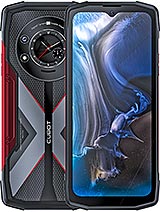
KingKong Star 2
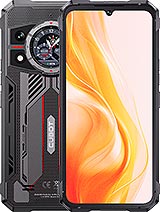
KingKong 11
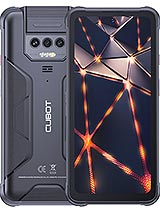
KingKong Power 5

Galaxy A17 4G