Doogee Blade 10 Ultra Energy review
If your phone needs to survive drops, dust, and water spray, or if you spend long stretches without charging, this phone earns its weight. For anyone else—casual users in cities, office workers, content creators—a lighter, faster mainstream phone at the same price will feel less like a sacrifice.
This review is written with AI assistance from Doogee’s published specifications and public benchmark data for the Doogee Blade 10 Ultra Energy, and the rating is spec-based. GoSolo does not physically test devices; where we estimate real-world behaviour such as battery life or charge time, we say so. How we rate phones.
Overview
The Blade 10 Ultra Energy is a rugged budget workhorse built for durability and longevity rather than speed or camera finesse. It survives drops, dust, and water with IP69K rating and throws in a 6150 mAh battery to match, making it sensible for field workers and outdoor users who need a phone that won't quit—just don't expect it to fly when multitasking or gaming.
Design & build
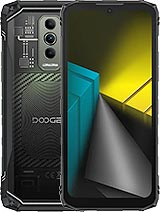
At 295g and 10.7mm thick, this phone is noticeably chunky and heavy by 2025 standards, but that heft is deliberate. The IP68/IP69K rating means it survives high-pressure water jets and 1.5 metres of submersion for half an hour—more robust than most rivals at twice the price. MIL-STD-810H certification adds military-grade durability for drops and vibration. Mohs level 5 screen protection will resist everyday scratches but is not Gorilla Glass; it's a fair compromise that keeps cost down. Dual nano-SIM and a dedicated microSD slot are practical touches. The trade-off is size: it's a brick in your pocket, but one that genuinely doesn't fear drops, dirt, or water.
Display
The 6.56-inch IPS LCD runs at 90Hz and 720p, which means text will look soft at 269 ppi—noticeably less sharp than a modern mid-range phone. In bright sunlight, the screen will wash out without explicit brightness specs listed; indoors and under clouds it remains legible. The 90Hz refresh is a bonus at this price and makes scrolling noticeably smoother than a 60Hz rival, though it's no flagship-level visual polish. The 20:9 aspect ratio is tall and narrow, suited to messaging and video but awkward for landscape gaming. For field work, outdoor navigation, or basic media consumption, it suffices; for photo editing or precision design work, the resolution is a limitation.
Performance
The Unisoc T7250 is entry-level: it handles messaging, email, YouTube, and Netflix at 1080p without strain, and light browsing is snappy enough. Multitasking stutters quickly, gaming beyond casual titles will lag, and video editing or heavy photo work will be slow. This chipset is fundamentally designed for practicality, not play. It's two generations behind current flagships and performs roughly on par with mid-range phones from 2022. For a worker who needs GPS navigation, voice calls, and email, it's fine. For someone who plays Genshin Impact or edits 4K footage on the phone, it will disappoint. Android 15 comes fresh, but the chipset won't sustain smooth performance in three years of OS updates.
Software
Android 15 is current and includes Google's latest security patches, though Doogee's track record on timely updates is mixed. The OS should feel responsive enough on the T7250 for day-to-day tasks, and there's no artificial bloat visible in the specs. Two years of security updates is standard for budget-rugged phones in this price bracket; three years would be ambitious. Given the durability of the hardware, some buyers might keep this phone for 4–5 years, which means update support is a practical concern worth asking Doogee directly about.
Camera
A 64MP sensor with f/1.8 and phase-detect autofocus sounds capable on paper, but real-world results will depend heavily on the image processor and lens quality—specs Doogee doesn't publish. 1080p video at 30fps is standard for budget phones and fine for clips and social media, though not cinema-grade. The 8MP front camera is adequate for video calls and selfies. Given the budget and rugged build, the camera here is functional but not a strength. You won't get detail-rich shots or stellar low-light performance; it's fit for documentation and casual photos, not for anyone who dreams of smartphone photography.
Battery & charging
The 6150 mAh battery is genuinely large and, combined with the modest 720p screen and entry-level chipset, should deliver 1.5 to 2 days of typical use, or a full day of heavier video and games. There's no explicit mention of fast charging (18W appears in some specs but not the official charging section), so assume standard 5–10W charging speed—plodding by current standards, but less important when the battery lasts so long. For workers in the field or on long trips without frequent access to power, the endurance is a real strength. The trade-off is charging time; you won't top up in 30 minutes.
Connectivity & value
No 5G, only LTE and dual-band Wi-Fi. That keeps cost and power consumption down, and LTE is reliable for browsing and streaming on most networks; you won't notice the speed difference unless you're in a 5G-rich urban area. GPS, NFC, Bluetooth 5.0, and FM radio cover most practical needs. At around 230 EUR, the Blade 10 Ultra Energy undercuts many flagships by a factor of three and offers durability specs that rivals often skip entirely. Compared to non-rugged phones in the same price range, you're paying a premium for IP69K and MIL-STD-810H certification; whether that's worth it depends entirely on your use case. For a casual buyer, this is overbuilt. For a construction worker, farmer, or outdoor guide, it's sensible.
Verdict
If your phone needs to survive drops, dust, and water spray, or if you spend long stretches without charging, this phone earns its weight. For anyone else—casual users in cities, office workers, content creators—a lighter, faster mainstream phone at the same price will feel less like a sacrifice.
- IP69K and MIL-STD-810H durability: survives high-pressure water jets, 1.5m submersion, drops, and dust without the fragility of typical phones
- 6150 mAh battery and modest hardware deliver 1.5–2 days of real use, making it practical for field work and travel without daily charging anxiety
- Dedicated microSD slot and 256GB base storage cover most users; expandable to 2TB for workers who record video or archive photos on the device
- 720p display is noticeably soft at 269 ppi and will wash out in bright sunlight; text and photos lack the crispness of a modern mid-range rival
- Entry-level Unisoc T7250 chipset handles basics but stutters under multitasking and won't sustain smooth performance beyond 2–3 years of OS updates
- Heavy at 295g and thick at 10.7mm; cramped in a pocket and awkward for one-handed use compared to standard 2025 flagships
Doogee Blade 10 Ultra Energy Key Specifications
The essentials at a glance. See the full spec sheet.
| Released | 2025 |
|---|---|
| Display | 6.56 inches, 103.4 cm2 (~74.8% screen-to-body ratio), IPS LCD, 90Hz |
| Resolution | 720 x 1612 pixels, 20:9 ratio (~269 ppi density) |
| Chipset | Unisoc T7250 (12 nm) |
| RAM & storage | 256GB 8GB RAM |
| Main camera | 64 MP, f/1.8, (wide), PDAF |
| Selfie camera | 8 MP, f/2.2, (wide) |
| Battery | 6150 mAh |
| Software | Android 15 |
| Dimensions | 172.7 x 80 x 10.7 mm (6.80 x 3.15 x 0.42 in) |
| Weight | 295 g (10.41 oz) |
| Durability | IP68/IP69K dust tight and water resistant (high pressure water jets; immersible up to 1.5m for 30 min) MIL-STD-810H compliant |
| Network | GSM / HSPA / LTE |
| NFC | Yes |
| USB | USB Type-C |
Doogee Blade 10 Ultra Energy FAQ
Common questions, answered from the spec sheet.
Does the Blade 10 Ultra Energy support 5G?
No. The Blade 10 Ultra Energy tops out at GSM / HSPA / LTE, without 5G.
What chipset does the Blade 10 Ultra Energy use?
The Blade 10 Ultra Energy runs on the Unisoc T7250 (12 nm).
What display does the Blade 10 Ultra Energy have?
A 6.56 inches, 103.4 cm2 (~74.8% screen-to-body ratio) IPS LCD, 90Hz, 720 x 1612 pixels, 20:9 ratio (~269 ppi density).
How big is the Blade 10 Ultra Energy battery?
The Blade 10 Ultra Energy has a 6150 mAh battery.
Does the Blade 10 Ultra Energy have NFC?
Yes, the Blade 10 Ultra Energy has NFC.
Is the Blade 10 Ultra Energy water resistant?
The Blade 10 Ultra Energy carries a IP68/IP69K dust tight and water resistant (high pressure water jets; immersible up to 1.5m for 30 min) MIL-STD-810H compliant rating.
Does the Blade 10 Ultra Energy support a microSD card?
Yes, the Blade 10 Ultra Energy supports expandable storage (microSDXC (dedicated slot)).
Alternatives to consider
If the Blade 10 Ultra Energy isn’t quite right, these are the closest calls.
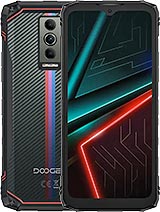
Blade 10 Energy
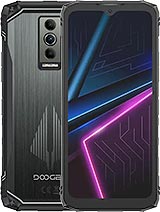
Blade 10 Pro Energy
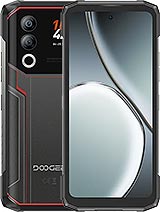
Blade20 Ultra
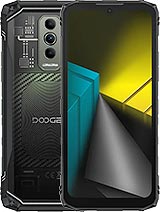
Blade 10 Ultra
N6 Lite