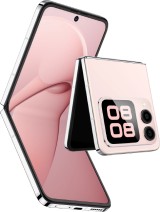
Doogee Blade GT Play review
The Blade GT Play suits outdoor and adventure users who value water resistance and battery endurance over gaming power and rapid charging. Anyone who prioritizes speed, zoom range, or flagship gaming should shop elsewhere.
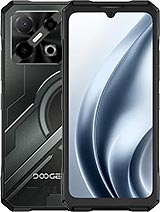
This review is based on Doogee’s published specifications and public benchmark data for the Doogee Blade GT Play, and the rating is spec-based. GoSolo does not physically test devices; where we estimate real-world behaviour such as battery life or charge time, we say so. How we rate phones.
Overview
The Blade GT Play is built for outdoor and adventure use, not daily flagship chasing: you get a rugged 6.72-inch display, two-day battery, and full IP69K submersion durability in a phone that's 10.5mm thin and 265g. The slow 18W charging and modest Dimensity 7025 performance are real trade-offs, but they're not the point of this design.
Design & build
Doogee has kept this thing remarkably slim at 10.5mm despite the large 6.72-inch frame and 5800mAh battery inside. At 265g it's not light, but it's not a brick either; the weight is distributed well enough that it doesn't feel heavy in pocket. The real story is durability: IP69K means it survives high-pressure water jets (car wash, pressure hose) and submerges to 1.5 meters for 30 minutes, while MIL-STD-810H certification and 1.5-meter drop resistance suggest it can handle genuine abuse. Mohs 6 screen protection won't match sapphire or gorilla glass, but it's good enough for typical scratches. If you're shopping a rugged phone in the 320 EUR range, the industrial-spec durability here is the headline—this is a phone built to be used in weather and rough terrain, not babied.
Display
The 6.72-inch IPS LCD with 120Hz refresh is large and bright enough for outdoor navigation and video work, and the 392ppi density looks reasonably sharp. IPS is no AMOLED: blacks are gray, contrast is flat, and direct sunlight makes it harder to read than flagships with OLED. But for a phone aimed at outdoor workers and adventurers, the screen does its job—big enough to read maps clearly, smooth enough that scrolling doesn't feel cheap, and the 1080p resolution keeps battery sip reasonable. You're not getting a cinema display, but you're getting a functional, durable screen that won't make you squint in daylight.
Performance
The Dimensity 7025 is a solid midrange chip that handles email, messaging, social media, and office work without lag. Everyday apps launch quickly and switching between tasks is snappy enough. Where it shows limits is gaming: Genshin Impact and Call of Duty will need lower graphics settings or frame drops to stay playable, and extended gaming sessions heat the phone slightly. If you're a casual mobile gamer or play lighter titles, you won't notice. Heavy gaming fans should temper expectations. Eight gigabytes of RAM keeps multitasking smooth, though you'll see the occasional background app kill on more than a dozen open windows. For a work phone or adventure device, the performance is fit for purpose; it's not a processor built for 3D gaming or video editing on the device.
Software
Android 14 ships clean and responsive on this hardware. Doogee's skin is light—no obnoxious bloatware or heavy customization that drains battery. Updates are the usual question mark with Doogee: don't expect the four or five years of guaranteed updates a Samsung or Google phone gets. Realistically, you'll see security patches and maybe one or two Android updates over the device's lifetime. For a rugged work phone, this is typical; the device is designed to be replaced after a few years of heavy field use anyway.
Camera
The 50MP main camera with f/1.8 aperture and PDAF captures solid daylight shots with plenty of detail and decent low-light performance thanks to the wide aperture. Colors are natural and the dual-LED flash works when you need it. What's missing is optical zoom: you get only digital crop, so zooming into a distant subject results in soft, pixelated results. The 2MP macro lens is a gimmick—modern phones handle close focus fine with the main sensor, and a dedicated 2MP camera adds almost nothing. The 16MP selfie camera is adequate for video calls and portraits. If you're shooting landscapes and wide outdoor scenes, the main camera performs well. If you're shooting events or wildlife where you need to reach out and grab detail, you'll be disappointed by the lack of 2x or 3x zoom.
Battery & charging
The 5800mAh battery is the phone's strongest card. On moderate use—mixed browsing, calls, messaging, maps—you'll easily see two days before hunting for power. Heavy video streaming or gaming pulls that down to one full day, but for a device aimed at outdoor workers and off-the-grid use, the two-day typical life is a genuine win. Charging, though, is a pain point: 18W wired tops out around 2 to 2.5 hours from dead, significantly slower than the 33W, 65W, or 100W you'll find on rival budget flagships. If you're working in the field all day, you'll need to charge overnight or plan your charge schedule carefully. The slow rate isn't a dealbreaker for a phone designed to last two days, but it's a tradeoff you should know about.
Value & verdict
At about 320 EUR, the Blade GT Play sits in a crowded midrange space where you can find faster chips, better cameras, and quicker charging. Those phones often won't survive a drop into a river or a high-pressure rinse, though. The value equation here is specific: if you're an outdoor worker, a hiker, a farmer, a construction site manager, or anyone who genuinely needs IP69K durability and multiday battery, the Blade GT Play is purpose-built and well-priced. If you're after a flagship feel or a gaming machine, look elsewhere. The design philosophy is pragmatic, not aspirational—this is a work phone that happens to be thin and reasonably stylish, not a flagship pretending to be tough.
Verdict
The Blade GT Play suits outdoor and adventure users who value water resistance and battery endurance over gaming power and rapid charging. Anyone who prioritizes speed, zoom range, or flagship gaming should shop elsewhere.
- 5800mAh battery easily lasts two days on moderate use, with no need to hunt for a charger in the field
- IP68/IP69K rating and MIL-STD-810H compliance mean you can drop it 1.5 meters or submerge it and keep working
- Large 6.72-inch 120Hz IPS screen is practical for navigation and maps on the go, and the 392ppi is sharp enough outdoors
- Slim 10.5mm build and 265g weight make it genuinely pocketable for a phone this size, unlike many rugged competitors
- 18W charging is slow by 2025 standards; rivals in this price bracket hit 33W or faster, so plan 2.5 hours or more from empty
- Dimensity 7025 struggles with demanding games and heavy multitasking; everyday apps are fine, but Genshin Impact and similar need compromises
- No optical zoom on the 50MP camera; distant subjects require harsh cropping or you accept soft, blown-up results
Doogee Blade GT Play Key Specifications
The essentials at a glance. See the full spec sheet.
| Released | 2025, June |
|---|---|
| Display | 6.72 inches, 109.0 cm2 (~73.1% screen-to-body ratio), IPS LCD, 120Hz |
| Resolution | 1080 x 2400 pixels, 20:9 ratio (~392 ppi density) |
| Chipset | Mediatek Dimensity 7025 (6 nm) |
| RAM & storage | 256GB 8GB RAM |
| Main camera | 50 MP, f/1.8, (wide), PDAF 2 MP (macro) |
| Selfie camera | 16 MP, f/2.3, (wide) |
| Battery | 5800 mAh |
| Charging | 18W wired |
| Software | Android 14 |
| Dimensions | 178.5 x 83.5 x 10.5 mm (7.03 x 3.29 x 0.41 in) |
| Weight | 265 g (9.35 oz) |
| Durability | IP68/IP69K dust tight and water resistant (high pressure water jets; immersible up to 1.5m for 30 min) Drop resistant up to 1.5m MIL-STD-810H compliant |
| Network | GSM / HSPA / LTE / 5G |
| NFC | Yes |
| USB | USB Type-C 2.0 |
Doogee Blade GT Play FAQ
Common questions, answered from the spec sheet.
Does the Blade GT Play support 5G?
Yes. The Blade GT Play supports 5G networks.
What chipset does the Blade GT Play use?
The Blade GT Play runs on the Mediatek Dimensity 7025 (6 nm).
What display does the Blade GT Play have?
A 6.72 inches, 109.0 cm2 (~73.1% screen-to-body ratio) IPS LCD, 120Hz, 1080 x 2400 pixels, 20:9 ratio (~392 ppi density).
How big is the Blade GT Play battery?
The Blade GT Play has a 5800 mAh battery. Charging is rated at 18W wired.
Does the Blade GT Play have NFC?
Yes, the Blade GT Play has NFC.
Is the Blade GT Play water resistant?
The Blade GT Play carries a IP68/IP69K dust tight and water resistant (high pressure water jets; immersible up to 1.5m for 30 min) Drop resistant up to 1.5m MIL-STD-810H compliant rating.
Does the Blade GT Play support a microSD card?
Yes, the Blade GT Play supports expandable storage (microSDXC (uses shared SIM slot)).
Does the Blade GT Play have a headphone jack?
No, the Blade GT Play does not have a 3.5mm headphone jack.
Alternatives to consider
If the Blade GT Play isn’t quite right, these are the closest calls.
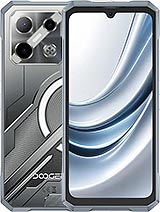
Blade GT Pro
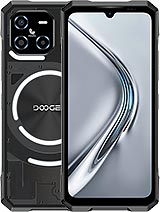
Blade GT
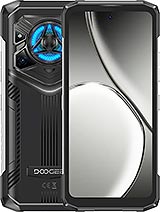
Blade20 Play
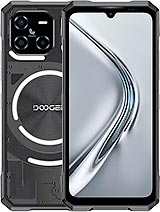
Blade GT Ultra
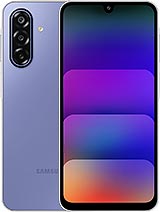
Galaxy F17 5G