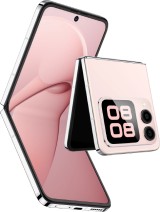
Doogee Blade GT Pro review
This phone is for outdoor workers, construction trades, and anyone whose job means regular drops, water, and dust—durability is the entire value proposition. If you want a balanced midrange phone that fits in your pocket and charges fast, buy elsewhere.
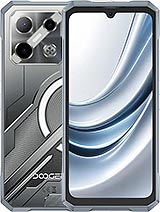
This review is based on Doogee’s published specifications and public benchmark data for the Doogee Blade GT Pro, and the rating is spec-based. GoSolo does not physically test devices; where we estimate real-world behaviour such as battery life or charge time, we say so. How we rate phones.
Overview
The Blade GT Pro is a rugged mid-range phone built first for durability—IP69K, MIL-STD-810H, 1.5m drop rating—not specs. It delivers adequate everyday performance and a 5800mAh battery that lasts a full day, but slow 18W charging and a large 265g frame make it a deliberate choice for outdoor workers and those who value toughness over speed.
Design & Build
The Blade GT Pro announces its purpose the moment you hold it. At 265g and 10.5mm thick, it is considerably heavier and chunkier than modern flagship phones, which is not accidental. The industrial frame and reinforced chassis are built to absorb impacts that would shatter conventional handsets. The IP69K rating—withstanding high-pressure water jets and immersible to 1.5m for 30 minutes—plus MIL-STD-810H military compliance and 1.5m drop resistance, make this phone genuinely fit for outdoor work, construction sites, agriculture, or any role where phones routinely get wet, muddy, or dropped. This is not marketing hyperbole; it is a deliberate design philosophy. The trade-off is obvious: size and weight. If you need a phone that fits in your pocket comfortably or works in one hand, this is not it. But if your phone must survive your job, the durability investment makes sense.
Display
The 6.72-inch IPS LCD runs at 120Hz and resolves to 1080 x 2400 pixels—enough to deliver a sharp 392ppi image that handles reading, video, and everyday apps without visible pixelation. The 20:9 aspect ratio makes it tall, which complements the industrial form factor and is typical for rugged phones. Brightness and outdoor legibility are not detailed in the spec sheet, so field performance in harsh sunlight remains uncertain, but the Mohs level 6 screen protection is modest—not sapphire, not Gorilla Glass, but functional. For a phone that will spend time in dusty or sandy environments, the protection rating matters more than the ppi count. The 120Hz refresh is noticeably smoother than 60Hz for scrolling and navigating work apps, and that matters over eight hours on a construction site.
Performance
The Mediatek Dimensity 7025 is a mainstream midrange chip. It handles email, messaging, video calls, light navigation, and everyday app use without stuttering. The 12GB RAM ensures multitasking remains smooth, and the 512GB storage is generous. You will not struggle with real-world apps like Slack, Google Workspace, or mapping tools. However, do not expect rapid gaming performance or smooth 4K video editing. The GPU is modest, and demanding 3D games will tax this chip. For a rugged phone aimed at field workers, tradespeople, and outdoor professionals, this is more than adequate—you are not buying this to stream heavy games, but to reliably run productivity and safety apps all day.
Software
Android 14 provides a standard experience. Doogee's interface has historically been light on bloat compared to some custom skins, and 12GB RAM should keep things responsive even if the phone accumulates a year of apps and updates. No other software details are provided, so expect standard Android behavior and security patches that depend on Doogee's commitment to support. For a rugged phone, the concern is less about flashy software and more about long-term security and OS updates. Given the durability focus, this phone may well outlast typical flagship support cycles, so firmware longevity matters.
Camera
The 100MP main sensor with f/1.8 aperture and PDAF should capture detail in good light, and the 8MP ultrawide at 112 degrees is useful for landscapes and group shots on a job site. The 2MP macro lens adds versatility but is modest compared to dedicated macro setups. The camera system handles the basics, but the real limitation is video: 1440p@30fps is now behind the curve for this price tier. By mid-2025, rivals at 340 EUR often offer 4K recording. Autofocus specifics are not listed, which is a red flag for a 100MP sensor—slow or hunting focus would undermine the megapixel count. The 32MP front camera handles video calls adequately. For construction documentation, field surveys, or safety logs, the setup is workable, but do not expect flagship-level zoom or low-light magic.
Battery & Charging
The 5800mAh battery paired with the Dimensity 7025 and 120Hz display delivers roughly 6 to 8 hours of screen-on time with moderate use—enough for a full working day if you are not constantly streaming video or gaming. This is one of the phone's genuine strengths for outdoor work. However, 18W charging is the weakness. From zero to 100% takes about 3 to 4 hours, which is slow even for midrange standards. In 2025, 30W to 50W charging at this price is common, and the Blade GT Pro falls well behind. If your job means limited access to power, the solid battery carries you through; if you need to top up quickly during a lunch break, you will be frustrated. There is no wireless charging, which is standard for rugged phones but worth noting.
Value & Verdict
At 340 EUR, the Blade GT Pro positions itself as a rugged workhorse, not a balanced flagship alternative. The IP69K and MIL-STD-810H credentials alone justify a premium over a conventional phone if durability is non-negotiable. If you drop your phone regularly, work in wet or dusty environments, or need industrial-grade build quality, this is a smart investment. If you are buying based on raw performance, camera quality, or charging speed, better options exist at this price. The large form factor and slow charging are genuine friction points for everyday convenience, but they are the intentional byproducts of a phone engineered to survive abuse. Weigh your priorities: if the job demands toughness, the Blade GT Pro delivers it.
Verdict
This phone is for outdoor workers, construction trades, and anyone whose job means regular drops, water, and dust—durability is the entire value proposition. If you want a balanced midrange phone that fits in your pocket and charges fast, buy elsewhere.
- IP69K and MIL-STD-810H certifications with 1.5m water immersion and drop resistance make it genuinely tough for construction, agriculture, or field work where most phones would break
- 5800mAh battery delivers a full day of moderate use without stress, backed by a modest power draw from the Dimensity 7025
- 120Hz LCD display is smooth for scrolling and provides sharp visuals at 392ppi even at 1080p on the large 6.72-inch screen
- 12GB RAM and 512GB storage leave room for work apps and files without bottlenecking, plus microSDXC expansion
- 18W charging takes 3 to 4 hours for a full top-up, which is slow by 2025 standards and incompatible with quick midday top-ups
- At 265g and 10.5mm thick, it feels noticeably heavier and bulkier than typical flagship phones, making one-handed use and pocket carry less convenient
- 1440p@30fps video capture is behind rivals in this price band who now offer 4K, and camera autofocus quality is unspecified despite the 100MP sensor
Doogee Blade GT Pro Key Specifications
The essentials at a glance. See the full spec sheet.
| Released | 2025, June |
|---|---|
| Display | 6.72 inches, 109.0 cm2 (~73.1% screen-to-body ratio), IPS LCD, 120Hz |
| Resolution | 1080 x 2400 pixels, 20:9 ratio (~392 ppi density) |
| Chipset | Mediatek Dimensity 7025 (6 nm) |
| RAM & storage | 512GB 12GB RAM |
| Main camera | 100 MP, f/1.8, (wide), PDAF 8 MP, f/2.2, 112˚ (ultrawide) 2 MP (macro) |
| Selfie camera | 32 MP, f/2.3, (wide), 1/2.8" |
| Battery | 5800 mAh |
| Charging | 18W wired |
| Software | Android 14 |
| Dimensions | 178.5 x 83.5 x 10.5 mm (7.03 x 3.29 x 0.41 in) |
| Weight | 265 g (9.35 oz) |
| Durability | IP68/IP69K dust tight and water resistant (high pressure water jets; immersible up to 1.5m for 30 min) Drop resistant up to 1.5m MIL-STD-810H compliant |
| Network | GSM / HSPA / LTE / 5G |
| NFC | Yes |
| USB | USB Type-C 2.0 |
Doogee Blade GT Pro FAQ
Common questions, answered from the spec sheet.
Does the Blade GT Pro support 5G?
Yes. The Blade GT Pro supports 5G networks.
What chipset does the Blade GT Pro use?
The Blade GT Pro runs on the Mediatek Dimensity 7025 (6 nm).
What display does the Blade GT Pro have?
A 6.72 inches, 109.0 cm2 (~73.1% screen-to-body ratio) IPS LCD, 120Hz, 1080 x 2400 pixels, 20:9 ratio (~392 ppi density).
How big is the Blade GT Pro battery?
The Blade GT Pro has a 5800 mAh battery. Charging is rated at 18W wired.
Does the Blade GT Pro have NFC?
Yes, the Blade GT Pro has NFC.
Is the Blade GT Pro water resistant?
The Blade GT Pro carries a IP68/IP69K dust tight and water resistant (high pressure water jets; immersible up to 1.5m for 30 min) Drop resistant up to 1.5m MIL-STD-810H compliant rating.
Does the Blade GT Pro support a microSD card?
Yes, the Blade GT Pro supports expandable storage (microSDXC (uses shared SIM slot)).
Does the Blade GT Pro have a headphone jack?
No, the Blade GT Pro does not have a 3.5mm headphone jack.
Alternatives to consider
If the Blade GT Pro isn’t quite right, these are the closest calls.
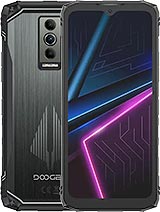
Blade 10 Pro Energy
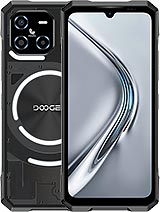
Blade GT
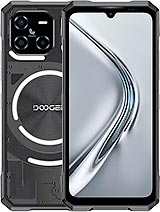
Blade GT Ultra

Note59 Pro+
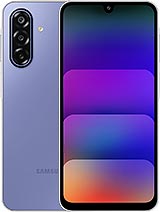
Galaxy F17 5G