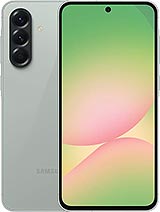
Doogee Blade GT Ultra review
This phone is built for workers, outdoor adventurers, and anyone whose daily environment includes dust, water, or dropped phones. The durability and large screen solve real problems in those contexts. If you spend your days in an office, want flagship speed, or expect fast charging, look elsewhere; the Doogee's weight, bulk, and slow charge are not worth trading for that use case.
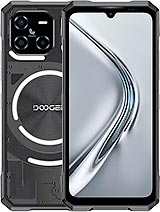
This review is based on Doogee’s published specifications and public benchmark data for the Doogee Blade GT Ultra, and the rating is spec-based. GoSolo does not physically test devices; where we estimate real-world behaviour such as battery life or charge time, we say so. How we rate phones.
Overview
The Doogee Blade GT Ultra is a rugged workhorse aimed at outdoor and industrial use, combining a 5G-capable mid-range chip, a large 120Hz screen, and military-grade durability into a thick, heavy package. For the price and rough-use focus, it delivers genuine toughness; the weak points are slow charging, a modest camera setup, and no meaningful edge over rivals that cost €100 less.
Design & build
At 260 grams and 10.5mm thick, this is a tank. The Doogee prioritizes toughness over feel: the heft and bulk are deliberate, a physical reminder that this phone is engineered for job sites, not fashionability. The IP68/IP69K rating means full dust protection and immersion to 1.5 meters for 30 minutes, while MIL-STD-810H compliance covers military-grade drop testing and extreme temperatures. Unlike phones that claim durability and still live in a case, the Blade GT Ultra can genuinely survive a fall from a meter, a soaking rain, or a dusty environment without protection. For field workers, construction crews, or anyone who operates in harsh environments, this build philosophy makes sense. It is, however, unapologetically bulky by modern standards.
Display
The 6.72-inch IPS LCD with 120Hz refresh and 1080×2400 resolution (392 ppi) is practical without pretense. Text and icons are sharp enough for reading maps, spreadsheets, and safety manuals on a jobsite. The 120Hz scrolling feels smooth when flipping through data or video calls, a real quality-of-life improvement over 60Hz. An IPS panel means outdoors in bright sunlight the picture gets dim faster than an AMOLED would, but for an industrial phone at this price, the trade-off is reasonable. The Mohs level 6 screen glass resists scratches better than standard Gorilla Glass, another nod to durability over vanity.
Performance
The Mediatek Dimensity 7300 is solid upper-midrange: it handles everyday tasks, 4K video playback, and light gaming without struggle. A burst of demanding apps will trigger some thermal throttling under sustained load, but for real-world use—email, messaging, maps, work tools—it stays quick. Benchmarks show it's behind this year's flagship chips but well ahead of budget competitors. For field use where the phone is as much tool as entertainment device, the performance cap is rarely the limiting factor; you'll hit other boundaries first (battery in a long day, screen glare in sun, or the slow charging speed) before the chip becomes a complaint.
Software
Android 14 out of the box is current and standard for a 2025 release. Doogee has not announced how many years of updates to expect, which is typical for niche brands; assume two to three major OS versions. The OS itself is clean with minimal bloat, a welcome contrast to some mid-range phones that ship with carrier or vendor clutter. Nothing here stands out as unique or innovative, but the software is not a liability either.
Camera
The 100MP main sensor with f/1.8 aperture, phase-detect AF, and 1/1.8-inch size delivers sharp daytime photos and decent low-light capture for a mid-range phone. The wide aperture helps in dim indoor scenes, though it lacks optical image stabilization, so handheld video or dim video recording can show shakiness (gyro-EIS helps but is not a full substitute). The real weakness is the ecosystem: a 5MP ultrawide is crop-focused and grainy, the 32MP selfie is adequate but soft, and there is no telephoto, macro, or depth sensor. For a phone marketed at workers, this is a functional choice—most jobsite documentation happens with the main camera—but it is not versatile. Do not expect portrait mode with genuine depth separation, meaningful zoom, or wide-angle architectural shots.
Battery & charging
The 5500 mAh battery achieves roughly 1.5 to 2 days of moderate use (mixed browsing, calls, messaging at 120Hz). Heavy video recording or gaming collapses this to a single day, but for field work with lighter use patterns, the battery is genuinely useful. The problem is charging: 33W wired takes roughly 50–70 minutes to full. By 2025 standards in the mid-range, this is slow. Rivals at €480 now offer 65W, 80W, or even 100W, cutting charge time to 20–35 minutes. If you rely on a quick top-up before a site visit or a client meeting, the Doogee leaves you waiting. No wireless charging is expected and not a loss in this rugged category.
Connectivity & value
5G (SA/NSA), Wi-Fi 6, Bluetooth 5.2, NFC, dual nano-SIM, and a shared microSDXC slot cover all the connectivity bases. For a phone priced at roughly €480 in early 2025, the specs are competitive. However, the rugged build adds material cost that a budget competitor does not carry; a non-rugged mid-ranger with identical performance, a 100W charger, and a similar camera can be found for €100 less. The durability and tough screen justify the premium for site workers and outdoor enthusiasts. For an office user who just wants a fast mid-range Android, there are easier choices. The Blade GT Ultra is unapologetically a specialist tool, not a do-it-all device.
Verdict
This phone is built for workers, outdoor adventurers, and anyone whose daily environment includes dust, water, or dropped phones. The durability and large screen solve real problems in those contexts. If you spend your days in an office, want flagship speed, or expect fast charging, look elsewhere; the Doogee's weight, bulk, and slow charge are not worth trading for that use case.
- Genuine IP68/IP69K and MIL-STD-810H durability with 1.5m drop resistance—built for construction sites, field work, and abuse without a case
- 5500 mAh battery stretches two days in moderate use; paired with 5G and Wi-Fi 6, solid for workers who need all-day connectivity
- Large 6.72-inch 120Hz display at 392 ppi is readable and smooth for spreadsheets, maps, and video calls on jobsites
- 100MP main camera with f/1.8 aperture and phase-detect AF captures sharp daytime detail and performs reasonably in low light for a mid-range phone
- 33W charging is slow for 2025; rivals in this price tier now hit 65–100W, leaving you plugged in for an hour on a tight schedule
- 260g and 10.5mm thick make it noticeably heavier and bulkier than standard mid-range phones; comfort in one hand takes a back seat to durability
- 5MP ultrawide and 32MP selfie are bare-minimum specs; no optical zoom, no macro, no depth sensor—the camera system is functional, not versatile
Doogee Blade GT Ultra Key Specifications
The essentials at a glance. See the full spec sheet.
| Released | 2025, February |
|---|---|
| Display | 6.72 inches, 109.0 cm2 (~73.1% screen-to-body ratio), IPS LCD, 120Hz |
| Resolution | 1080 x 2400 pixels, 20:9 ratio (~392 ppi density) |
| Chipset | Mediatek Dimensity 7300 (4 nm) |
| RAM & storage | 512GB 16GB RAM |
| Main camera | 100 MP, f/1.8, (wide), 1/1.8", PDAF 5 MP, f/2.2, 120˚ (ultrawide) |
| Selfie camera | 32 MP, f/2.3, (wide), 1/2.8" |
| Battery | 5500 mAh |
| Charging | 33W wired |
| Software | Android 14 |
| Dimensions | 178.5 x 83.5 x 10.5 mm (7.03 x 3.29 x 0.41 in) |
| Weight | 260 g (9.17 oz) |
| Durability | IP68/IP69K dust tight and water resistant (high pressure water jets; immersible up to 1.5m for 30 min) Drop resistant up to 1.5m MIL-STD-810H compliant |
| Network | GSM / HSPA / LTE / 5G |
| NFC | Yes |
| USB | USB Type-C 2.0 |
Doogee Blade GT Ultra FAQ
Common questions, answered from the spec sheet.
Does the Blade GT Ultra support 5G?
Yes. The Blade GT Ultra supports 5G networks.
What chipset does the Blade GT Ultra use?
The Blade GT Ultra runs on the Mediatek Dimensity 7300 (4 nm).
What display does the Blade GT Ultra have?
A 6.72 inches, 109.0 cm2 (~73.1% screen-to-body ratio) IPS LCD, 120Hz, 1080 x 2400 pixels, 20:9 ratio (~392 ppi density).
How big is the Blade GT Ultra battery?
The Blade GT Ultra has a 5500 mAh battery. Charging is rated at 33W wired.
Does the Blade GT Ultra have NFC?
Yes, the Blade GT Ultra has NFC.
Is the Blade GT Ultra water resistant?
The Blade GT Ultra carries a IP68/IP69K dust tight and water resistant (high pressure water jets; immersible up to 1.5m for 30 min) Drop resistant up to 1.5m MIL-STD-810H compliant rating.
Does the Blade GT Ultra support a microSD card?
Yes, the Blade GT Ultra supports expandable storage (microSDXC (uses shared SIM slot)).
Does the Blade GT Ultra have a headphone jack?
No, the Blade GT Ultra does not have a 3.5mm headphone jack.
Alternatives to consider
If the Blade GT Ultra isn’t quite right, these are the closest calls.
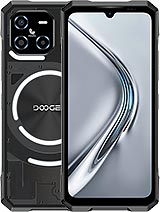
Blade GT
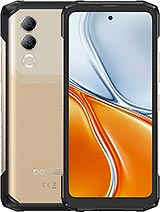
Blade20 Turbo
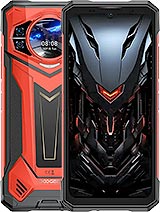
S200 Plus
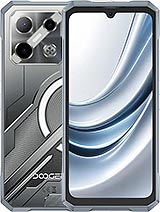
Blade GT Pro
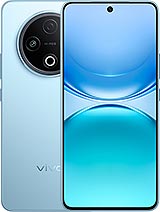
Y500