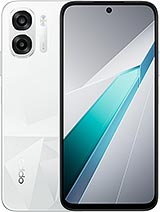
Doogee Blade20 review
The Blade20 suits fieldwork, outdoor duty, or anyone who runs a phone hard and cannot afford downtime for charging or repairs. If you want a smooth display, quick performance, or modern cameras, a mainstream budget phone offers more for your money.
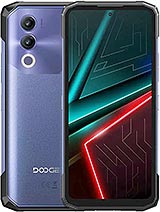
This review is based on Doogee’s published specifications and public benchmark data for the Doogee Blade20, and the rating is spec-based. GoSolo does not physically test devices; where we estimate real-world behaviour such as battery life or charge time, we say so. How we rate phones.
Overview
The Blade20 is a rugged budget workhorse built for field duty and rough handling, not speed or cameras. If you need a phone that survives dunking and drops and lasts two days on battery, the IP68/IP69K rating and 10300mAh pack deliver; if you want smooth gaming or a sharp screen, look elsewhere.
Design & Build
At 327 grams and 15.8mm thick, the Blade20 feels industrial—there is a heft and substance that signals durability over lightness. The phone is built to take abuse: IP68/IP69K certification means it survives 1.5 meters of dunking for 30 minutes and can handle high-pressure water jets, while MIL-STD-810H compliance proves it passes military-grade drop and shock tests. This is not a phone that will shatter if you drop it in a river or leave it on a construction site. For outdoor work, field crews, or anyone who runs a phone hard, that toughness is the entire point. The dual Nano-SIM slots and dedicated microSD slot show thoughtful design for people who actually use their phones for work across regions.
Display
The 6.6-inch IPS LCD panel runs at 720 x 1612 pixels (267ppi), a resolution that simply does not scale well at this screen size. Close-up text remains readable, but pixelation is visible if you look, and the screen lacks the crisp clarity of even budget 1080p phones. The 90Hz refresh makes scrolling feel smooth, but on an IPS panel the colors are muted and contrast is flat—blacks look gray. Mohs level 6 protection is modest; it resists scratches but is not gorilla glass. For a work phone where the display is secondary to durability, this trade-off makes sense. For everyday use where you want to enjoy what you are looking at, the screen quickly becomes a sore point.
Performance
The Unisoc T7200 is an entry-level processor that handles basic tasks—messaging, calling, browsing—without lag. Watching video is fine, and social media apps open without drama. The moment you push beyond that comfort zone, the phone begins to show strain. Heavier games stutter or refuse to run, multitasking with five or six apps open causes visible pauses, and any task involving heavy computation will make the phone feel sluggish. For someone texting and taking calls, this is adequate. For anyone expecting snappy app switching or any gaming beyond 2D casual titles, the Unisoc will disappoint. The 4GB of RAM compounds the issue; a more generous memory pool would help, but this is a cost-cutting measure baked into a 200 EUR device.
Software
Android 15 runs cleanly with no obvious bloatware visible in the spec sheet, and the side-mounted fingerprint sensor works as expected. Updates and long-term support are not mentioned; Doogee's track record on software longevity is mixed, so do not expect years of fresh OS versions. For a work phone, a stable base OS matters more than cutting-edge features, and on that measure the Blade20 delivers.
Camera
The 16MP main camera captures acceptable daytime shots on a small screen, but zoom in or study detail, and softness becomes obvious. The 1/2.8-inch sensor is small, and autofocus works but does not guarantee compelling results. The 2MP macro camera is a gimmick—modern macro lenses require room to work, and 2MP strips away any detail gained from close focus. Video tops out at 1080p at 30fps with no stabilization listed, which is basic; most phones at this price offer at least 4K recording now. For casual documentation or job-site photos, the cameras suffice. For anything demanding, the Blade20 falls short.
Battery & Charging
The 10300mAh battery is the phone's real strength. With a modest chipset and 720p screen, expect about 10–12 hours of screen-on time in mixed use, or stretch to a full second day if you are mostly calling and texting. For fieldwork without reliable charging, this is compelling. Charging, however, is the bottleneck: 18W wired power takes 80–110 minutes to fully charge from empty. That is slow by 2025 standards—rivals at this price routinely offer 30–65W—and means you cannot grab a quick 20-minute boost. Plan your charging around the Blade20, not the other way around.
Value & Verdict
At 200 EUR, the Blade20 is cheap, but its price is not the hook—the toughness is. Every euro saved on screen quality and processing power went into IP68/IP69K and MIL-STD-810H compliance, a trade that makes sense only if durability and battery life matter more to you than speed or image quality. A construction worker, outdoor guide, or anyone working in harsh conditions will find solid value here. A student or casual user shopping at this price will find better screens, faster chips, and modern cameras elsewhere for the same money.
Verdict
The Blade20 suits fieldwork, outdoor duty, or anyone who runs a phone hard and cannot afford downtime for charging or repairs. If you want a smooth display, quick performance, or modern cameras, a mainstream budget phone offers more for your money.
- 10300mAh battery stretches to a full two days on light use, a real asset for fieldwork or travel without constant charging.
- IP68/IP69K rating and MIL-STD-810H compliance mean it genuinely withstands dunking, high-pressure jets, and drops—not just marketing.
- Dedicated microSD slot allows storage expansion without sacrificing the SIM tray, practical for a work phone.
- Android 15 and side-mounted fingerprint sensor are straightforward and responsive for everyday unlocking.
- 720p display at 267ppi is noticeably pixelated on a 6.6-inch screen; text is readable but not crisp, and colors are flat compared to even mid-range phones.
- 18W charging for a 10300mAh battery means 80–110 minutes from empty—slow by current standards and impractical for urgent top-ups.
- Unisoc T7200 chipset handles texting and video but stutters on heavier apps and games; no gaming performance at any level.
Doogee Blade20 Key Specifications
The essentials at a glance. See the full spec sheet.
| Released | 2025, May |
|---|---|
| Display | 6.6 inches, 104.6 cm2 (~74.1% screen-to-body ratio), IPS LCD, 90Hz |
| Resolution | 720 x 1612 pixels, 20:9 ratio (~267 ppi density) |
| Chipset | Unisoc T7200 (12 nm) |
| RAM & storage | 128GB 4GB RAM |
| Main camera | 16 MP, (wide), 1/2.8", AF 2 MP (macro) |
| Selfie camera | 8 MP, f/2.2, (wide), 1/4.0" |
| Battery | 10300 mAh |
| Charging | 18W wired |
| Software | Android 15 |
| Dimensions | 174 x 81.2 x 15.8 mm (6.85 x 3.20 x 0.62 in) |
| Weight | 327 g (11.53 oz) |
| Durability | IP68/IP69K dust tight and water resistant (high pressure water jets; immersible up to 1.5m for 30 min) MIL-STD-810H compliant |
| Network | GSM / HSPA / LTE |
| NFC | Yes |
| USB | USB Type-C 2.0, OTG |
Doogee Blade20 FAQ
Common questions, answered from the spec sheet.
Does the Blade20 support 5G?
No. The Blade20 tops out at GSM / HSPA / LTE, without 5G.
What chipset does the Blade20 use?
The Blade20 runs on the Unisoc T7200 (12 nm).
What display does the Blade20 have?
A 6.6 inches, 104.6 cm2 (~74.1% screen-to-body ratio) IPS LCD, 90Hz, 720 x 1612 pixels, 20:9 ratio (~267 ppi density).
How big is the Blade20 battery?
The Blade20 has a 10300 mAh battery. Charging is rated at 18W wired.
Does the Blade20 have NFC?
Yes, the Blade20 has NFC.
Is the Blade20 water resistant?
The Blade20 carries a IP68/IP69K dust tight and water resistant (high pressure water jets; immersible up to 1.5m for 30 min) MIL-STD-810H compliant rating.
Does the Blade20 support a microSD card?
Yes, the Blade20 supports expandable storage (microSDXC (dedicated slot)).
Does the Blade20 have a headphone jack?
No, the Blade20 does not have a 3.5mm headphone jack.
Alternatives to consider
If the Blade20 isn’t quite right, these are the closest calls.
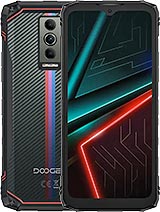
Blade 10 Energy
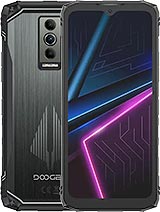
Blade 10 Pro Energy
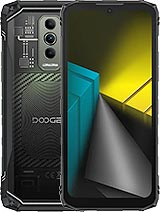
Blade 10 Ultra Energy
U11 Pro
N6