Doogee Blade20 Turbo review
The Blade20 Turbo is built for field teams, outdoor workers, and anyone who prioritizes battery endurance and rugged durability over screen quality and fast charging. If you use a phone mainly indoors, upgrade often, and care about display sharpness, you'll find more polished options at the same price.
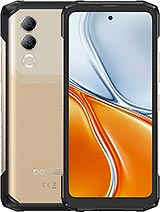
This review is written with AI assistance from Doogee’s published specifications and public benchmark data for the Doogee Blade20 Turbo, and the rating is spec-based. GoSolo does not physically test devices; where we estimate real-world behaviour such as battery life or charge time, we say so. How we rate phones.
Overview
The Doogee Blade20 Turbo trades pixel density and charging speed for what actually matters in its price bracket: a massive 10,300mAh battery, genuine rugged durability (IP68/IP69K + military certification), and 5G on a budget. For outdoor workers and anyone needing a phone that survives neglect, it's worth the compromise on display sharpness.
Design & build
At 333g and 15.8mm thick, the Blade20 Turbo is substantially heavier and chunkier than mainstream flagships, a direct consequence of its rugged engineering. But that heft comes with genuine value: IP68/IP69K rating plus MIL-STD-810H certification means it survives full dust sealing, submersion to 1.5 meters for 30 minutes, high-pressure water jets, and military-grade drop tests. For field workers, outdoor teams, or anyone who regularly exposes their phone to harsh conditions, this level of durability is rare at €290. The build feels industrial rather than refined, which is exactly the point. Dual Nano-SIM support and a dedicated microSD slot complete a practical, work-oriented package.
Display
The 6.6-inch IPS LCD runs at 720p, which is low enough to be worth noting. At 267 ppi, the screen stays readable—emails, messaging, and browsing are clear—but compared to the 1080p panels now standard even at mid-range, text and icons carry visible softness. For someone coming from a modern smartphone, the compromise is noticeable on close inspection. The 90Hz refresh rate does smooth out scrolling in apps and the browser compared to 60Hz, making everyday use feel less janky despite the lower pixel count. Mohs level 6 scratch resistance is reasonable but not standout.
Performance
The Mediatek Dimensity 7050 is a mainstream midrange chipset that handles messaging, social media, light photography, and navigation without strain. It runs Android 15 and everyday apps stay responsive. Intensive 3D games will need medium settings or reduced resolution to avoid lag, which is standard behavior for this tier. There are no surprises here: the chip matches expectations for a €290 phone in 2025. It pairs well with the 8GB of RAM for smooth multitasking.
Camera
The 50MP main sensor (f/1.8, 1/2.5-inch) with PDAF is the strongest part of the camera system. The wide aperture and large sensor size capture bright, well-detailed daylight shots and handle low light noticeably better than smaller sensors on budget phones. The 16MP selfie camera is adequate for video calls and casual portraits. But video is a weak point: 4K is locked at 30fps instead of the 60fps that rivals have offered since 2023. For a phone marketed as rugged and field-oriented, that limitation is oddly dated. The 2MP macro camera is filler.
Battery & charging
The 10,300mAh battery is the heart of the Blade20 Turbo. Combined with the efficient Dimensity 7050 and the low-density display, you can expect about 10–12 hours of screen time on moderate use, stretching to a full day-plus with lighter loads like calling and messaging. On truly light use (mostly texts, calls, and GPS), you can push close to two days before needing a charge. That is genuinely rare at this price and makes this phone appealing for anyone who works outdoors and can't charge daily. However, 33W wired charging is slow by 2025 standards. A full charge takes about 45–60 minutes; rivals at this price now hit 65–100W, cutting that time significantly. The phone supports reverse wireless charging, which is a minor convenience.
Software & features
Android 15 is current and supported, and the side-mounted fingerprint sensor works reliably. NFC is included for contactless payments. Wi-Fi 6 dual-band connectivity keeps data speeds solid on modern home networks, and 5G support across a wide range of bands (1, 3, 7, 8, 28, 38, 41, 77, 78 SA/NSA) means you can connect where networks have rolled out. GPS is multi-band (GPS, GLONASS, BDS, Galileo), which helps in challenging conditions. FM radio and a loudspeaker are present, adding minor utility. No headphone jack aligns with current norms.
Value & verdict
At €290, the Blade20 Turbo is not a hidden gem across all use cases—the 720p display and 33W charging age poorly against mainstream competition. But for specific needs, it is genuinely good value. The battery endurance, rugged durability, and 5G connectivity together solve a real problem for people working outdoors, in remote areas, or in conditions where phones get dropped, drenched, or used for days without a charger. If you are shopping for a typical daily driver that looks and feels modern, look elsewhere. If you need a phone that survives neglect and lasts two days on a single charge, the durability and battery make the screen sharpness and charging speed feel like acceptable trade-offs.
Verdict
The Blade20 Turbo is built for field teams, outdoor workers, and anyone who prioritizes battery endurance and rugged durability over screen quality and fast charging. If you use a phone mainly indoors, upgrade often, and care about display sharpness, you'll find more polished options at the same price.
- 10,300mAh battery with efficient Dimensity 7050 delivers genuine two-day endurance on light use and a full day on moderate use—rare at this price
- IP68/IP69K plus MIL-STD-810H certification: this phone survives submersion to 1.5m, high-pressure jets, and military-grade drops; few rivals at €290 match this durability
- 5G on dual-band Wi-Fi 6 for the money; most competitors in this bracket still rely on LTE or offer 5G without modern Wi-Fi
- Dedicated microSD slot for storage expansion, which remains useful for media and work files
- 720p resolution on a 6.6-inch screen means noticeable softness in text and UI compared to 1080p phones; 267 ppi is readable but feels behind the curve for 2025
- 33W charging is slow by current standards—rivals now hit 65–100W, so even a 45–60 minute full charge feels dated
- 4K video capped at 30fps instead of the 60fps that is standard on mid-range phones since 2023
Doogee Blade20 Turbo Key Specifications
The essentials at a glance. See the full spec sheet.
| Released | 2025, May |
|---|---|
| Display | 6.6 inches, 104.6 cm2 (~74.1% screen-to-body ratio), IPS LCD, 90Hz |
| Resolution | 720 x 1612 pixels, 20:9 ratio (~267 ppi density) |
| Chipset | Mediatek Dimensity 7050 (6 nm) |
| RAM & storage | 256GB 8GB RAM |
| Main camera | 50 MP, f/1.8, (wide), 1/2.5", PDAF 2 MP (macro) |
| Selfie camera | 16 MP, f/2.5, (wide), 1/3.1" |
| Battery | 10300 mAh |
| Charging | 33W wiredReverse wired |
| Software | Android 15 |
| Dimensions | 174 x 81.2 x 15.8 mm (6.85 x 3.20 x 0.62 in) |
| Weight | 333 g (11.75 oz) |
| Durability | IP68/IP69K dust tight and water resistant (high pressure water jets; immersible up to 1.5m for 30 min) MIL-STD-810H compliant |
| Network | GSM / HSPA / LTE / 5G |
| NFC | Yes |
| USB | USB Type-C 2.0, OTG |
Doogee Blade20 Turbo FAQ
Common questions, answered from the spec sheet.
Does the Blade20 Turbo support 5G?
Yes. The Blade20 Turbo supports 5G networks.
What chipset does the Blade20 Turbo use?
The Blade20 Turbo runs on the Mediatek Dimensity 7050 (6 nm).
What display does the Blade20 Turbo have?
A 6.6 inches, 104.6 cm2 (~74.1% screen-to-body ratio) IPS LCD, 90Hz, 720 x 1612 pixels, 20:9 ratio (~267 ppi density).
How big is the Blade20 Turbo battery?
The Blade20 Turbo has a 10300 mAh battery. Charging is rated at 33W wiredReverse wired.
Does the Blade20 Turbo have NFC?
Yes, the Blade20 Turbo has NFC.
Is the Blade20 Turbo water resistant?
The Blade20 Turbo carries a IP68/IP69K dust tight and water resistant (high pressure water jets; immersible up to 1.5m for 30 min) MIL-STD-810H compliant rating.
Does the Blade20 Turbo support a microSD card?
Yes, the Blade20 Turbo supports expandable storage (microSDXC (dedicated slot)).
Does the Blade20 Turbo have a headphone jack?
No, the Blade20 Turbo does not have a 3.5mm headphone jack.
Alternatives to consider
If the Blade20 Turbo isn’t quite right, these are the closest calls.
Blade 10 Pro Energy
Blade 10 Ultra Energy
Blade GT
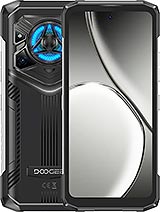
Blade20 Play
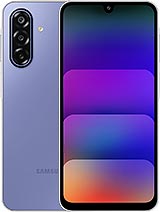
Galaxy F17 5G