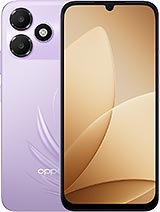
Doogee Blade20 Ultra review
It suits field workers, outdoor professionals, and people who destroy phones regularly and need a device that survives neglect. Anyone prioritizing camera quality, fast charging, or a sharp display should look at a conventional mid-range phone instead; you will get better everyday performance and screen quality for the same price."
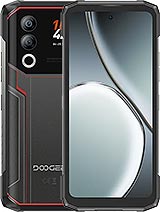
This review is based on Doogee’s published specifications and public benchmark data for the Doogee Blade20 Ultra, and the rating is spec-based. GoSolo does not physically test devices; where we estimate real-world behaviour such as battery life or charge time, we say so. How we rate phones.
Overview
A rugged workhorse built to absorb punishment, the Blade20 Ultra trades performance and screen clarity for durability and battery life. It suits field workers and travel backups, but anyone doing more than messaging and video playback will find the Unisoc chip and 267ppi display quickly underwhelming.
Design & build
At 326 grams and 15.8 mm thick, the Blade20 Ultra is genuinely heavy—roughly a third heavier than modern flagships—but that mass exists for a reason. The phone carries MIL-STD-810H certification and an IP68/IP69K rating, meaning it survives immersion to 1.5 meters for half an hour, can handle pressure-jet washing, and shrugs off drops that would destroy typical phones. The secondary 1.54-inch rear display is a nice quirk for quick notifications without flipping the device, though hardly essential. This is a phone engineered for construction sites, outdoor work, and severe neglect, not for pocket elegance.
Display
The 6.6-inch IPS LCD runs at 90Hz, which keeps scrolling reasonably smooth, but the 720×1612 resolution yields a bare 267 pixels per inch. At arm's length, text and icons lack sharpness compared to phones costing half as much. Mohs level 6 glass prioritizes scratch resistance over the clarity and brightness you'd get from modern gorilla glass, a deliberate trade-off for a device expected to spend its life in harsh environments. The 74% screen-to-body ratio reflects the robust bezels needed for structural rigidity. For office work or media consumption, this display feels dated; for work in dust, sun, and rain, it is fit for purpose.
Performance
The Unisoc T7250 is entry-level silicon designed for budget 4G phones, not for multitasking or gaming. Messaging apps, social media, video playback, and web browsing all work without lag, but opening heavy apps or switching between many at once exposes the limits of the dual Cortex-A75 cores and Mali-G57 GPU. Gaming, video editing, and intensive photo processing are out of scope. By 2025 standards, this is slower than mid-range phones at the same price point, a conscious sacrifice on Doogee's part to prioritize battery efficiency and durability. It is honest about what it is: a work phone for calls, emails, and media, not a pocket computer.
Software
Android 14 ships clean and uncluttered, a rarity from Doogee's earlier days. The side-mounted fingerprint sensor is responsive. Software feels stable on light workloads. Given the entry-level chip, there is no performance software issues, just a glass ceiling on what the hardware can do. Updates are a question mark; Doogee's track record on timely patches is mixed, so assume this phone will lag behind mainstream flagships on security releases.
Camera
The 50MP main sensor with f/1.8 aperture and autofocus captures decent daylight photos when conditions favor it. The sensor is large enough (1/2.5-inch) to let in reasonable light, and HDR processing adds detail in backlit scenes. In poor light or at dusk, results soften and noise creeps in. The real shortcoming is video: 1080p@30fps only, no 4K option. For a phone released in 2025, this is restrictive. The 8MP front camera is adequate for video calls but nothing more. If video quality matters to you at all, this phone will disappoint.
Battery & charging
The 10,300 mAh cell is enormous and benefits from the efficient entry-level chip; expect 1.5 to 2 days of real-world mixed use before needing a charge. That endurance is its strongest selling point and justifies the weight. Charging at 18W is slow by today's standards—rivals at this price have moved to 33W and beyond—and takes 60 to 90 minutes to fill from empty. Reverse charging lets you top up another device, a nice touch for people in remote areas. For a work phone that sits on the charger overnight, the slow charging is forgivable; for anyone accustomed to 30-minute top-ups, it is a step backward.
Connectivity & value
The phone supports 19 LTE bands, dual-band Wi-Fi 5, NFC, GPS with four satellite systems, and FM radio. There is no 5G, so data speeds cap at LTE levels—fine for browsing and social media, weak for bulk downloads or real-time streaming on congested networks. The 512GB storage with microSDXC expansion is generous. At around 230 EUR, the Blade20 Ultra costs more than mid-range phones with better performance and displays, but you are paying for extreme durability and battery life. For field workers, outdoor guides, or anyone who regularly destroys phones, the value calculus flips. For a secondary device or backup, it makes sense. For your main phone if you care about performance, a modern display, or fast video, look elsewhere.
Verdict
It suits field workers, outdoor professionals, and people who destroy phones regularly and need a device that survives neglect. Anyone prioritizing camera quality, fast charging, or a sharp display should look at a conventional mid-range phone instead; you will get better everyday performance and screen quality for the same price."
- Genuinely rugged: IP68/IP69K and MIL-STD-810H certified survive real drops, water, dust, and pressure cleaning
- Exceptional battery life, 1.5 to 2 days per charge, a direct result of the efficient chip and huge 10,300mAh cell
- Rear display is a thoughtful differentiator for checking notifications without opening the phone
- 18W charging is slow by 2025 standards; rivals at this price now charge at 33W or faster
- No 4K video recording, only 1080p@30fps, limiting quality for anyone who records regularly
- Screen resolution at 267ppi feels soft and dated; the rugged glass prioritizes durability over clarity
Doogee Blade20 Ultra Key Specifications
The essentials at a glance. See the full spec sheet.
| Released | 2025, May |
|---|---|
| Display | 6.6 inches, 104.6 cm2 (~74.1% screen-to-body ratio), IPS LCD, 90Hz |
| Resolution | 720 x 1612 pixels, 20:9 ratio (~267 ppi density) |
| Chipset | Unisoc T7250 (12 nm) |
| RAM & storage | 512GB 8GB RAM |
| Main camera | 50 MP, f/1.8, (wide), 1/2.5", AF |
| Selfie camera | 8 MP, f/2.2, (wide), 1/4.0" |
| Battery | 10300 mAh |
| Charging | 18W wiredReverse wired |
| Software | Android 14 |
| Dimensions | 174 x 81.2 x 15.8 mm (6.85 x 3.20 x 0.62 in) |
| Weight | 326 g (11.50 oz) |
| Durability | IP68/IP69K dust tight and water resistant (high pressure water jets; immersible up to 1.5m for 30 min) MIL-STD-810H compliant |
| Network | GSM / HSPA / LTE |
| NFC | Yes |
| USB | USB Type-C 2.0, OTG |
Doogee Blade20 Ultra FAQ
Common questions, answered from the spec sheet.
Does the Blade20 Ultra support 5G?
No. The Blade20 Ultra tops out at GSM / HSPA / LTE, without 5G.
What chipset does the Blade20 Ultra use?
The Blade20 Ultra runs on the Unisoc T7250 (12 nm).
What display does the Blade20 Ultra have?
A 6.6 inches, 104.6 cm2 (~74.1% screen-to-body ratio) IPS LCD, 90Hz, 720 x 1612 pixels, 20:9 ratio (~267 ppi density).
How big is the Blade20 Ultra battery?
The Blade20 Ultra has a 10300 mAh battery. Charging is rated at 18W wiredReverse wired.
Does the Blade20 Ultra have NFC?
Yes, the Blade20 Ultra has NFC.
Is the Blade20 Ultra water resistant?
The Blade20 Ultra carries a IP68/IP69K dust tight and water resistant (high pressure water jets; immersible up to 1.5m for 30 min) MIL-STD-810H compliant rating.
Does the Blade20 Ultra support a microSD card?
Yes, the Blade20 Ultra supports expandable storage (microSDXC (dedicated slot)).
Does the Blade20 Ultra have a headphone jack?
No, the Blade20 Ultra does not have a 3.5mm headphone jack.
Alternatives to consider
If the Blade20 Ultra isn’t quite right, these are the closest calls.
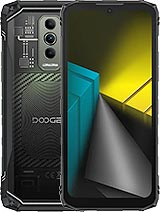
Blade 10 Ultra Energy
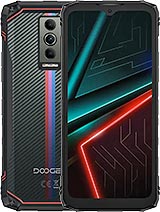
Blade 10 Energy
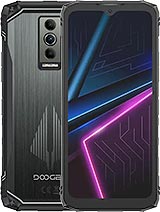
Blade 10 Pro Energy
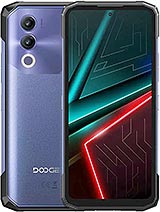
Blade20
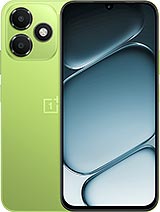
N6 Lite