Doogee DK10 review
The DK10 suits fieldworkers and outdoor enthusiasts who need a phone that survives rough treatment and charges in minutes, not someone chasing camera quality or software longevity. Skip it if you value camera video capability, design refinement, or a predictable update roadmap.
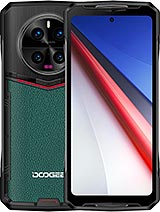
This review is based on Doogee’s published specifications and public benchmark data for the Doogee DK10, and the rating is spec-based. GoSolo does not physically test devices; where we estimate real-world behaviour such as battery life or charge time, we say so. How we rate phones.
Overview
The Doogee DK10 is a rugged mid-range phone built for fieldwork and outdoor use, not style. It prioritizes durability (IP68, MIL-STD-810H, 1.8m drop rating) and fast charging (120W) over last-gen performance, making it honest work gear rather than a flagship compromise.
Design & build
At 12.7 mm thick and angular, the DK10 reads more worksite tool than fashion object. The Kevlar Black and Emerald Green finishes hint at its intended audience. What matters here is not aesthetics but the actual ruggedness: IP68 waterproofing up to 1.5 metres for 30 minutes, MIL-STD-810H military certification, and verified drop resistance to 1.8 metres. These are not theoretical specs—they are the kind of numbers that mean you can take this into a muddy site, a rain-soaked job, or a rocky hike without babying it. Corning Gorilla Glass and dual-SIM nano slots round out the practical foundation.
Display
The 6.67-inch AMOLED screen with 120 Hz refresh runs smooth during scrolling and gaming. At 1080 x 2400 pixels and 395 ppi, the pixel density keeps text legible without magnification, and AMOLED blacks are genuinely black, not just dark. For a mid-range phone in 2024, this is solid—better than many budget rivals. Sunlight legibility is decent thanks to AMOLED's brightness curve, though you will still squint in direct noon sun like anyone else.
Performance
The Mediatek Dimensity 8020 is a capable mid-range chip that handles everyday apps, messaging, streaming, and light gaming without stutter. Expect smooth performance in most real-world scenarios. Heavy gaming at high settings or sustained CPU loads will see throttling—this is not a flagship processor and does not pretend to be. Multitasking is comfortable with 12 GB of RAM, and 512 GB storage is spacious, though the microSD slot is shared with the SIM tray, a minor inconvenience if you swap cards often.
Software
Android 13 is already two generations old by mid-2024 standards. Doogee's track record on updates is spotty, so do not expect a swift jump to Android 14 or beyond. Security patches matter more on a budget-to-mid brand, and there is no indication here that they will arrive on any schedule. For a work phone, this is less critical than for a daily driver, but it is worth noting that you are not buying into a well-maintained software lifecycle.
Camera
The quad setup is tailored to fieldwork, not Instagram. The 50 MP main sensor with f/2.0 aperture and phase-detection autofocus captures sharp stills in daylight. The 16 MP 4x optical telephoto is the real differentiator—true zoom without digital sacrifice, useful for inspections or distant subjects. The 123-degree ultrawide covers broad scenes, and the 64 MP night-vision camera with dual infrared lights is niche but genuine; you can actually see in zero light, which matters for security rounds or dark sites. Video tops out at 4K 30fps for the main camera and 1440p for selfies, both underwhelming for a 2024 device. Expect good stills, limited video ambition.
Battery & charging
The 5150 mAh battery yields about 6 to 8 hours of screen-on time under moderate use—messaging, browsing, social media without gaming marathons. A full workday is achievable; heavy users will need an evening top-up. The headline feature is the 120W wired charging, which fills the tank from zero in roughly 20 to 30 minutes, meaning you can squeeze a full battery into a lunch break. The 50W wireless charging is also present, a rare pairing and useful if you dock overnight. Reverse wired charging lets you top up other devices in a pinch, though it is more novelty than necessity. Charging speed alone sets this apart from rivals.
Connectivity & verdict
Comprehensive 5G coverage across global bands, Wi-Fi 6, Bluetooth 5.1, dual-SIM, NFC, and FM radio mean you are covered for most networks and use cases. USB Type-C is standard, though it is USB 2.0, not the faster 3.0 you might expect. GPS with L1+L5 and multi-system support keeps positioning accurate in challenging terrain. This phone is purpose-built for field operators, construction workers, outdoor guides, and anyone whose phone takes mud, water, and falls as part of the job. If you need true ruggedness with fast charging and a telephoto zoom, the DK10 earns its place. If you want the latest camera tech, sleek design, or years of software support, look to mainstream brands.
Verdict
The DK10 suits fieldworkers and outdoor enthusiasts who need a phone that survives rough treatment and charges in minutes, not someone chasing camera quality or software longevity. Skip it if you value camera video capability, design refinement, or a predictable update roadmap.
- 120W wired charging reaches a full battery in under 30 minutes, and 50W wireless is also available—rarely seen together at this price
- IP68 rating plus MIL-STD-810H certification and 1.8m drop resistance mean it actually survives rough sites and wet conditions, not just marketing
- 4x optical telephoto zoom handles real distance work without resorting to digital zoom and quality loss
- AMOLED 120Hz display at 395 ppi stays sharp and responsive, while the 5150 mAh battery runs a full work day on moderate use
- Dimensity 8020 is a mid-range chip; it handles apps and casual gaming fine, but sustained demanding tasks will throttle
- 1080p main camera video and 1440p selfie feel dated for a 2024 phone; rivals at this tier now shoot 4K across all lenses
- No weight listed in the spec sheet, which for a rugged phone often means it is heavier than typical flagships—a real concern for all-day carry
Doogee DK10 Key Specifications
The essentials at a glance. See the full spec sheet.
| Released | 2024, February 28 |
|---|---|
| Display | 6.67 inches, 107.4 cm2 (~71.1% screen-to-body ratio), AMOLED, 120Hz |
| Resolution | 1080 x 2400 pixels, 20:9 ratio (~395 ppi density) |
| Chipset | Mediatek Dimensity 8020 (6 nm) |
| RAM & storage | 512GB 12GB RAM |
| Main camera | 50 MP, f/2.0, (wide), 1/1.31", PDAF 16 MP, f/2.5, (telephoto), 1/3.1", PDAF, 4x optical zoom 50 MP, f/2.2, 123˚ (ultrawide) 64 MP, f/1.8, (night vision), 2 infrared night vision lights |
| Selfie camera | 50 MP, f/2.5, (wide), 1/2.76" |
| Battery | 5150 mAh |
| Charging | 120W wired50W wirelessReverse wired |
| Software | Android 13 |
| Dimensions | 181.7 x 83.1 x 12.7 mm (7.15 x 3.27 x 0.5 in) |
| Durability | IP68 dust tight and water resistant (immersible up to 1.5m for 30 min) Drop resistant up to 1.8m MIL-STD-810H compliant |
| Network | GSM / CDMA / HSPA / LTE / 5G |
| NFC | Yes |
| USB | USB Type-C 2.0, OTG |
Doogee DK10 FAQ
Common questions, answered from the spec sheet.
Does the DK10 support 5G?
Yes. The DK10 supports 5G networks.
What chipset does the DK10 use?
The DK10 runs on the Mediatek Dimensity 8020 (6 nm).
What display does the DK10 have?
A 6.67 inches, 107.4 cm2 (~71.1% screen-to-body ratio) AMOLED, 120Hz, 1080 x 2400 pixels, 20:9 ratio (~395 ppi density).
How big is the DK10 battery?
The DK10 has a 5150 mAh battery. Charging is rated at 120W wired50W wirelessReverse wired.
Does the DK10 have NFC?
Yes, the DK10 has NFC.
Is the DK10 water resistant?
The DK10 carries a IP68 dust tight and water resistant (immersible up to 1.5m for 30 min) Drop resistant up to 1.8m MIL-STD-810H compliant rating.
Does the DK10 support a microSD card?
Yes, the DK10 supports expandable storage (microSDXC (uses shared SIM slot)).
Does the DK10 have a headphone jack?
No, the DK10 does not have a 3.5mm headphone jack.
Alternatives to consider
If the DK10 isn’t quite right, these are the closest calls.
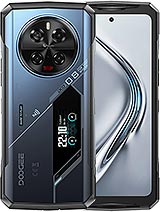
V40 Pro
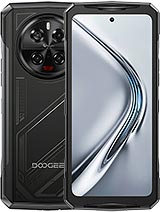
V40
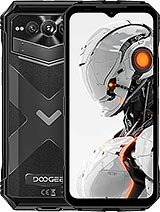
V Max Pro
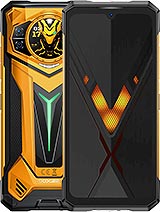
S200 Ultra
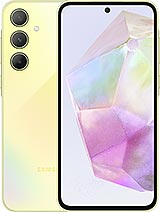
Galaxy A35 5G