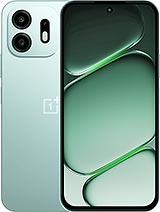
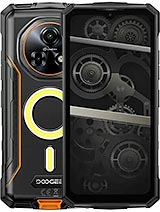
Doogee Fire 3 Ultra review
The Fire 3 Ultra suits outdoor workers and field crews who need a phone that survives falls, dust, and water, and runs two days between charges. Anyone else shopping at this price should look elsewhere: the chipset and screen feel rough compared to midrange phones designed for general use.
This review is written with AI assistance from Doogee’s published specifications and public benchmark data for the Doogee Fire 3 Ultra, and the rating is spec-based. GoSolo does not physically test devices; where we estimate real-world behaviour such as battery life or charge time, we say so. How we rate phones.
Overview
The Doogee Fire 3 Ultra is a rugged everyday phone built for outdoor work, with a massive 13,000 mAh battery, IP68/IP69K armor, and genuine drop resistance. Its weakness is a dated Helio G81 chip paired with a 720p screen that feel rough for the 2025 era, making it best suited for field workers rather than anyone wanting a modern mobile experience.
Design & build
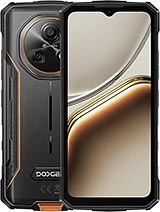
At 395 grams and 18.7 mm thick, the Fire 3 Ultra is a heavyweight with serious durability credentials. The IP68/IP69K rating means full dust sealing plus immersion to 1.5 meters for 30 minutes, and MIL-STD-810H compliance adds military-grade drop resistance from the same height. A dedicated rear flashlight is a practical touch for work sites. The 6.6-inch frame feels substantial in hand, almost a workbench phone rather than a pocket device. There is no question this is built to survive rough environments where most phones would fail. That durability comes at a cost to everyday feel: it is chunky, it is heavy, and if you move between construction sites and coffee shops, the heft will be noticeable.
Display
A 6.6-inch IPS LCD screen at 720 by 1612 pixels yields 267 ppi, which is entry-level clarity for 2025. Text is legible at normal viewing distance, but pixelation creeps in at close range, and photos lack the crispness rivals offer at this price. The 90 Hz refresh rate is a modest improvement over 60 Hz, though on a mid-range Mediatek chip it makes little practical difference. At 400 nits the panel is bright enough outdoors, which matters for outdoor workers. The 20:9 aspect ratio stretches the frame usefully tall, but the overall experience feels several years behind current midrange standards.
Performance
The Mediatek Helio G81 is mainstream entry-level silicon that handles daily tasks without struggle—messaging, email, light web browsing all run smoothly. The 8 GB of RAM ensures multitasking does not stumble. However, gaming is where limits show quickly. Casual titles work, but 3D games beyond that demand the phone to throttle. The Mali-G52 MC2 GPU is modest, and sustained heavy work (video editing, large file transfers) will cause noticeable slowdown. For a phone released in late 2025, this is a year or two behind the curve. It is the price Doogee pays for durability—industrial phones do not typically pack flagship chips.
Software
Android 15 arrives clean and current. Doogee's overlay appears light, avoiding the bloat some budget brands pile on. Updates will likely lag compared to major OEMs, but for a specialized work phone that is an accepted trade. The side-mounted fingerprint sensor is responsive and works well with one hand, common on larger phones and practical here.
Camera
A 48 MP f/1.8 main sensor with autofocus handles general shooting competently, capturing decent detail in daylight with the dual-LED flash for backup. However, 1440p video is the ceiling—no 4K, no meaningful zoom, no ultra-wide option. The 8 MP selfie camera is purely functional. For a work phone this is adequate; for anyone who cares about photo quality, rivals at this price deliver noticeably more. Night mode relies on software processing, not dedicated hardware, so low-light output is ordinary. This feels like a camera designed to document rather than impress.
Battery & charging
The 13,000 mAh cell is genuinely large, promising about two days of moderate use with light gaming and streaming cutting into that. For a phone targeting field workers who spend long hours away from power, this is a defining strength. The trade-off is 18W charging, which reaches full from empty in roughly two hours—slow by 2025 standards, where 65W and beyond is common even at midrange. For overnight charging this matters little, but day-to-day top-ups will test patience.
Value & verdict
At around 250 EUR, the Fire 3 Ultra occupies a specific niche: outdoor workers, construction crews, and extreme-environment users who value durability and battery life over performance and screen clarity. The durability is real and uncompromising. The battery endurance is a genuine advantage for long shifts off-grid. Where it falters is everywhere else—the Helio G81 feels dated, the 720p screen does not match modern expectations, and 18W charging is too slow. If your phone needs to survive drops, dust, and water, and spend two days between charges, this phone earns its place. If you want a phone that also feels modern, responsive, and pleasant to use, step up to a conventional midrange device. The Fire 3 Ultra asks you to accept genuine compromises for specific strengths.
Verdict
The Fire 3 Ultra suits outdoor workers and field crews who need a phone that survives falls, dust, and water, and runs two days between charges. Anyone else shopping at this price should look elsewhere: the chipset and screen feel rough compared to midrange phones designed for general use.
- 13,000 mAh battery with proven two-day endurance, a genuine advantage for field workers
- Full IP68/IP69K armor plus MIL-STD-810H compliance and 1.5 m drop resistance, real durability for rough environments
- Clean Android 15, responsive side-mounted fingerprint sensor, dedicated rear flashlight
- Mediatek Helio G81 is entry-level for 2025, stuttering on 3D games and heavy multitasking
- 720p screen at 267 ppi feels low by current standards, pixelation visible at normal viewing distance
- 18W charging is slow, taking about two hours from empty—modern rivals at this price hit 65W or higher
Doogee Fire 3 Ultra Key Specifications
The essentials at a glance. See the full spec sheet.
| Released | 2025, December |
|---|---|
| Display | 6.6 inches, 104.6 cm2 (~71.9% screen-to-body ratio), IPS LCD, 90Hz, 400 nits |
| Resolution | 720 x 1612 pixels, 20:9 ratio (~267 ppi density) |
| Chipset | Mediatek Helio G81 (12 nm) |
| RAM & storage | 256GB 8GB RAM |
| Main camera | 48 MP, f/1.8, (wide), AF |
| Selfie camera | 8 MP, f/2.0, (wide) |
| Battery | 13000 mAh |
| Charging | 18W wired |
| Software | Android 15 |
| Dimensions | 176.5 x 82.5 x 18.7 mm (6.95 x 3.25 x 0.74 in) |
| Weight | 395 g (13.93 oz) |
| Durability | IP68/IP69K dust tight and water resistant (high pressure water jets; immersible up to 1.5m for 30 min) Drop resistant up to 1.5m MIL-STD-810H compliant Dedicated flashlight (on the back) |
| Network | GSM / HSPA / LTE |
| NFC | Yes |
| USB | USB Type-C |
Doogee Fire 3 Ultra FAQ
Common questions, answered from the spec sheet.
Does the Fire 3 Ultra support 5G?
No. The Fire 3 Ultra tops out at GSM / HSPA / LTE, without 5G.
What chipset does the Fire 3 Ultra use?
The Fire 3 Ultra runs on the Mediatek Helio G81 (12 nm).
What display does the Fire 3 Ultra have?
A 6.6 inches, 104.6 cm2 (~71.9% screen-to-body ratio) IPS LCD, 90Hz, 400 nits, 720 x 1612 pixels, 20:9 ratio (~267 ppi density).
How big is the Fire 3 Ultra battery?
The Fire 3 Ultra has a 13000 mAh battery. Charging is rated at 18W wired.
Does the Fire 3 Ultra have NFC?
Yes, the Fire 3 Ultra has NFC.
Is the Fire 3 Ultra water resistant?
The Fire 3 Ultra carries a IP68/IP69K dust tight and water resistant (high pressure water jets; immersible up to 1.5m for 30 min) Drop resistant up to 1.5m MIL-STD-810H compliant Dedicated flashlight (on the back) rating.
Does the Fire 3 Ultra support a microSD card?
Yes, the Fire 3 Ultra supports expandable storage (microSDXC (dedicated slot)).
Does the Fire 3 Ultra have a headphone jack?
Yes, the Fire 3 Ultra has a 3.5mm headphone jack.
Alternatives to consider
If the Fire 3 Ultra isn’t quite right, these are the closest calls.
Fire 7 Ultra
Fire 5 Ultra
Fire 5 Pro
Fire 7 Pro
Play20A