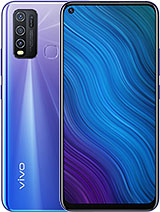
Doogee N55 review
The N55 suits light users on a tight budget who spend most time on messaging, social media, and web browsing and want a phone that will run two days between charges without fussing. Anyone who games, edits photos regularly, or travels and depends on fast charging should look elsewhere—the processing power and charging speed will disappoint quickly.
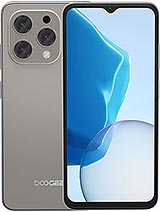
This review is based on Doogee’s published specifications and public benchmark data for the Doogee N55, and the rating is spec-based. GoSolo does not physically test devices; where we estimate real-world behaviour such as battery life or charge time, we say so. How we rate phones.
Overview
The Doogee N55 is a budget phone built around a large 6.56-inch 90Hz screen and a sturdy 5150mAh battery, designed for light daily use rather than performance. At €120 it competes on endurance and screen size, not features or speed, and hits that target squarely.
Design & build
At 186g and 8.6mm thick, the N55 is remarkably slim and light for its 6.56-inch screen size. The balance between thinness and durability is almost accidental—the phone feels insubstantial in hand rather than premium, and Mohs level 6 protection (roughly equivalent to tempered glass) is basic for 2024. Dual nano-SIM support is useful in regions with competing carriers, though the microSD slot shares a tray with one SIM, forcing a choice. The industrial aesthetic is anonymous, without the visual language of more costly Doogee models, but that works against wear and scratches if you don't fuss over looks.
Display
The 6.56-inch 90Hz IPS LCD screen is the phone's strongest selling point. Scrolling through apps and feeds feels noticeably smoother than 60Hz rivals, a tangible difference in day-to-day handling. At 350 nits, brightness is adequate indoors and in shade, though direct sunlight will force a viewing angle adjustment. The real weakness is resolution: 720 × 1612 pixels squeezed across 6.56 inches yields only 269 ppi, leaving text and UI elements visibly coarse compared to budget competitors offering 1080p at similar prices. For someone with good eyesight, the softness becomes apparent within days.
Performance
The Unisoc T606 and 4GB RAM pairing is entry-level processing for 2024, capable of handling instant messaging, social media feeds, and web browsing without lag, but starting to stutter under multitasking load or with demanding apps. YouTube streaming at 1080p works fine; switching between five open apps or playing a 3D game will expose its limits quickly. The Mali-G57 GPU is not built for gaming. For a buyer who checks email, reads news, and scrolls TikTok, it will suffice; for anyone with heavier usage patterns, this phone will feel slow by the week's end.
Software
Android 14 launches out of the box, which is current and ensures access to the latest security patches and Play Store features at purchase time. Doogee's software skin appears minimal, without the bloat that sinks slower processors, a practical choice for this hardware tier. One-handed software utilities are sparse compared to Xiaomi or Samsung's budget lines, but there is no burden of pre-installed adware or unwanted subscriptions. Updates beyond security patches are unlikely to arrive frequently.
Camera
The 13MP main camera with f/2.2 aperture and autofocus captures daylight and well-lit indoor photos with adequate detail and color balance, neither excellent nor broken. Dual-LED flash helps indoors, though results in that harsh, flat look typical of budget phone flash. Low-light performance deteriorates quickly into visible noise. Video tops out at 1080p@30fps, which is functional but offers no room to crop or zoom in post-production. The 8MP selfie camera handles video calls acceptably. Overall, camera performance tracks with the price: competent for social-media snaps, mediocre for anything you want to keep.
Battery & charging
The 5150mAh battery is the true differentiator. With light to moderate use—social media, messaging, some video streaming—it easily pushes to a second day before needing power. This is genuinely impressive for €120 and outperforms rivals in the budget space that cluster around 4000–4500mAh. Charging is the trade-off: 10W wired charging takes roughly 2 to 2.5 hours from empty to full, making it a slow overnight affair rather than a coffee-break top-up. Budget phones at this price point now commonly offer 33W or faster; the N55's turtle pace feels out of step with 2024 standards and will frustrate anyone accustomed to half-hour charging.
Value & verdict
At €120, the Doogee N55 makes a clear bet: endurance and screen size matter more than raw speed or camera polish. It is honest about what it is—a light-duty daily driver for price-conscious buyers who tolerate LTE-only connectivity, modest processing power, and slow charging in exchange for a big screen and battery that lasts beyond a single day. The soft 720p display and sluggish processor are genuine drawbacks that will wear on power users, and the 10W charging is genuinely outdated by mid-2024 standards. Doogee's reputation in the global south for low-cost ruggedness carries some weight here, even though this model leans budget over durability.
Verdict
The N55 suits light users on a tight budget who spend most time on messaging, social media, and web browsing and want a phone that will run two days between charges without fussing. Anyone who games, edits photos regularly, or travels and depends on fast charging should look elsewhere—the processing power and charging speed will disappoint quickly.
- 5150mAh battery delivers roughly 1.5 days of mixed use, a genuine advantage over rivals at this price that often stop at 4000–4500mAh
- 90Hz IPS LCD screen with 350 nits brightness makes scrolling smooth and readable indoors; the 6.56-inch diagonal is generous for the money
- Runs Android 14 out of the box and includes practical touches like FM radio, dual SIM, and microSD expansion without removing the second SIM slot entirely
- 720p resolution on a 6.56-inch screen means 269 ppi—noticeably soft text and icons compared to 1080p budget phones at similar prices
- 10W charging is glacially slow by modern standards; rivals in this bracket now offer 33W or faster, cutting charge time in half
- Unisoc T606 and 4GB RAM struggle with anything beyond messaging, social media, and light video streaming
Doogee N55 Key Specifications
The essentials at a glance. See the full spec sheet.
| Released | 2024, May |
|---|---|
| Display | 6.56 inches, 103.4 cm2 (~83.3% screen-to-body ratio), IPS LCD, 90Hz, 350 nits |
| Resolution | 720 x 1612 pixels, 20:9 ratio (~269 ppi density) |
| Chipset | Unisoc T606 (12 nm) |
| RAM & storage | 128GB 4GB RAM |
| Main camera | 13 MP, f/2.2, (wide), AF |
| Selfie camera | 8 MP, f/2.2, (wide) |
| Battery | 5150 mAh |
| Charging | 10W wired |
| Software | Android 14 |
| Dimensions | 163.8 x 75.8 x 8.6 mm (6.45 x 2.98 x 0.34 in) |
| Weight | 186 g (6.56 oz) |
| Network | GSM / HSPA / LTE |
| NFC | No |
| USB | USB Type-C 2.0, OTG |
Doogee N55 FAQ
Common questions, answered from the spec sheet.
Does the N55 support 5G?
No. The N55 tops out at GSM / HSPA / LTE, without 5G.
What chipset does the N55 use?
The N55 runs on the Unisoc T606 (12 nm).
What display does the N55 have?
A 6.56 inches, 103.4 cm2 (~83.3% screen-to-body ratio) IPS LCD, 90Hz, 350 nits, 720 x 1612 pixels, 20:9 ratio (~269 ppi density).
How big is the N55 battery?
The N55 has a 5150 mAh battery. Charging is rated at 10W wired.
Does the N55 have NFC?
No, the N55 does not list NFC support.
Does the N55 support a microSD card?
Yes, the N55 supports expandable storage (microSDXC (uses shared SIM slot)).
Does the N55 have a headphone jack?
Yes, the N55 has a 3.5mm headphone jack.
Alternatives to consider
If the N55 isn’t quite right, these are the closest calls.
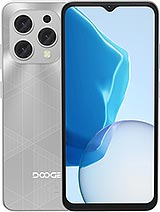
N55 Plus
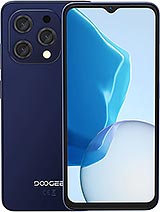
N55 Pro
T30S
S Cyber
Galaxy M06 5G