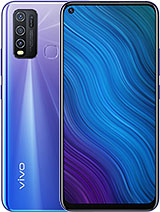
Doogee N55 Pro review
This phone suits someone who values battery endurance, keeps LTE coverage, and does not game or shoot often. Charge-hungry users and mobile photographers should look at a mid-range model with faster charging and a better camera sensor.
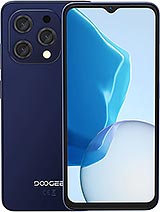
This review is based on Doogee’s published specifications and public benchmark data for the Doogee N55 Pro, and the rating is spec-based. GoSolo does not physically test devices; where we estimate real-world behaviour such as battery life or charge time, we say so. How we rate phones.
Overview
The Doogee N55 Pro is a light-use Android phone built around a modest Unisoc chip, 5150 mAh battery, and a 720p display. It suits buyers in regions with stable LTE who prioritize durability and all-day battery life over performance or camera quality.
Design & build
At 186 grams and 8.6 mm thick, the N55 Pro sits comfortably in one hand and slips easily into a pocket. The slim profile feels deliberate for a budget phone, and the 83% screen-to-body ratio suggests decent engineering in the bezel department. There is no mention of rubberized sides or a protected frame in the spec sheet, so assume modest durability rather than rugged—this is not a drop-tested workhorse. Nano-SIM dual slots mean regional flexibility, though microSD uses a shared slot, so you choose between dual SIM or expandable storage. For its price tier and release date, the industrial design is competent and forgettable; there is nothing here to excite or disappoint.
Display
The 6.56-inch IPS LCD sits at 720p resolution, a choice that keeps power draw low and ensures the 5150 mAh battery stretches a full day. At 269 ppi, text is sharp enough for reading and browsing at normal arm's length, though zoomed crops and fine details will pixelate if you hold the phone close. The 90Hz refresh rate smooths scrolling and web navigation noticeably compared to 60Hz panels, a genuine quality-of-life upgrade at this price. Brightness tops out at 350 nits, adequate indoors and legible in daylight but not brilliant—you will see sunlight washout if you are outdoors with high contrast content. Mohs level 6 protection (likely Gorilla Glass 3 or unbranded equivalent) resists scratches reasonably well but will chip and crack like any budget glass under real drops.
Performance
The Unisoc T606 is an entry-level octa-core processor that handles email, social media, browsing, and message apps without noticeable lag. Switch to a demanding mobile game, open a dozen browser tabs, or run multiple heavy apps in the background, and you will feel the limits—the Mali-G57 MP1 GPU and 6GB RAM are simply not built for sustained heavy lifting. For 2024, this sits decisively below the mid-range; think of it as "daily utility, not performance." Android 14 is up to date, which is a small win for software support, but a two-year-old flagship would outpace this phone by a factor of five in CPU and GPU throughput. The takeaway: if your day is messaging, navigation, shopping, and light streaming, you will not notice the gap. If you run three apps at once or play games beyond Candy Crush, you will.
Software
Android 14 ships out of the box, which is encouraging—Doogee did not cheap out on the OS version. There is no public changelog on what skin or custom UI overlay sits on top of stock Android, so assume light customization or bloatware is possible; this is typical for budget brands. Security patch velocity is unknown and likely slow compared to Samsung or Google, so updates may trickle rather than arrive on schedule. For a phone at this price, software responsiveness is decent enough that the UX does not feel sluggish, and the UI keeps out of your way.
Camera
The 13MP f/2.2 main sensor is a basic wide-angle camera with autofocus and dual LED flash. In bright daylight, it captures usable snapshots with acceptable color and detail, perfect for social media sharing at thumb size. Zoom into a photo, and pixelation and noise become visible quickly—this is not a phone for cropped or enlarged prints. Low-light shots are thin: the dual-LED flash will light a subject point-blank but wash out color and detail, and without optical stabilization, handheld night shots blur easily. Video maxes at 1080p@30fps, standard but unremarkable for 2024; no electronic or optical stabilization means panned footage will jitter noticeably. The 8MP selfie camera is adequate for video calls and casual self-portraits. Bottom line: this camera suits travelers snapping landmarks and food photos, not enthusiasts or anyone who shoots often after sunset.
Battery & charging
The 5150 mAh battery paired with a 720p display and modest chipset yields approximately 1.5 days of mixed use (8 to 10 hours of screen-on time in normal daily activity), or closer to two days if you are predominantly reading and messaging. That is above average for the price, and the headphone jack plus low power draw mean this phone can genuinely last through a short trip without anxiety. Charging is the weak point: 10W wired charging takes 2.5 to 3 hours from empty to full, a long haul by 2024 standards. Rivals at similar prices now push 33W, 65W, or higher, so the N55 Pro's charging speed feels stalled—you will need to plug in for an evening or overnight. There is no wireless charging, which is expected at this tier, but the charging delta versus competitors is the most concrete frustration here.
Value & verdict context
At roughly 140 EUR, the N55 Pro undercuts many mainstream brands and targets regions where budget Android dominates. The value proposition hinges on pragmatism: solid battery, thin design, microSD slot, headphone jack, LTE with broad band support (no 5G), and enough processor to keep a non-power-user happy. You do not get fast charging, a capable camera, premium materials, or flagship software support—those omissions are deliberate and baked into the price. For a buyer in a market with reliable LTE infrastructure who treats a phone as a tool (messaging, navigation, light work) rather than an entertainment hub or creative platform, this phone delivers predictable utility. A gamer or photo enthusiast should look elsewhere; so should anyone who charges their phone on a commute and needs it ready within 45 minutes. The N55 Pro is a phone that asks little of you and demands little of your time, which is precisely what a segment of the market needs.
Verdict
This phone suits someone who values battery endurance, keeps LTE coverage, and does not game or shoot often. Charge-hungry users and mobile photographers should look at a mid-range model with faster charging and a better camera sensor.
- 5150 mAh battery with 90Hz IPS display delivers a full day and a half on light to moderate use
- Headphone jack and microSD slot still present, rare for 2024
- Thin 8.6mm build and 186g weight make it pocket-friendly
- Quad-band GPS (GPS/GLONASS/BDS/GALILEO) locks position reliably
- 10W charging is slow—expect 2.5 to 3 hours to fill a 5150 mAh battery, lagging rivals by a wide margin
- Unisoc T606 and Mali-G57 MP1 struggle with anything beyond messaging, browsing, and light apps; 3D games and heavy multitasking will stutter
- 13MP camera is bare-bones: decent daylight snapshots only, weak in low light, and 1080p video at 30fps is standard for 2024 but lacks stabilization
Doogee N55 Pro Key Specifications
The essentials at a glance. See the full spec sheet.
| Released | 2024, May |
|---|---|
| Display | 6.56 inches, 103.4 cm2 (~83.3% screen-to-body ratio), IPS LCD, 90Hz, 350 nits |
| Resolution | 720 x 1612 pixels, 20:9 ratio (~269 ppi density) |
| Chipset | Unisoc T606 (12 nm) |
| RAM & storage | 256GB 6GB RAM |
| Main camera | 13 MP, f/2.2, (wide), AF |
| Selfie camera | 8 MP, f/2.2, (wide) |
| Battery | 5150 mAh |
| Charging | 10W wired |
| Software | Android 14 |
| Dimensions | 163.8 x 75.8 x 8.6 mm (6.45 x 2.98 x 0.34 in) |
| Weight | 186 g (6.56 oz) |
| Network | GSM / HSPA / LTE |
| NFC | No |
| USB | USB Type-C 2.0, OTG |
Doogee N55 Pro FAQ
Common questions, answered from the spec sheet.
Does the N55 Pro support 5G?
No. The N55 Pro tops out at GSM / HSPA / LTE, without 5G.
What chipset does the N55 Pro use?
The N55 Pro runs on the Unisoc T606 (12 nm).
What display does the N55 Pro have?
A 6.56 inches, 103.4 cm2 (~83.3% screen-to-body ratio) IPS LCD, 90Hz, 350 nits, 720 x 1612 pixels, 20:9 ratio (~269 ppi density).
How big is the N55 Pro battery?
The N55 Pro has a 5150 mAh battery. Charging is rated at 10W wired.
Does the N55 Pro have NFC?
No, the N55 Pro does not list NFC support.
Does the N55 Pro support a microSD card?
Yes, the N55 Pro supports expandable storage (microSDXC (uses shared SIM slot)).
Does the N55 Pro have a headphone jack?
Yes, the N55 Pro has a 3.5mm headphone jack.
Alternatives to consider
If the N55 Pro isn’t quite right, these are the closest calls.
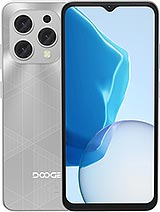
N55 Plus
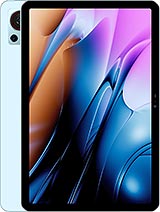
T30S
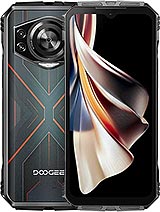
S Cyber
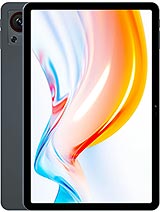
T30SE
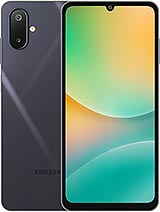
Galaxy M06 5G