Doogee Note 58 review
This phone suits people in regions with solid LTE who value all-day battery and dual SIM over speed and camera ambition, and who are willing to wait for slow charging. Anyone expecting zippy performance or fast charging should look elsewhere.

This review is based on Doogee’s published specifications and public benchmark data for the Doogee Note 58, and the rating is spec-based. GoSolo does not physically test devices; where we estimate real-world behaviour such as battery life or charge time, we say so. How we rate phones.
Overview
The Doogee Note 58 is a large-screen budget phone with a 6250 mAh battery and 90Hz LCD display, built for messaging and light streaming on a tight budget. The Unisoc T7250 chip and 10W charging hold it back from being a true daily workhorse, but the battery life and dual SIM setup make it useful in regions where LTE coverage is solid.
Design & Build
At 199 grams and 8.6 mm thick, the Note 58 is a bulky but manageable slab. The 6.75-inch frame stretches the phone to 168 mm in height, which feels unwieldy in one hand but fits the large-battery brief. Specs mention nothing about the case material or durability, only Mohs level 5 screen protection, which is basic scratches-and-drops territory. Dual SIM and microSDXC expansion (sharing the SIM slot) cover the bases for people who juggle two numbers or need storage beyond the 128 GB.
Display
The 6.75-inch IPS LCD runs at 90Hz and tops out at 450 nits, a respectable brightness for outdoor reading in most conditions but not effortless in direct sun. The 720 x 1600 resolution yields about 260 ppi, which is noticeably soft at normal viewing distance—text and icons lack the crispness you would expect from a phone released in 2025. This is the trade-off for fitting such a large screen at this price. Scrolling feels smooth enough thanks to the 90Hz refresh, but the low pixel density is the first thing you notice when you compare it side by side with any modern mid-range phone.
Performance
The Unisoc T7250 is an entry-level chip designed for light work: messaging, social media, web browsing, and video streaming. Pair it with 8 GB of RAM and it handles everyday apps without stuttering, but heavy multitasking and games will expose its limits. The Mali-G57 graphics are modest and do not scale well to demanding 3D workloads. If you are buying this phone expecting to run recent games or switch between ten apps without lag, you will be frustrated. For casual users in regions where the alternative is a significantly older phone or going without, the T7250 is adequate, but it is not the chipset to stretch any ambitions on.
Software
Android 15 ships out of the box, which gives Doogee credit for not shipping a stale OS. Whether the Note 58 will see timely updates is another question entirely. Doogee's track record on security patches and major OS upgrades is thin compared to established brands, so expect this phone to fall behind within a year or two. For a €120 device, software longevity is a real concern, especially if you rely on it for banking or payments via NFC.
Camera
The 16 MP main camera with f/2.2 and autofocus takes sharp daylight photos and captures 1080p video at 30 fps. The dual-LED flash and HDR help in mixed lighting, and panorama mode is a nice touch. Low-light performance will be soft and noisy because the sensor and aperture are both modest. There is no ultrawide, telephoto, or macro lens, so framing is limited to what the single focal length allows. The 8 MP selfie camera at 720p video is functional but nothing more. For a budget phone, this camera set is honest work: it will not wow you, but it will not embarrass you either if the light is good.
Battery & Charging
The 6250 mAh battery is the phone's real hero. In moderate use—a mix of messaging, social apps, and video watching—expect to stretch past a full day, possibly toward 30 to 36 hours before hitting empty. Heavy video streaming will trim that down, but even then you should clear a full waking day. The problem is charging: 10W is painfully slow by 2025 standards. From empty to full takes roughly 2 to 2.5 hours on a quiet charge, so overnight plugging is the norm. At this price, rivals are pushing 30W or more, making the Note 58's charging feel like a genuine step back.
Value & Verdict
At about €120, the Note 58 occupies an odd corner of the market. It is cheap enough to appeal to budget shoppers in the global south and regions where LTE infrastructure is solid. The large battery, dual SIM, and NFC support add practical value for people who need one phone to last all day and handle two numbers. Android 15 is fresh, and the LCD screen, while low-res, is readable without backlight halo issues. Against the real alternatives at this price—typically last-gen budget phones or increasingly capable Chinese brands—the Note 58 competes on battery life and build size, not processing power or camera flair. The weak link is the processor and glacial charging, which means this is a phone for people who consciously accept slower performance in exchange for a larger screen and all-day battery.
Verdict
This phone suits people in regions with solid LTE who value all-day battery and dual SIM over speed and camera ambition, and who are willing to wait for slow charging. Anyone expecting zippy performance or fast charging should look elsewhere.
- 6250 mAh battery easily clears a full day and often stretches to 36 hours in mixed use
- Large 6.75-inch screen with dual SIM and microSDXC expansion suit people managing two numbers or need extra storage
- Android 15 out of the box, NFC for contactless payments, and GPS/GLONASS/BDS for reliable positioning
- 10W charging takes 2+ hours from empty, slower than rivals at this price who now offer 30W or higher
- Unisoc T7250 struggles with heavy multitasking and gaming, a real limitation for anyone beyond light daily tasks
- 720p resolution on a 6.75-inch screen looks soft and blurry compared to modern budget competitors
Doogee Note 58 Key Specifications
The essentials at a glance. See the full spec sheet.
| Released | 2025, September |
|---|---|
| Display | 6.75 inches, 110.0 cm2 (~84.5% screen-to-body ratio), IPS LCD, 90Hz, 450 nits |
| Resolution | 720 x 1600 pixels, 20:9 ratio (~260 ppi density) |
| Chipset | Unisoc T7250 (12 nm) |
| RAM & storage | 128GB 8GB RAM |
| Main camera | 16 MP, f/2.2, (wide), AF |
| Selfie camera | 8 MP, f/2.2, (wide) |
| Battery | 6250 mAh |
| Charging | 10W wired |
| Software | Android 15 |
| Dimensions | 168 x 77.5 x 8.6 mm (6.61 x 3.05 x 0.34 in) |
| Weight | 199 g (7.02 oz) |
| Network | GSM / HSPA / LTE |
| NFC | Yes |
| USB | USB Type-C |
Doogee Note 58 FAQ
Common questions, answered from the spec sheet.
Does the Note 58 support 5G?
No. The Note 58 tops out at GSM / HSPA / LTE, without 5G.
What chipset does the Note 58 use?
The Note 58 runs on the Unisoc T7250 (12 nm).
What display does the Note 58 have?
A 6.75 inches, 110.0 cm2 (~84.5% screen-to-body ratio) IPS LCD, 90Hz, 450 nits, 720 x 1600 pixels, 20:9 ratio (~260 ppi density).
How big is the Note 58 battery?
The Note 58 has a 6250 mAh battery. Charging is rated at 10W wired.
Does the Note 58 have NFC?
Yes, the Note 58 has NFC.
Does the Note 58 support a microSD card?
Yes, the Note 58 supports expandable storage (microSDXC (uses shared SIM slot)).
Does the Note 58 have a headphone jack?
No, the Note 58 does not have a 3.5mm headphone jack.
Alternatives to consider
If the Note 58 isn’t quite right, these are the closest calls.
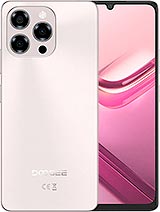
Note 58 Pro

Note 59

Note59 Pro+
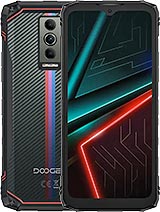
Blade 10 Energy
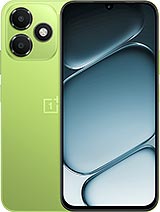
N6 Lite