Doogee Note59 Pro+ review
This phone suits users in power-constrained environments who prioritize endurance and carry comfort over screen quality and responsiveness. Anyone with regular charging access or expectations for a sharp display should look elsewhere.

This review is based on Doogee’s published specifications and public benchmark data for the Doogee Note59 Pro+, and the rating is spec-based. GoSolo does not physically test devices; where we estimate real-world behaviour such as battery life or charge time, we say so. How we rate phones.
Overview
The Note59 Pro+ is an affordable Android phone built around a huge battery and light weight, offering two days of real-world use and effortless one-handed carry. The trade-offs—low-resolution 720p display, glacial 18W charging, and entry-level performance—make it a fine fit for users in markets with inconsistent power, but a tough sell anywhere else.
Design & build
At 199g and 8.6mm thick, the Note59 Pro+ is genuinely light—a notable quality when you're carrying it every day. The dimensions are sensible for a 6.75-inch device, though the Panda Glass protection is a weak point: Mohs level 6 scratches more readily than Gorilla Glass, and the absence of an IP rating means dust and water exposure poses real risk. For a phone banking on long battery life for outdoor use in emerging markets, the fragility is an odd design choice. The materials feel ordinary, nothing that suggests durability beyond the obvious.
Display
The 6.75-inch IPS LCD with 120Hz refresh and 450 nits brightness is a mixed picture. The 120Hz makes scrolling smooth, and the brightness is enough for outdoor readability even in glare. But 720p resolution (260 ppi) on this diagonal is visibly pixelated the moment you hold it close to read text or look at images. By 2025 standards, where budget phones routinely hit 1080p or higher, this feels like a deliberate cost cut. The screen will not disappoint if you're checking email and messaging, but anyone expecting crisp text or photo viewing will notice the limitation.
Performance
The Unisoc T8200 is an entry-level octa-core chipset; it handles everyday apps, web browsing, and video streaming without lag, but struggles with sustained demands. Mobile gaming beyond casual titles, heavy multitasking, and video editing will reveal the limits. For most buyers in emerging markets using this phone for calls, social media, and light work tasks, it is sufficient. Comparison to a mid-range Snapdragon or MediaTek would be unfair here—this is not a speed demon, and anyone expecting flagship responsiveness will be frustrated. The 12GB RAM helps offset some constraints, but the core processing power remains the limiting factor.
Software
Android 15 arrives out of the box, which is current and welcome. Doogee's track record with timely updates is patchy, so long-term software support remains a gamble. The dual-SIM setup and support for microSDXC (via a shared slot) add practical flexibility for users who swap carriers or need more storage. No bloatware is mentioned, which is a small win for a budget brand. Overall, the software package is functional rather than polished.
Camera
The 50MP main shooter with f/1.8 aperture and phase autofocus captures satisfying everyday photos and handles low light better than smaller sensors. The dual-LED flash aids night shooting, and HDR is on board. Video is locked to 4K@30fps, which is adequate but not smooth for action or pans. The 8MP selfie camera is basic—usable for video calls and casual selfies, but fine detail is limited. For a phone at this price and positioning, the rear camera is a genuine strength; the selfie is what you'd expect from the budget tier.
Battery & charging
The 6250 mAh battery is the anchor of this phone. With moderate daily use—messaging, calls, some browsing, light video—expect two days between charges. Heavy gaming or video streaming shortens that to one day or less. In markets where grid power is unreliable or charging infrastructure is sparse, this endurance is a real asset. The 18W charging speed is where the value proposition falters. Two hours to fully charge is slow by modern standards; most competitors at this price now push 65W or faster, meaning a Doogee phone left overnight stays plugged in significantly longer. For someone without reliable access to power, the large battery makes up for the slow top-up. For everyone else, it is a frustration.
Value & verdict-context
The Note59 Pro+ is transparently built around one strong premise: multi-day battery life in a lightweight package. Everything else—low-res screen, slow charging, entry-level chip, basic selfie camera—either supports that goal or is sacrificed for it. In markets with sporadic electricity or where carry comfort matters (field workers, long commutes without charging access), this phone earns its place. Anywhere with reliable power, nearby chargers, and user expectations for screen clarity and app responsiveness, the trade-offs become hard to justify. At typical sub-$300 pricing, it competes against phones offering faster charging, sharper displays, and equivalent battery life; buyers must weigh whether light weight and two-day endurance outweigh visual and speed compromises.
Verdict
This phone suits users in power-constrained environments who prioritize endurance and carry comfort over screen quality and responsiveness. Anyone with regular charging access or expectations for a sharp display should look elsewhere.
- 6250 mAh battery delivers realistic two-day endurance with typical use (messaging, calls, browsing), a genuine edge in power-constrained regions
- Extremely light at 199g with an 8.6mm frame; easier to carry all day than most phones in this size range
- 50MP main camera with f/1.8 aperture and phase autofocus captures decent low-light shots and daylight detail without complexity
- Android 15 out of the box with dual SIM and microSDXC expansion for flexibility
- 720p resolution at 260 ppi looks pixelated up close; a notable visual compromise in 2025, especially on a 6.75-inch screen
- 18W charging takes 90 minutes to two hours—markedly slower than the 65W+ standard now common in this price band
- Unisoc T8200 is entry-level; handles everyday tasks but falters on demanding games and sustained multitasking
Doogee Note59 Pro+ Key Specifications
The essentials at a glance. See the full spec sheet.
| Released | 2025, April |
|---|---|
| Display | 6.75 inches, 110.0 cm2 (~84.5% screen-to-body ratio), IPS LCD, 120Hz, 450 nits |
| Resolution | 720 x 1600 pixels, 20:9 ratio (~260 ppi density) |
| Chipset | Unisoc T8200 (6 nm) |
| RAM & storage | 512GB 12GB RAM |
| Main camera | 50 MP, f/1.8, (wide), 1/2.5", PDAF |
| Selfie camera | 8 MP, f/2.2, (wide), 1/4.0" |
| Battery | 6250 mAh |
| Charging | 18W wiredReverse wired |
| Software | Android 15 |
| Dimensions | 168 x 77.5 x 8.6 mm (6.61 x 3.05 x 0.34 in) |
| Weight | 199 g (7.02 oz) |
| Network | GSM / HSPA / LTE / 5G |
| NFC | Yes |
| USB | USB Type-C 2.0, OTG |
Doogee Note59 Pro+ FAQ
Common questions, answered from the spec sheet.
Does the Note59 Pro+ support 5G?
Yes. The Note59 Pro+ supports 5G networks.
What chipset does the Note59 Pro+ use?
The Note59 Pro+ runs on the Unisoc T8200 (6 nm).
What display does the Note59 Pro+ have?
A 6.75 inches, 110.0 cm2 (~84.5% screen-to-body ratio) IPS LCD, 120Hz, 450 nits, 720 x 1600 pixels, 20:9 ratio (~260 ppi density).
How big is the Note59 Pro+ battery?
The Note59 Pro+ has a 6250 mAh battery. Charging is rated at 18W wiredReverse wired.
Does the Note59 Pro+ have NFC?
Yes, the Note59 Pro+ has NFC.
Does the Note59 Pro+ support a microSD card?
Yes, the Note59 Pro+ supports expandable storage (microSDXC (uses shared SIM slot)).
Does the Note59 Pro+ have a headphone jack?
No, the Note59 Pro+ does not have a 3.5mm headphone jack.
Alternatives to consider
If the Note59 Pro+ isn’t quite right, these are the closest calls.
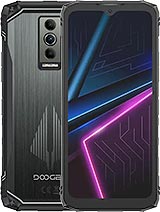
Blade 10 Pro Energy

Note 59 Pro+
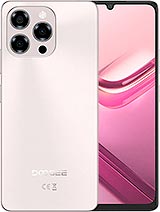
Note 58 Pro
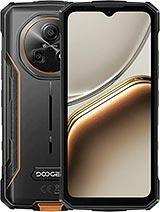
Fire 3 Pro
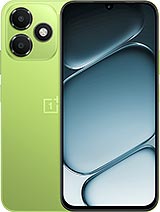
N6 Lite