Doogee R20 review
The R20 is for field teams, site workers, and outdoor enthusiasts who need a day-long battery and genuine durability over sleekness or gaming prowess. Anyone looking for a general-purpose tablet with class-leading performance or display quality should look elsewhere.
This review is based on Doogee’s published specifications and public benchmark data for the Doogee R20, and the rating is spec-based. GoSolo does not physically test devices; where we estimate real-world behaviour such as battery life or charge time, we say so. How we rate phones.
Overview
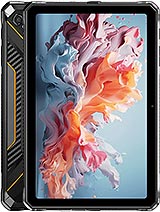
The Doogee R20 is a rugged 10.4-inch tablet built for field work and outdoor use, with military-grade durability (IP68/IP69K, MIL-STD-810H) and a massive 21600 mAh battery that lasts a full working day. Its modest Helio G99 processor and 224 ppi display mean it prioritizes toughness and battery life over screen sharpness or gaming, making it practical for workers and teams who need reliability on the job site rather than performance or visual finesse.
Design & durability
At 931 g and 18 mm thick, the R20 is built like a tool, not a lifestyle object. The heft comes from IP68/IP69K sealing (dust-tight, submersible to 1.5 meters for 30 minutes, and rated for high-pressure water jets) and MIL-STD-810H military compliance that covers drop, thermal shock, and vibration standards. This is not a tablet you baby; it is one you throw into a backpack on a construction site or take into muddy field conditions. The 5:3 aspect ratio on a 10.4-inch frame gives more room for landscape work apps than the typical 16:10 tablet, and the stylus support, dual SIM slots, and FM radio suggest a device built for crews and fieldwork, not consumers. If you need it to survive the job, the R20 delivers. If you want light and svelte, this is not your tablet.
Display
A 10.4-inch IPS LCD running 1200 x 2000 pixels yields 224 ppi—respectable for a rugged workhorse but noticeably softer than mid-range phones or modern consumer tablets. Gorilla Glass 5 protects against scratches but lacks the advanced hardening of newer formulations. Colors and viewing angles are stable thanks to the IPS panel, so it remains usable on a jobsite at odd angles or in bright sun. The 70% screen-to-body ratio is typical for a ruggedized design with bezels thick enough to survive drops. For reading work orders, maps, or basic video, it is adequate. For photo editing or media consumption, the grain becomes apparent side-by-side with sleeker tablets. This is a screen that works, not one that impresses.
Performance
The MediaTek Helio G99 is an upper-midrange processor from 2024 with enough muscle for everyday Android apps, light multitasking, and casual 2D games. The 8GB of RAM keeps things running without stuttering in normal use. However, demanding 3D games, heavy video editing, or running multiple intensive apps requires compromise—lowered graphics settings, longer load times, or visible frame drops. For a rugged tablet meant for field apps like mapping, site surveys, forms, and email, the chip is fit for purpose. For gaming or graphics-heavy workflows, you will need to adjust expectations. The Helio G99 is no bottleneck for a work tablet but a ceiling for power users.
Software
Android 13 ships on the device, meaning you have Android's standard flexibility for work apps, sideloading, and customization. Two years after launch (early 2024), this version is no longer cutting-edge but mature and stable. Security patches and software updates for a Doogee device are less predictable than Samsung or Apple, so if timely updates matter to you, plan accordingly. For team deployment with specific work apps, the openness of Android is a strength. For those tracking Google's latest platform features, you are already one major version behind.
Camera
A 50 MP main sensor with f/1.8 aperture and 16 MP selfie camera are honest specs for a work tablet. In good light, the rear camera captures usable photos for documentation, jobsite records, or video calls. Low-light performance is modest, and there is no optical zoom or ultra-wide lens to extend range. Video tops out at 1440p@30fps, which is fine for evidence or training clips but not cinematic. For a device whose role is durability and battery life, the camera is fit but unremarkable. You are not buying the R20 to replace a smartphone camera.
Battery & charging
The 21600 mAh battery is the R20's true strength. In typical mixed use, you can expect 15 to 17 hours of screen time—easily a full working day or multi-day trip with modest use. On a jobsite where power is scarce, this is invaluable. Charging via 33W wired takes about 60 to 90 minutes from empty, so a lunch break or morning refill is realistic. Reverse charging means you can top up a phone or power bank from the tablet itself, useful when the team is out in the field. For a rugged device aimed at field workers, the battery is the real hero: it stays alive when you need it most.
Value & verdict
At around 250 EUR, the R20 competes against consumer tablets (iPad, Samsung Galaxy Tab) and industrial/rugged alternatives from CAT, Panasonic, and other durability-first brands. Unlike most consumer tablets, it survives dust, water, drops, and thermal extremes; unlike industrial devices, it costs a fraction of the price. The trade-off is obvious: performance, screen sharpness, and refinement are secondary to toughness and runtime. If your work happens outdoors, on wet sites, or in harsh conditions, the R20 is a logical buy. If you are browsing the web from your sofa or editing photos, a standard consumer tablet or iPod Pro will feel more polished for the money. The R20 is honestly a specialist device, not a universal tablet, and it owns that niche.
Verdict
The R20 is for field teams, site workers, and outdoor enthusiasts who need a day-long battery and genuine durability over sleekness or gaming prowess. Anyone looking for a general-purpose tablet with class-leading performance or display quality should look elsewhere.
- IP68/IP69K and MIL-STD-810H durability mean it survives dust, immersion to 1.5 meters, high-pressure water jets, and military drop standards without armor case overkill
- 21600 mAh battery delivers about 15–17 hours of real mixed-use screen time, enough to get through a full shift or field day without hunting for a charger
- Stylus support, dual SIM LTE, GPS/GLONASS/GALILEO/BDS, and stereo speakers make it genuinely functional for field teams, site surveys, and outdoor navigation without needing to pair with other gadgets
- 33W charging tops the battery in 60–90 minutes and handles reverse charging to back up other devices on the job
- Helio G99 with Mali-G57 GPU is a upper-midrange performer from 2024 that struggles with demanding games and heavy multitasking; light apps run fine, but anything graphics-heavy requires throttled settings
- 224 ppi on a 10.4-inch screen leaves text and icons visibly grainy next to modern flagship tablets; Gorilla Glass 5 is competent but not current-gen protection
- 31g heavier and 18mm thicker than comparable consumer tablets mean it is built for durability first and feel second; not ideal if you are carrying it daily for casual browsing
Doogee R20 Key Specifications
The essentials at a glance. See the full spec sheet.
| Released | 2024, January 26 |
|---|---|
| Display | 10.4 inches, 307.9 cm2 (~70.1% screen-to-body ratio), IPS LCD |
| Resolution | 1200 x 2000 pixels, 5:3 ratio (~224 ppi density) |
| Chipset | Mediatek Helio G99 (6 nm) |
| RAM & storage | 256GB 8GB RAM |
| Main camera | 50 MP, f/1.8, (wide) |
| Selfie camera | 16 MP, f/2.0, (wide) |
| Battery | 21600 mAh |
| Charging | 33W wiredReverse wired |
| Software | Android 13 |
| Dimensions | 258.9 x 169.6 x 18 mm (10.19 x 6.68 x 0.71 in) |
| Weight | 931 g (2.05 lb) |
| Durability | IP68/IP69K dust tight and water resistant (high pressure water jets; immersible up to 1.5m for 30 min) MIL-STD-810H compliant Stylus support |
| Network | GSM / HSPA / LTE |
| NFC | No |
| USB | USB Type-C 2.0, OTG |
Doogee R20 FAQ
Common questions, answered from the spec sheet.
Does the R20 support 5G?
No. The R20 tops out at GSM / HSPA / LTE, without 5G.
What chipset does the R20 use?
The R20 runs on the Mediatek Helio G99 (6 nm).
What display does the R20 have?
A 10.4 inches, 307.9 cm2 (~70.1% screen-to-body ratio) IPS LCD, 1200 x 2000 pixels, 5:3 ratio (~224 ppi density).
How big is the R20 battery?
The R20 has a 21600 mAh battery. Charging is rated at 33W wiredReverse wired.
Does the R20 have NFC?
No, the R20 does not list NFC support.
Is the R20 water resistant?
The R20 carries a IP68/IP69K dust tight and water resistant (high pressure water jets; immersible up to 1.5m for 30 min) MIL-STD-810H compliant Stylus support rating.
Does the R20 support a microSD card?
Yes, the R20 supports expandable storage (microSDXC (uses shared SIM slot)).
Does the R20 have a headphone jack?
Yes, the R20 has a 3.5mm headphone jack.
Alternatives to consider
If the R20 isn’t quite right, these are the closest calls.
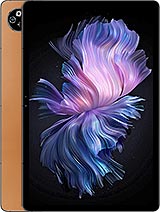
T30 Max
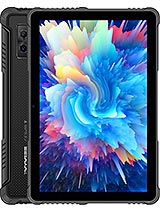
R08
Note59 Pro+
Note 59
X60