Doogee S Cyber review
This phone is for field workers, rural users, and travelers in tough climates who need durability and battery endurance more than processing speed. Anyone expecting fast performance, modern gaming, or sophisticated photography should look elsewhere.
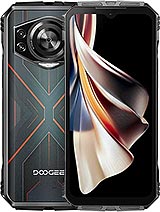
This review is based on Doogee’s published specifications and public benchmark data for the Doogee S Cyber, and the rating is spec-based. GoSolo does not physically test devices; where we estimate real-world behaviour such as battery life or charge time, we say so. How we rate phones.
Overview
The Doogee S Cyber is built for outdoor workers and rural users who prioritize durability and battery life over processing power. At €300, the 10800mAh cell and IP68/IP69K ruggedness justify the entry-level Unisoc T606 chipset, though performance will be a bottleneck for anything beyond everyday tasks and older games.
Design & build
At 178.5 × 83.1 × 17.9mm, this is a substantial phone—chunky by modern standards, though that thickness is entirely justified by the military-grade durability underneath. The IP68/IP69K rating means it survives dust, high-pressure water jets, and 1.5m submersion for 30 minutes. MIL-STD-810H compliance adds drop and shock testing on top. This is not a fashion statement; it is a working phone for construction sites, farms, and field work where a conventional flagship would die in the first month. The dual-SIM setup with a shared microSD slot is practical for regional flexibility, though it forces a compromise if you want both SIMs and expanded storage.
Display
The 6.58-inch IPS LCD is large and readable in daylight, with a 20:9 aspect ratio and 401 ppi density that keeps text sharp. Gorilla Glass adds scratch resistance. Brightness will not match modern AMOLED flagships, and the refresh rate (unstated, likely 60Hz) is standard for this tier. For someone checking GPS maps, reading construction documents, or working outdoors, this screen does the job without complaint. It is not designed to impress; it is designed to work.
Performance
The Unisoc T606 is an entry-level octa-core chipset with a Mali-G57 GPU. It handles everyday tasks—messaging, social media, maps, email, light multitasking—without stutter. Gaming is restricted to lighter titles and older games; modern AAA games will stutter or require lowered settings. If your day revolves around calls, messaging, and navigation, you will not notice the CPU deficit. If you expect fast app launches, heavy multitasking, or gaming, you will quickly hit its ceiling. For its price and design purpose, the chipset is honest: rugged phones with flagship processors remain too costly for field workers.
Camera
The 50MP main sensor with f/1.8 aperture and phase detect autofocus captures sharp detail in good light and handles low-light scenarios reasonably well, thanks to the dual-LED flash. The 5MP ultra-wide is basic—fine for landscape and group shots, but detail drops noticeably compared to the main lens. The 16MP selfie camera is adequate for video calls. This is a practical camera package that prioritizes wide-angle versatility and durability over pixel-peeping image quality. Do not expect computational photography or night mode sophistication; what you get is what you see.
Battery & charging
At 10800mAh with an IPS LCD screen, expect 12 to 15 hours of screen-on time on a single charge, stretching to two days with light use. This is the phone's strongest selling point for field workers who cannot charge throughout the day. The 18W wired charging is slow by 2024 standards—reckon 60 to 90 minutes from zero to full—but the massive battery capacity means you rarely need a top-up during work hours. Reverse wireless charging is listed but unlikely to be fast or reliable enough for daily use. For outdoor work, this battery endurance is a genuine advantage over flagships that need charging every afternoon.
Software
Android 14 is current and well-supported. No mention of a custom skin suggests fairly stock Android, which is refreshing. Long-term update timelines for a Doogee rugged phone are unknown and likely modest—expect security patches and perhaps one major OS bump, not the four-year commitment of Samsung or Google flagships. For field users, this is acceptable; most will not keep the phone long enough for this to matter.
Value & verdict
At €300, this is a rational choice for a specific user: someone who works outdoors, travels to regions with poor signal coverage, and needs a phone that survives dust, water, and drops without requiring a case and screen protector. The 10800mAh battery and LTE coverage across multiple bands justify the price. Against a €300 mainstream phone with a faster chip, the S Cyber sacrifices gaming performance and processing speed but trades up dramatically in durability, battery life, and multi-band connectivity. It is not a phone for everyone, but it is the right phone for its intended audience.
Verdict
This phone is for field workers, rural users, and travelers in tough climates who need durability and battery endurance more than processing speed. Anyone expecting fast performance, modern gaming, or sophisticated photography should look elsewhere.
- 10800mAh battery delivers 12–15 hours of screen-on time and stretches past two days on light use—outperforming most flagships at any price
- IP68/IP69K plus MIL-STD-810H durability means genuine resilience to dust, high-pressure water, drops, and rough handling without needing a case
- Dual-SIM, quad-band LTE (bands 1–41), GPS/GLONASS/BDS/Galileo, and NFC offer broad regional flexibility and connectivity for travel and remote work
- Large 6.58-inch IPS LCD with 401 ppi is readable in daylight and comfortable for maps, documents, and extended field work
- Unisoc T606 struggles with modern games and heavy multitasking; not suitable for anyone who values speed or responsive performance
- 18W charging is slow; a full charge takes 60–90 minutes, and reverse wireless charging is too weak to rely on daily
- Entry-level camera system and no ultra-wide detail; fine for field snapshots but will disappoint anyone used to computational photography or night mode
Doogee S Cyber Key Specifications
The essentials at a glance. See the full spec sheet.
| Released | 2024, May |
|---|---|
| Display | 6.58 inches, 104.3 cm2 (~70.3% screen-to-body ratio), IPS LCD |
| Resolution | 1080 x 2408 pixels, 20:9 ratio (~401 ppi density) |
| Chipset | Unisoc T606 (12 nm) |
| RAM & storage | 256GB 8GB RAM |
| Main camera | 50 MP, f/1.8, (wide), PDAF 5 MP, (ultrawide) |
| Selfie camera | 16 MP, (wide) |
| Battery | 10800 mAh |
| Charging | 18W wiredReverse wired |
| Software | Android 14 |
| Dimensions | 178.5 x 83.1 x 17.9 mm (7.03 x 3.27 x 0.70 in) |
| Durability | IP68/IP69K dust tight and water resistant (high pressure water jets; immersible up to 1.5m for 30 min) MIL-STD-810H compliant |
| Network | GSM / HSPA / LTE |
| NFC | Yes (market/region dependent) |
| USB | USB Type-C 2.0, OTG |
Doogee S Cyber FAQ
Common questions, answered from the spec sheet.
Does the S Cyber support 5G?
No. The S Cyber tops out at GSM / HSPA / LTE, without 5G.
What chipset does the S Cyber use?
The S Cyber runs on the Unisoc T606 (12 nm).
What display does the S Cyber have?
A 6.58 inches, 104.3 cm2 (~70.3% screen-to-body ratio) IPS LCD, 1080 x 2408 pixels, 20:9 ratio (~401 ppi density).
How big is the S Cyber battery?
The S Cyber has a 10800 mAh battery. Charging is rated at 18W wiredReverse wired.
Does the S Cyber have NFC?
Yes, the S Cyber has NFC.
Is the S Cyber water resistant?
The S Cyber carries a IP68/IP69K dust tight and water resistant (high pressure water jets; immersible up to 1.5m for 30 min) MIL-STD-810H compliant rating.
Does the S Cyber support a microSD card?
Yes, the S Cyber supports expandable storage (microSDXC (uses shared SIM slot)).
Does the S Cyber have a headphone jack?
No, the S Cyber does not have a 3.5mm headphone jack.
Alternatives to consider
If the S Cyber isn’t quite right, these are the closest calls.
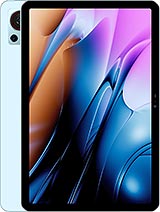
T30S
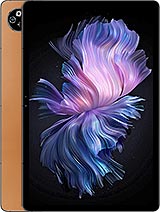
T30 Max
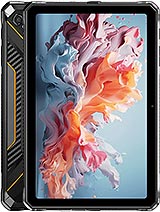
R20
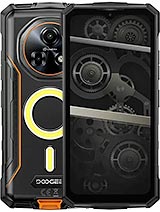
Fire 3 Ultra
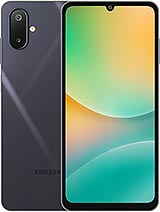
Galaxy M06 5G