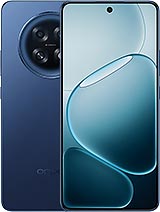
Doogee S200 Ultra review
Buy this if you work outdoors, need serious durability, or operate in environments where a normal phone would fail—the rugged certification, infrared night vision, and multi-day battery are real strengths. Skip it if you want a lightweight everyday phone or flagship gaming performance; the weight and mid-range chipset are genuine compromises for anyone not facing harsh field conditions.
This review is based on Doogee’s published specifications and public benchmark data for the Doogee S200 Ultra, and the rating is spec-based. GoSolo does not physically test devices; where we estimate real-world behaviour such as battery life or charge time, we say so. How we rate phones.
Overview
The S200 Ultra is a rugged outdoor workhorse built for field conditions—11000mAh battery, IP68/IP69K, infrared night vision—that sacrifices sleekness for durability and a week-spanning battery. For its niche it delivers honest value, but the thick 19mm profile and 383g weight make it unwieldy as an everyday carry, and the Dimensity 7400 is mid-range performance, not a powerhouse.
Design & build
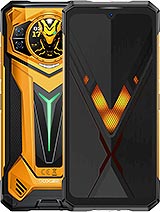
The S200 Ultra is built like a tool—179.5 × 82.5 × 19.1mm and 383 grams of reinforced frame with IP68/IP69K sealing and MIL-STD-810H compliance. That means it survives drops, dust, and 2-meter submersion for 24 hours, and can handle high-pressure water jets. For a construction site, farm, or outdoor expedition, this is the real deal. The trade-off is obvious: at 383 grams, it's a brick in your pocket. Rivals like the Samsung Galaxy Xcover 8, while tougher than mainstream phones, are lighter; the S200 Ultra embraces heft as the price of serious protection. The rear 1.32-inch AMOLED secondary display is clever—it lets you check time, alerts, and notifications without powering up the main screen, saving battery on a device where every hour counts. Gorilla Glass (Mohs 5) guards the front; no protection is specified for the rear secondary screen.
Display
The 6.72-inch IPS LCD runs at 120Hz and 1080×2400 resolution, landing at 392ppi—sharp enough for everyday use and video consumption, though not cutting-edge. The 73.6% screen-to-body ratio is respectable for a rugged device that prioritizes frame strength. 120Hz scrolling feels smooth and responsive. The spec sheet does not list peak brightness, a glaring omission for an outdoor phone; daylight legibility is therefore unverified, though typical rugged-phone LCDs are adequate, not brilliant, under sun. The rear AMOLED secondary display is a nice touch for low-power glances, but the main panel is the workhorse, and it delivers a solid, unspectacular experience.
Performance
The Mediatek Dimensity 7400 (4nm, Mali-G615 GPU) is capable upper-midrange—octa-core with four Cortex-A78 cores at 2.6GHz. With 12GB RAM, it handles everyday apps, streaming, and 4K video recording without lag. Gaming at high settings on demanding titles will throttle more than a current flagship, and multitasking with heavy workloads will feel less snappy than Snapdragon 8-series or Dimensity 9000-series rivals. For a rugged phone aimed at fieldwork and outdoor use rather than mobile gaming, that trade-off makes sense. The 1TB storage (yes, one terabyte) sounds excessive—most users will fill maybe 10–20% of it—but the microSDXC slot uses a shared SIM tray, so you choose between a second nano-SIM or extra storage, a practical compromise.
Software
Android 15 comes preloaded and ready. Doogee phones have historically leaned light on custom bloat compared to some Chinese brands, though the company's track record for timely updates is mixed. You get the baseline Google apps and a few Doogee utilities (health tracking, emergency SOS). Security patches on rugged phones often lag mainstream flagships; if regular Android updates matter to you, this is not a strong point. For fieldwork and utility-focused users, Android 15's tools and accessibility features are solid.
Camera
The triple rear setup is where the S200 Ultra earns its price: a 100MP main sensor (f/1.8, 1/1.8 inch, PDAF) handles daylight and detail work cleanly; a dedicated 20MP f/1.8 night-vision module with infrared illumination lets you shoot in near-total darkness, a genuinely useful feature for security patrols, wildlife watching, or construction inspections without a flashlight. The 2MP macro rounds out the kit. Video maxes at 4K@30fps with gyro-EIS, not cinema-quality but stable for handheld fieldwork. The 32MP selfie camera (f/2.2, 1/2.8 inch, 1080p video) is standard. In daylight, the 100MP main produces detailed, well-exposed shots; the f/1.8 aperture handles low-light photography without needing the dedicated night vision. The night-vision module is the standout—infrared night vision is rare and practical outside of niche rugged phones, setting this apart from mainstream rivals.
Battery & charging
The 11000mAh Si/C Li-Ion battery is the S200 Ultra's lifeline. On a 6.72-inch 120Hz LCD with a mid-range chipset, expect about 10–13 hours of mixed use or 2–3 days of light duty (texts, calls, email). That endurance is a real advantage for fieldwork where charging opportunities are sparse. The 66W wired charger tops it in roughly 40–45 minutes from empty to full, assuming you use Doogee's charger and a good cable; that is respectable but slower than 100W+ rivals now offer at the €550 price point. Reverse wireless charging (10W) is a novelty for rugged phones, though impractical for most users. No wireless charging for the main battery.
Value & verdict
At approximately €550, the S200 Ultra sits in contested midrange territory where you can also find Snapdragon 7 Gen 3 flagships and upper-midrange phones. Its value hinges entirely on need: if you work outdoors, operate in harsh environments, or genuinely need infrared night vision and week-spanning battery, the rugged certification and specialized camera justify the cost and bulk. If you want style, light weight, and pure performance per euro, mainstream alternatives offer better specs and sleeker form factors. The Dimensity 7400 is a realistic limit here—good enough for daily work and media, not aspirational for gaming or heavy creative tasks. The 1TB storage is a gimmick (nobody needs that much room), and the 66W charging, while adequate, lags what peers offer. For its intended audience—field technicians, outdoor teams, expedition enthusiasts—it delivers. For casual buyers seeking a pocket-friendly flagship, this is overkill in the wrong ways.
Verdict
Buy this if you work outdoors, need serious durability, or operate in environments where a normal phone would fail—the rugged certification, infrared night vision, and multi-day battery are real strengths. Skip it if you want a lightweight everyday phone or flagship gaming performance; the weight and mid-range chipset are genuine compromises for anyone not facing harsh field conditions.
- 11000mAh battery with 66W charging handles 2–3 days of moderate use without reaching for a charger
- Dedicated 20MP infrared night-vision module lets you shoot in near-total darkness, a genuinely useful feature for fieldwork and not just spec bragging
- IP68/IP69K + MIL-STD-810H durability built for drops, dust, and submersion, with a rear AMOLED secondary screen for quick alerts without waking the main display
- 1TB storage (split 12GB RAM) is excessive capacity, but dual nano-SIM, 5G, Wi-Fi 6, and NFC mean connectivity and payments work globally without compromise
- 383 grams and 19.1mm thick—heavier and bulkier than most flagships, making it tiring to carry and use one-handed
- Dimensity 7400 is mid-range and paired with a 1080×2400 LCD; it handles everyday tasks and 4K video smoothly enough, but gaming and heavy multitasking will feel less fluid than flagship rivals at similar price
- 66W charging is adequate for the capacity but slower than 100W+ rivals now offer at this price point; you're spending ~40–45 minutes to full charge
Doogee S200 Ultra Key Specifications
The essentials at a glance. See the full spec sheet.
| Released | 2025, September |
|---|---|
| Display | 6.72 inches, 109.0 cm2 (~73.6% screen-to-body ratio), IPS LCD, 120Hz |
| Resolution | 1080 x 2400 pixels, 20:9 ratio (~392 ppi density) |
| Chipset | Mediatek Dimensity 7400 (4 nm) |
| RAM & storage | 1TB 12GB RAM |
| Main camera | 100 MP, f/1.8, (wide), 1/1.8", PDAF 20 MP, f/1.8, (night vision), infrared night vision light 2 MP (macro) |
| Selfie camera | 32 MP, f/2.2, (wide), 1/2.8" |
| Battery | 11000 mAh |
| Charging | 66W wired10W reverse wired |
| Software | Android 15 |
| Dimensions | 179.5 x 82.5 x 19.1 mm (7.07 x 3.25 x 0.75 in) |
| Weight | 383 g (13.51 oz) |
| Durability | IP68/IP69K dust tight and water resistant (high pressure water jets; immersible up to 2m for 24 h) MIL-STD-810H compliant |
| Network | GSM / HSPA / LTE / 5G |
| NFC | Yes |
| USB | USB Type-C 2.0, OTG |
Doogee S200 Ultra FAQ
Common questions, answered from the spec sheet.
Does the S200 Ultra support 5G?
Yes. The S200 Ultra supports 5G networks.
What chipset does the S200 Ultra use?
The S200 Ultra runs on the Mediatek Dimensity 7400 (4 nm).
What display does the S200 Ultra have?
A 6.72 inches, 109.0 cm2 (~73.6% screen-to-body ratio) IPS LCD, 120Hz, 1080 x 2400 pixels, 20:9 ratio (~392 ppi density).
How big is the S200 Ultra battery?
The S200 Ultra has a 11000 mAh battery. Charging is rated at 66W wired10W reverse wired.
Does the S200 Ultra have NFC?
Yes, the S200 Ultra has NFC.
Is the S200 Ultra water resistant?
The S200 Ultra carries a IP68/IP69K dust tight and water resistant (high pressure water jets; immersible up to 2m for 24 h) MIL-STD-810H compliant rating.
Does the S200 Ultra support a microSD card?
Yes, the S200 Ultra supports expandable storage (microSDXC (uses shared SIM slot)).
Does the S200 Ultra have a headphone jack?
No, the S200 Ultra does not have a 3.5mm headphone jack.
Alternatives to consider
If the S200 Ultra isn’t quite right, these are the closest calls.
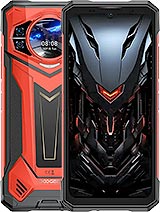
S200 Plus
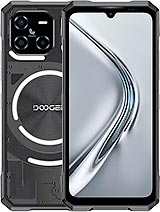
Blade GT Ultra
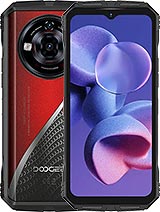
S118 Pro
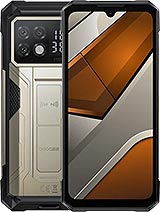
S200 Max
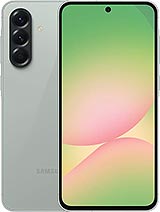
Galaxy A56