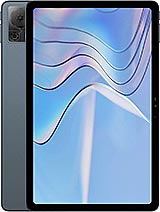
Doogee T20S review
The T20S suits students and casual users who prioritize a large, affordable screen for note-taking and reading over performance and camera quality. Skip it if you need smooth gaming, sharp text clarity, or anything demanding—the chip and display will disappoint.
This review is based on Doogee’s published specifications and public benchmark data for the Doogee T20S, and the rating is spec-based. GoSolo does not physically test devices; where we estimate real-world behaviour such as battery life or charge time, we say so. How we rate phones.
Overview
The Doogee T20S is a 10.4-inch budget tablet built for students and note-takers who want a big screen and stylus support without spending much. The weak Unisoc T616 chip and modest cameras limit it to everyday tasks, media, and document work—not gaming or anything demanding.
Design & build
At 7.9 mm thick, the T20S is slim for a 10.4-inch tablet. Glass front, aluminum frame, and aluminum back give it a solid feel that punches above the €270 price. The dual Nano-SIM slots—with a shared microSDXC expansion—are genuinely useful in regions where carriers and local storage matter. Stylus support is included, though Doogee doesn't specify pressure levels or latency, so this is a basic pen experience, not a replacement for a Wacom or Apple Pencil. Build quality is respectable for the class, but the lack of published weight suggests it may be heavier than you'd hope for a device this thin.
Display
The 10.4-inch IPS LCD is plenty large and the 16:10 ratio suits productivity. The problem is 1200 × 1920 resolution at 218 ppi, which is visibly soft. At close reading distance, text and icons lack crispness; smaller UI elements blur noticeably. For media consumption and casual browsing from a normal arm's length, it is adequate. For office work or reading PDFs for hours, you will feel the resolution gap against tablets with 250+ ppi. Android scaling helps, but does not entirely hide it. Color accuracy is typical IPS—decent but unremarkable—with no high refresh rate or Gorilla Glass protection to justify the low density.
Performance
The Unisoc Tiger T616 is an entry-level chip that handles everyday Android, light streaming, and document work. The octa-core CPU (two 2.0 GHz A75s, six 1.8 GHz A55s) and Mali-G57 GPU manage apps without crashing in normal use. Expect stuttering in heavy multitasking, mobile games beyond 2D titles, and demanding video editing. For 2023, this is budget-tier performance; rivals at similar prices offer faster chips. The 8GB RAM and UFS 2.1 storage are competent, but the processor ceiling is real. If you plan to use this as a secondary device for note-taking and light media, it suffices. If you expect smooth gaming or demanding apps, look elsewhere.
Software
Android 13 ships out of the box, which was current for mid-2023 but is now two years behind. Doogee's update track record is inconsistent, so do not count on seeing Android 14 or 15. The UI is stock-ish with minimal bloat, which is a bright spot. Stylus software is basic—pressure and hover support are unspecified, limiting handwriting apps and digital art. For note-taking in Google Keep or OneNote, it works; for Ibis Paint or Clip Studio, the input lag will be noticeable.
Camera
The 13MP rear camera is serviceable for documents, whiteboards, and casual outdoor shots in good light. Indoors or in dim conditions, it struggles; the LED flash helps but is not powerful. 1080p video at 30fps is behind the curve for 2023 and beyond, when mid-range tablets routinely offer 60fps or higher. The 5MP front camera is basic for video calls, with no ultrawide and no autofocus mentioned. Neither camera is a strength of this tablet; think of them as functional backups, not reasons to buy it.
Battery & charging
The 7500 mAh battery is substantial and should deliver about 8 to 10 hours of screen time for mixed use—video, browsing, documents. That is roughly a day on a single charge for moderate workloads. The spec sheet omits charging wattage and time, a significant oversight; without this, we cannot predict whether a full charge takes two hours or five. For a 2023 tablet at this price, 18W or 20W charging is typical. The lack of this detail suggests it may be slower. The 3.5mm headphone jack is a plus, sparing you adapters and dongle clutter.
Value & verdict-context
At €270, the T20S competes with entry-level budget tablets from bigger brands. The main draw is size—a large screen for note-taking and reading—and stylus support, which is rare at this price. The main drag is the soft display, weak processor, and dim cameras. If you need a cheap tablet for students, light reading, or document work, the size and build justify the cost. If you expect sharp text, responsive apps, or decent photos, you will feel the gaps. By late 2024 and beyond, rival tablets from Lenovo, Samsung, and Xiaomi in this tier often offer faster chips and better displays, making the T20S feel dated. This is not a bad tablet for its price, but it is not a standout either.
Verdict
The T20S suits students and casual users who prioritize a large, affordable screen for note-taking and reading over performance and camera quality. Skip it if you need smooth gaming, sharp text clarity, or anything demanding—the chip and display will disappoint.
- Large 10.4-inch display comfortable for reading, note-taking, and media at arm's length
- Stylus support and dual Nano-SIM slots add practical value for regional users and productivity
- 7500 mAh battery yields a full day of moderate use; 3.5mm jack saves buying adapters for headphones
- Thin aluminum-and-glass build feels solid for its price
- Unisoc T616 is underpowered for anything beyond light browsing or streaming; multitasking and games stutter
- 218 ppi pixel density is soft for close reading; text and icons lack sharpness compared to tablets at this size
- 13MP rear camera and 5MP front are dated and dim; 1080p video at only 30fps falls behind rivals even in this budget tier
Doogee T20S Key Specifications
The essentials at a glance. See the full spec sheet.
| Released | 2023, July 01 |
|---|---|
| Display | 10.4 inches, 313.6 cm2, IPS LCD |
| Resolution | 1200 x 1920 pixels, 16:10 ratio (~218 ppi density) |
| Chipset | Unisoc Tiger T616 (12 nm) |
| RAM & storage | 128GB 8GB RAM |
| Main camera | 13 MP secondary unspecified camera |
| Selfie camera | 5 MP |
| Battery | 7500 mAh |
| Software | Android 13 |
| Dimensions | 7.9 mm thickness |
| Build | Glass front, aluminum frame, aluminum back |
| Durability | Stylus support |
| Network | GSM / HSPA / LTE |
| NFC | No |
| USB | USB Type-C |
Doogee T20S FAQ
Common questions, answered from the spec sheet.
Does the T20S support 5G?
No. The T20S tops out at GSM / HSPA / LTE, without 5G.
What chipset does the T20S use?
The T20S runs on the Unisoc Tiger T616 (12 nm).
What display does the T20S have?
A 10.4 inches, 313.6 cm2 IPS LCD, 1200 x 1920 pixels, 16:10 ratio (~218 ppi density).
How big is the T20S battery?
The T20S has a 7500 mAh battery.
Does the T20S have NFC?
No, the T20S does not list NFC support.
Is the T20S water resistant?
The T20S carries a Stylus support rating.
Does the T20S support a microSD card?
Yes, the T20S supports expandable storage (microSDXC (uses shared SIM slot)).
Does the T20S have a headphone jack?
Yes, the T20S has a 3.5mm headphone jack.
Alternatives to consider
If the T20S isn’t quite right, these are the closest calls.
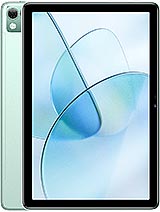
T10S
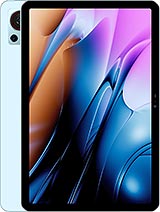
T30S
T20mini
N50S
Galaxy A06