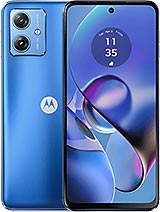
Doogee T30 Max review
The T30 Max suits anyone who prioritizes a large screen and battery life for reading, streaming, and casual productivity over performance and durability. Those who game seriously, need 5G connectivity, or work outdoors should look at more robust tablets or a capable phone-plus-tablet combination instead.
This review is based on Doogee’s published specifications and public benchmark data for the Doogee T30 Max, and the rating is spec-based. GoSolo does not physically test devices; where we estimate real-world behaviour such as battery life or charge time, we say so. How we rate phones.
Overview
The Doogee T30 Max is a large-screen Android tablet aimed at reading and video consumption, held back by mid-range performance, no 5G, and absence of water resistance. For its 2024 arrival and price, it offers a spacious display and solid battery life but doesn't do anything exceptionally well.
Design & build
At 678 grams and 7.9mm thick, the T30 Max is slim for its size but substantial enough to feel grounded in hand. The aluminum frame and glass front are solid materials, and the silicone polymer (eco leather) back resists fingerprints better than bare plastic. The dual-SIM slot with microSD expansion is practical. The absence of any IP rating is a real weakness—no water resistance or dust sealing means a spill or sand exposure risks damage. The side-mounted fingerprint sensor works reliably, though the lack of more precise biometric options like face unlock limits unlock convenience.
Display
The 12.4-inch IPS LCD is the T30 Max's defining strength. At 243 ppi, pixel density is noticeably softer than a modern phone, but at typical viewing distance, text and images remain legible and pleasant to look at. The 16:10 aspect ratio is better suited to reading than video, and the large real estate makes it genuinely useful for e-books and office documents. IPS viewing angles are wide, color reproduction is neutral, and brightness is sufficient for indoor and bright outdoor viewing. This is a screen built for consumption, not gaming; games show the density gap more plainly than text or film.
Performance
The Helio G99 is a capable mid-range chipset but not a powerhouse. With 8GB RAM, it handles everyday tasks—email, browsing, social media, light office work—without stutter. Casual games like Candy Crush or Asphalt 8 run smoothly. Demanding titles like Genshin Impact or heavy 3D games require lower graphics settings and still may drop frames. Multitasking with many background apps is possible but not frictionless. For a 2024 tablet, this performance positioning is ordinary; you are getting what you pay for, neither more nor less.
Software
Android 14 brings recent features and security patches. Doogee's software skin appears light, which is a small win—no heavy bloat or aggressive ads clogging the system. Updates are a question mark; Doogee's track record is modest, so expect a year or two of OS updates at best. For a device aimed at content consumption rather than long-term software support, this is an acceptable tradeoff, but do not assume you will see Android 16 or 17 on this hardware.
Camera
The 50MP main sensor captures reasonable detail in daylight, and the 2MP macro lens handles close-up shots adequately. The 20MP front camera is fine for video calls. However, this is not a tablet you should buy for camera quality. No ultra-wide, no telephoto, no night mode, and video maxes out at 1440p@30fps. For occasional tablet photos, it suffices; for serious photography, use a phone. The LED flash is basic but useful in low light.
Battery & charging
The 10,800 mAh battery is one of the T30 Max's genuine assets. You will get a full day of real use—about 10 to 12 hours of screen-on time—before needing to plug in, even with video and reading mixed together. Light users may stretch this to two days. At 33W wired charging, a full charge takes roughly 90–120 minutes from empty, or you can grab a 50% top-up in under an hour. This is adequate charging speed for a 2024 tablet; it does not match the 65W+ of newer flagship models, but for a device of this tier and size, 33W is reasonable.
Value & verdict-context
The T30 Max is not trying to be a flagship or a bargain-basement budget device; it sits in the practical middle of the tablet market. A large screen and solid battery make it a genuine companion for reading, video, and light work. The mid-range chipset and lack of 5G limit it to casual productivity and gaming. The missing IP rating is a stumbling block for a device you might use on the sofa or carry while traveling—one accident and you face a repair bill. At its price point (which varies by region and retailer), it competes with basic Samsung Galaxy Tab models and other Doogee offerings; those with tighter budgets or a need for ruggedness should look elsewhere, while those who want a no-fuss screen for media will find it suitable.
Verdict
The T30 Max suits anyone who prioritizes a large screen and battery life for reading, streaming, and casual productivity over performance and durability. Those who game seriously, need 5G connectivity, or work outdoors should look at more robust tablets or a capable phone-plus-tablet combination instead.
- 12.4-inch IPS LCD screen with strong brightness and wide viewing angles; proper size for reading and streaming without eye strain
- 10,800 mAh battery delivers a full day of real use—about 10–12 hours of screen-on—and 33W charging tops it in roughly two hours
- 512GB storage and microSD expansion mean no storage anxiety for documents, books, or media libraries
- Stylus support and four speakers suit note-taking and multimedia consumption
- Helio G99 chipset cannot handle demanding games or heavy multitasking without stuttering; casual titles work fine, but anything CPU-heavy lags noticeably
- No 5G and LTE-only connectivity means slower mobile downloads in areas with 5G infrastructure
- No IP rating and unprotected glass screen make this fragile for travel or outdoor use; water damage is a real risk
Doogee T30 Max Key Specifications
The essentials at a glance. See the full spec sheet.
| Released | 2024, March 08 |
|---|---|
| Display | 12.4 inches, 445.8 cm2 (~84.3% screen-to-body ratio), IPS LCD |
| Resolution | 1600 x 2560 pixels, 16:10 ratio (~243 ppi density) |
| Chipset | Mediatek Helio G99 |
| RAM & storage | 512GB 8GB RAM |
| Main camera | 50 MP, (wide) 2 MP (macro) |
| Selfie camera | 20 MP |
| Battery | 10800 mAh |
| Charging | 33W wired |
| Software | Android 14 |
| Dimensions | 285.1 x 185.4 x 7.9 mm (11.22 x 7.30 x 0.31 in) |
| Weight | 678 g (1.49 lb) |
| Build | Glass front, aluminum frame, aluminum back, silicone polymer (eco leather) cover |
| Durability | Stylus support |
| Network | GSM / HSPA / LTE |
| NFC | No |
| USB | USB Type-C 2.0, OTG, charging/accessories connector pins |
Doogee T30 Max FAQ
Common questions, answered from the spec sheet.
Does the T30 Max support 5G?
No. The T30 Max tops out at GSM / HSPA / LTE, without 5G.
What chipset does the T30 Max use?
The T30 Max runs on the Mediatek Helio G99.
What display does the T30 Max have?
A 12.4 inches, 445.8 cm2 (~84.3% screen-to-body ratio) IPS LCD, 1600 x 2560 pixels, 16:10 ratio (~243 ppi density).
How big is the T30 Max battery?
The T30 Max has a 10800 mAh battery. Charging is rated at 33W wired.
Does the T30 Max have NFC?
No, the T30 Max does not list NFC support.
Is the T30 Max water resistant?
The T30 Max carries a Stylus support rating.
Does the T30 Max support a microSD card?
Yes, the T30 Max supports expandable storage (microSDXC (uses shared SIM slot)).
Does the T30 Max have a headphone jack?
No, the T30 Max does not have a 3.5mm headphone jack.
Alternatives to consider
If the T30 Max isn’t quite right, these are the closest calls.

T35
T40 Pro
T40
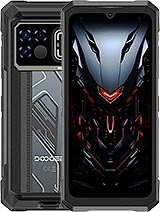
Fire 3 Max
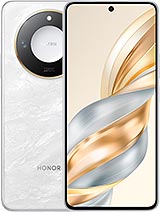
X60