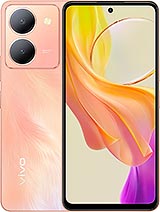
Doogee T30 Pro review
The T30 Pro suits anyone who reads, watches video, or handles documents at home or in transit and values battery life over speed or bright-day visibility. Skip it if you need 5G, fast charging, or outdoor screen brightness—or if gaming and demanding apps define your tablet use."
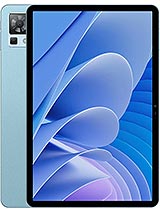
This review is based on Doogee’s published specifications and public benchmark data for the Doogee T30 Pro, and the rating is spec-based. GoSolo does not physically test devices; where we estimate real-world behaviour such as battery life or charge time, we say so. How we rate phones.
Overview
The Doogee T30 Pro is an 11-inch tablet built for media and reading rather than gaming, with an 8580 mAh battery that clears a full day and a crisp LCD display that struggles in bright sunlight. At roughly 330 EUR, it delivers practical tablet work and video watching, but the Helio G99 and LTE-only connectivity show its age even for a 2023 device.
Design & build
At 7.6 mm thick, this tablet is slim for its 11-inch size, though the spec sheet omits weight, leaving only the impression of a compact slate. The dual SIM and microSD slot signal practical value—you can run two networks and expand storage without sacrificing a SIM tray. Build details beyond thickness and materials are sparse, but the layout is straightforward and the 80.9% screen-to-body ratio shows Doogee prioritized display real estate over bezels. Calling it premium would be false, but it looks deliberate rather than cheap.
Display
The 11-inch IPS LCD hits 1600 by 2560 pixels at 274 ppi—sharp enough for reading and video without visible pixelation, and the 16:10 ratio suits content consumption and office work. At 350 nits peak, it handles indoor lighting and dimmer spaces well, but bright sunlight will wash the image, making outdoor reading or media frustrating on cloudless days. This is a known trade-off for budget LCD tablets; comparable rival panels at this price hover in the same range. For the intended use case—lounging indoors with a book, document, or film—the trade-off is livable.
Performance
The Helio G99 with 15 GB RAM handles everyday apps, browsing, email, and light multitasking without stutter. Video playback and reading are smooth, and lighter Android games run at normal settings without drama. Demanding 3D games will throttle or force lower graphics, so anyone expecting console-class performance will be disappointed. By 2023 standards, this chipset sits in the capable upper-midrange—not flagship tier, not entry-level hobbled, but designed for users who don't demand cutting-edge gaming. The UFS 2.2 storage is fast enough for app launches and file transfers, though not state-of-the-art anymore.
Software
Android 13 ships out of the box, which was current for mid-2023 and respectable for a budget tablet. Doogee's update track record is mixed; expect patches slower than Samsung or Apple, and don't bank on seeing Android 14 or 15 soon. The lack of heavy bloatware is a small plus—you get more usable storage than some competitors and fewer pre-installed apps hogging RAM. For media and work, stock Android is adequate; power users accustomed to heavy customization may feel the experience is bare-bones, but that cuts both ways.
Camera
The 20 MP main sensor with a 2 MP depth helper records 1440p at 30 fps and stills with HDR and panorama modes. In bright daylight, images are acceptable for social sharing and documents; dynamic range is handled competently. Low-light shots turn noisy and muddy fast, and there is no optical zoom or dedicated night mode to rescue the situation. The 8 MP selfie handles video calls adequately. For a tablet in this price bracket, the camera is never the highlight—it's backup utility, and that's what you get here. If you need a serious camera, buy a phone or a larger device; if you occasionally want to snap reference shots or scan a document, this does the job.
Battery & charging
The 8580 mAh cell delivers around 10 to 12 hours of mixed use—reading, video, and light apps across a full day without reaching for the charger. Heavy video streaming or gaming shortens that to one afternoon. For a large-screen device, this endurance is solid and practical for travel or work away from a plug. Charging via 18W takes roughly 90 to 120 minutes from empty, hitting 50% in an hour. Fast charging this is not, but it's predictable; a quick top-up before leaving home is feasible if you don't mind waiting. By tablet standards, the battery life is the real headline—it goes the distance when phones run dry.
Connectivity & value
LTE-only connectivity means no 5G speeds if your network has rolled them out; on shared 4G bands, speeds are typical for the standard, not behind. Wi-Fi 5 dual-band is solid for home and office, and Bluetooth 5.2 pairs smoothly with headphones and peripherals. At roughly 330 EUR, the T30 Pro prices itself as a no-frills media tablet—you trade bleeding-edge performance and 5G for a large display, all-day battery, expandable storage, and a headphone jack (a rarity in modern tablets). It's not a flagship killer or a value steal; it's a sensible pick for someone who watches videos, reads long-form content, and tackles light document work on a budget. Buyers chasing top-tier gaming or the latest connectivity should look at more expensive options or phones. Those who want a simple, durable tablet for leisure and productivity will find the value case compelling.
Verdict
The T30 Pro suits anyone who reads, watches video, or handles documents at home or in transit and values battery life over speed or bright-day visibility. Skip it if you need 5G, fast charging, or outdoor screen brightness—or if gaming and demanding apps define your tablet use."
- 11-inch display with 274 ppi sharpness and 80.9% screen-to-body ratio maximizes viewing area without bulk
- 8580 mAh battery lasts a full day on mixed use and outlasts most phones, crucial for a tablet meant for travel
- Expandable microSD storage and dual SIM slots offer practical flexibility without sacrificing design
- Headphone jack and stereo speakers (four of them) are relics elsewhere but useful for media on this device
- 350-nit LCD display washes out in bright sunlight, limiting outdoor readability and media watching
- LTE-only connectivity and 2023 Helio G99 show age; 5G rivals even at similar price have matured since launch
- 18W charging is slow; rivals in this category now hit 30–50W, leaving the T30 Pro tethered for longer
Doogee T30 Pro Key Specifications
The essentials at a glance. See the full spec sheet.
| Released | 2023, May 23 |
|---|---|
| Display | 11.0 inches, 350.9 cm2 (~80.9% screen-to-body ratio), IPS LCD, 350 nits (peak) |
| Resolution | 1600 x 2560 pixels, 16:10 ratio (~274 ppi density) |
| Chipset | Mediatek Helio G99 (6 nm) |
| RAM & storage | 256GB 15GB RAM |
| Main camera | 20 MP 2 MP |
| Selfie camera | 8 MP |
| Battery | 8580 mAh |
| Charging | 18W wired, 50% in 60 min |
| Software | Android 13 |
| Dimensions | 257 x 168.7 x 7.6 mm (10.12 x 6.64 x 0.30 in) |
| Network | GSM / HSPA / LTE |
| NFC | No |
| USB | USB Type-C 2.0, OTG, accessory connector |
Doogee T30 Pro FAQ
Common questions, answered from the spec sheet.
Does the T30 Pro support 5G?
No. The T30 Pro tops out at GSM / HSPA / LTE, without 5G.
What chipset does the T30 Pro use?
The T30 Pro runs on the Mediatek Helio G99 (6 nm).
What display does the T30 Pro have?
A 11.0 inches, 350.9 cm2 (~80.9% screen-to-body ratio) IPS LCD, 350 nits (peak), 1600 x 2560 pixels, 16:10 ratio (~274 ppi density).
How big is the T30 Pro battery?
The T30 Pro has a 8580 mAh battery. Charging is rated at 18W wired, 50% in 60 min.
Does the T30 Pro have NFC?
No, the T30 Pro does not list NFC support.
Does the T30 Pro support a microSD card?
Yes, the T30 Pro supports expandable storage (microSDXC (uses shared SIM slot)).
Does the T30 Pro have a headphone jack?
Yes, the T30 Pro has a 3.5mm headphone jack.
Alternatives to consider
If the T30 Pro isn’t quite right, these are the closest calls.
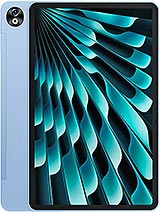
T40 Pro
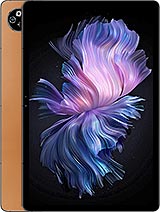
T30 Max
T40
V20 Pro
Galaxy F14