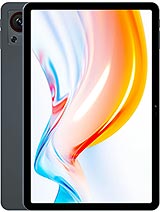
Doogee T30SE review
The T30SE makes sense for students, budget-conscious households, and anyone in LTE-only regions who prioritizes screen size and battery endurance over raw speed. Anyone who juggles many apps, edits photos, or needs fast charging should look to a mid-range tablet instead.
This review is based on Doogee’s published specifications and public benchmark data for the Doogee T30SE, and the rating is spec-based. GoSolo does not physically test devices; where we estimate real-world behaviour such as battery life or charge time, we say so. How we rate phones.
Overview
The Doogee T30SE is a budget 11-inch tablet built for reading, streaming, and light work on a shoestring: long battery life and a big screen at €130 make it appealing for students or cost-conscious households in regions where LTE is the connectivity standard. A slow processor and sluggish 10W charging are its real limits.
Design & build
At 500 grams and 7.6 mm thick, the T30SE is lighter and slimmer than many 11-inch tablets, making it reasonably portable for its size. The dual-nano SIM setup suggests international travel use, though the shared microSD slot (one slot, two devices, pick one) is a familiar penny-pinch. Build materials and durability specs are not mentioned, so expect plastic chassis and ordinary durability for the price tier. The 257 x 169 mm frame is landscape-friendly for watching video or reading, but nearly impossible to handle one-handed.
Display
The 11.0-inch IPS LCD panel running 1200 x 1920 at 206 ppi hits the bare minimum for sharpness at reading distance. Text, documents, and web pages render cleanly; photos and video are watchable without obvious pixelation. IPS angles are forgiving, so shared viewing works fine. The 80.9% screen-to-body ratio is decent but unremarkable for a 2024 tablet. No refresh rate, HDR, or brightness specs are listed, which hints at a baseline, power-efficient display rather than one built for speed or visual richness. For a €130 device, this is solid value; for a €200 competitor, you would expect 90Hz or brighter peaks.
Performance
The Unisoc T606 is entry-level silicon, even by 2024 standards. The octa-core setup (2x1.6 GHz Cortex-A75, 6x1.6 GHz Cortex-A55) is designed for efficiency, not speed, and the Mali-G57 MP1 GPU is minimal. This setup handles email, web browsing, streaming video, and light productivity (document editing, spreadsheets) without fuss. Older or simplified games run fine; demanding 3D titles or heavy photo editing will cause lag. Switching between many open apps drains performance visibly. For a student tablet or second screen for casual media, it is adequate; anyone expecting smooth multitasking or app-heavy workflows should look elsewhere. The 4GB RAM and eMMC 5.1 storage are not limiting factors in day-to-day use, only the CPU.
Software
Android 14 out of the box is current, and Doogee's update track record for budget tablets is historically slow. Expect at least one major OS update, but security patches beyond 2026 are uncertain. The OS runs smoothly on this hardware, but vendor bloatware typically ships with budget Doogee devices; expect some pre-installed apps you will want to remove.
Camera
The 13MP rear camera handles casual stills, document scanning, and video calls over Wi-Fi adequately. Daytime shots are acceptable; low-light performance is muddy, and there is no zoom or macro mode. The 5MP selfie camera suits video calls but little else. Video maxes out at 1080p@60fps, which is standard for budget tablets but not a standout. Do not buy this tablet expecting serious photography or video work; the cameras are auxiliary features, not reasons to pick this device.
Battery & charging
The 8580 mAh cell delivers about 10–12 hours of screen-on time during mixed use (light browsing, streaming, messaging), translating to 1.5 to 2 days between charges for typical tablet habits. Heavy video streaming cuts that to a single day. This is competitive for an 11-inch tablet and a genuine selling point for students or travelers who do not charge daily. Charging, however, is slow: 10W wired means a full charge takes 2 to 3 hours, and reaching 50% takes about an hour. Plan to charge overnight or during work; quick top-ups are not realistic.
Value & verdict-context
At €130, the T30SE slots into a rare sweet spot: a large-screen tablet that costs less than many 10-inch competitors and undercuts most 11-inch alternatives by 50 euros or more. The spec sheet is honest budget fare (slow processor, basic cameras, weak charging), but the battery life and display size deliver tangible use value for students, casual readers, and households stretched for money. The Unisoc T606 and 10W charging are genuine pain points if you multitask heavily or need quick recharges, and the lack of 5G means LTE speeds cap out at around 100 Mbps in ideal conditions (fine for streaming, slow for large file downloads). This tablet knows what it is: a low-cost screen for media and light work, not a productivity powerhouse.
Verdict
The T30SE makes sense for students, budget-conscious households, and anyone in LTE-only regions who prioritizes screen size and battery endurance over raw speed. Anyone who juggles many apps, edits photos, or needs fast charging should look to a mid-range tablet instead.
- 11-inch IPS display at 206 ppi is sharp enough for reading, web browsing, and casual media without strain
- 8580 mAh battery delivers 1.5 to 2 days of typical use (light browsing, video, messaging)
- Dual stereo speakers and 3.5mm jack for straightforward media consumption
- €130 price point undercuts most tablets in this size category by a healthy margin
- 10W charging takes 2–3 hours for a full charge, making it impractical for quick top-ups during the day
- Unisoc T606 processor stalls on demanding apps and heavier multitasking; entry-level 2024 hardware by any standard
- Cameras (13MP rear, 5MP front) are purely functional; no zoom, weak low-light performance, and 1080p video caps out at 60fps
Doogee T30SE Key Specifications
The essentials at a glance. See the full spec sheet.
| Released | 2024, April |
|---|---|
| Display | 11.0 inches, 350.9 cm2 (~80.9% screen-to-body ratio), IPS LCD |
| Resolution | 1200 x 1920 pixels, 16:10 ratio (~206 ppi density) |
| Chipset | Unisoc T606 (12 nm) |
| RAM & storage | 128GB 4GB RAM |
| Main camera | 13 MP |
| Selfie camera | 5 MP |
| Battery | 8580 mAh |
| Charging | 10W wired |
| Software | Android 14 |
| Dimensions | 257 x 168.7 x 7.6 mm (10.12 x 6.64 x 0.30 in) |
| Weight | 500 g (1.10 lb) |
| Network | GSM / HSPA / LTE |
| NFC | No |
| USB | USB Type-C 2.0, OTG |
Doogee T30SE FAQ
Common questions, answered from the spec sheet.
Does the T30SE support 5G?
No. The T30SE tops out at GSM / HSPA / LTE, without 5G.
What chipset does the T30SE use?
The T30SE runs on the Unisoc T606 (12 nm).
What display does the T30SE have?
A 11.0 inches, 350.9 cm2 (~80.9% screen-to-body ratio) IPS LCD, 1200 x 1920 pixels, 16:10 ratio (~206 ppi density).
How big is the T30SE battery?
The T30SE has a 8580 mAh battery. Charging is rated at 10W wired.
Does the T30SE have NFC?
No, the T30SE does not list NFC support.
Does the T30SE support a microSD card?
Yes, the T30SE supports expandable storage (microSDXC (uses shared SIM slot)).
Does the T30SE have a headphone jack?
Yes, the T30SE has a 3.5mm headphone jack.
Alternatives to consider
If the T30SE isn’t quite right, these are the closest calls.
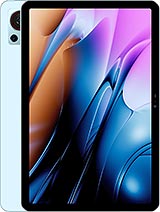
T30S
N55 Plus
S Cyber
Fire 5 Pro
Galaxy M06 5G