Doogee V Max review
The Doogee V Max is purpose-built for field workers, outdoor enthusiasts, and anyone operating in harsh environments where most phones would die. For that audience, the multi-day battery and IP69K/MIL-STD-810H durability are compelling. Urban users chasing performance, design, or a camera that rivals flagships will find this phone clumsy and underpowered.
This review is based on Doogee’s published specifications and public benchmark data for the Doogee V Max, and the rating is spec-based. GoSolo does not physically test devices; where we estimate real-world behaviour such as battery life or charge time, we say so. How we rate phones.
Overview
The Doogee V Max is a workhorse rugged phone built for field use and outdoor abuse, not speed or beauty. At €60, the IP69K/MIL-STD-810H durability and 22000 mAh battery justify the bulk and thick bezels if you need a phone that survives a construction site and runs for three to four days between charges.
Design & build
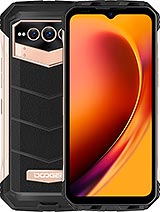
The Doogee V Max is built like a brick, and that is the entire point. At 27.3 mm thick and an unspecified but clearly heavy weight, this phone trades thinness and lightness for a chassis that can be dropped 1.5 meters, submerged to 1.5 meters for half an hour, and blasted with high-pressure water jets without complaining. The IP69K rating goes beyond the common IP68—it means active water jets, not just submersion. MIL-STD-810H compliance signals real durability testing by military standards. If you are buying a phone to survive a construction site or a year of outdoor field work, the size and weight are features, not flaws. The body will feel unwieldy in an office or a café, but that is not the intended habitat.
Display
The 6.58-inch IPS LCD runs at 120 Hz with 401 ppi—smooth scrolling but soft text compared to phones at 480 ppi or above. The 1080 × 2408 resolution is adequate for a rugged device; nobody buying this phone is chasing pixel density. The lack of a specified peak brightness and the unlit margin of bezel around the screen suggest outdoor visibility in direct sunlight will be dim. For a phone designed to work in muddy fields and construction zones, legibility in shade is more realistic than blazing-sun readability. The 120 Hz refresh does keep the interface snappy despite the midrange chip, which is a small but real quality-of-life gain.
Performance
The Dimensity 1080 is capable upper-midrange silicon for 2023, with enough grunt for email, messaging, browsing, and light office apps. Light games like Candy Crush and low-demand 3D titles run fine at medium settings. Demanding games—Genshin Impact, Call of Duty Mobile—will stutter or force you to dial down graphics to stay playable. Camera processing, file editing, and multitasking feel responsive enough for field use; the Mali-G68 GPU is not cutting-edge but sufficient for the phone's intended purpose. This is not a creative workstation or a gaming device. It is a reliable tool that keeps pace with daily work without strain, and for a rugged phone at this price, that is a fair trade.
Software
Android 12 at launch (early 2023) means you are starting on a version that is already one generation behind by mid-2024 standards, and future update support from a smaller vendor like Doogee is typically uncertain. The OS ships stock without excessive bloat, which is good news for a workhorse phone. Expect two years of Android security patches and perhaps one major OS upgrade if you are optimistic. For a phone marketed at field workers and outdoor enthusiasts, the software is functional and forgettable, which is exactly what you want. No fancy skins, no aggressive background apps, just Android doing its job.
Camera
The 108 MP f/1.8 main sensor (1/1.52 inch, 0.7 µm) captures solid daylight photos and handles low-light scenes better than the small sensor size might suggest, thanks to the wide aperture and PDAF. The unique party piece is the 20 MP night-vision mode with dual infrared lights: you can shoot in total darkness without visible illumination, invaluable for inspections, wildlife surveys, or security work. The 16 MP ultrawide at 130° and 32 MP selfie camera are ordinary but functional. Video tops out at 4K 30 fps, which is not cinematic but adequate for documentation and site recording. This is not a camera phone; it is a phone with cameras that happen to include an infrared mode. Expectations should match.
Battery & charging
The 22000 mAh battery is the showstopper. On real mixed use—calls, messages, light browsing, some office apps, the occasional video—you will stretch to three to four days before needing to plug in. This eliminates the anxiety of hunting for a charger on a multi-day job site or backcountry trip. The tradeoff is 33W charging; at 22000 mAh, that is roughly 2 to 3 hours from flat to full. It is not quick, so overnight charging is the expectation, not a lunch-break top-up. For the intended user—field workers who charge in an evening camp or at a site office—this is acceptable. For urban users accustomed to 65W+ speeds, it will feel slow.
Value & verdict
At about €60, the Doogee V Max costs less than many flagship phones' chargers. The durability (IP69K, MIL-STD-810H, 1.5m drops), multi-day battery, and niche night-vision feature justify the bulk for anyone working outdoors, in hazardous conditions, or in remote areas. A construction worker, farmer, rescue volunteer, or security guard will find genuine value here. A city dweller wanting a slim daily driver should look elsewhere; the phone is too thick and heavy for comfort in that setting, and the performance and display are adequate but uninspiring for routine use. The 2023 launch date means Android 12 is aging and updates are a question mark. Buy this if you need a phone that survives and lasts; skip it if you want cutting-edge speed, a camera that competes with flagships, or a device that fits your slim jeans pocket.
Verdict
The Doogee V Max is purpose-built for field workers, outdoor enthusiasts, and anyone operating in harsh environments where most phones would die. For that audience, the multi-day battery and IP69K/MIL-STD-810H durability are compelling. Urban users chasing performance, design, or a camera that rivals flagships will find this phone clumsy and underpowered.
- 22000 mAh battery delivers 3–4 days of real-world mixed use, eliminating daily charging anxiety for extended fieldwork
- IP69K water resistance plus MIL-STD-810H compliance and 1.5m drop tolerance cover harsh environments—construction, farming, military, rescue—where most phones fail
- Night-vision mode with dual infrared lights lets you shoot in complete darkness without visible light, a niche but genuine advantage for inspections, surveillance, and outdoor work at night
- Dual stereo speakers and FM radio add practicality for site communication and entertainment without relying on mobile data
- 27.3 mm thickness and substantial weight make it bulky for everyday pockets; it's a tool, not a phone you'll want to carry socially
- 33W charging means 2–3 hours from flat, too slow for a quick top-up and paired with the 22000 mAh cell that's effectively built for infrequent charging
- Dimensity 1080 handles light tasks and casual apps but stumbles on demanding games and large image edits; not a performance phone by any standard
Doogee V Max Key Specifications
The essentials at a glance. See the full spec sheet.
| Released | 2023, February 13 |
|---|---|
| Display | 6.58 inches, 104.3 cm2 (~70.3% screen-to-body ratio), IPS LCD, 120Hz |
| Resolution | 1080 x 2408 pixels, 20:9 ratio (~401 ppi density) |
| Chipset | Mediatek Dimensity 1080 (6 nm) |
| RAM & storage | 256GB 12GB RAM |
| Main camera | 108 MP, f/1.8, (wide), 1/1.52", 0.7µm, PDAF 20 MP, f/1.8, (night vision), 2 infrared night vision lights 16 MP, f/2.2, 130˚ (ultrawide) |
| Selfie camera | 32 MP, f/1.8, (wide), 1/2.8", 0.8µm |
| Battery | 22000 mAh |
| Charging | 33W wiredReverse wired |
| Software | Android 12 |
| Dimensions | 178.5 x 83.1 x 27.3 mm (7.03 x 3.27 x 1.07 in) |
| Durability | IP68/IP69K dust tight and water resistant (high pressure water jets; immersible up to 1.5m for 30 min) Drop resistant up to 1.5m MIL-STD-810H compliant |
| Network | GSM / CDMA / HSPA / LTE / 5G |
| NFC | Yes (market/region dependent) |
| USB | USB Type-C 2.0, OTG |
Doogee V Max FAQ
Common questions, answered from the spec sheet.
Does the V Max support 5G?
Yes. The V Max supports 5G networks.
What chipset does the V Max use?
The V Max runs on the Mediatek Dimensity 1080 (6 nm).
What display does the V Max have?
A 6.58 inches, 104.3 cm2 (~70.3% screen-to-body ratio) IPS LCD, 120Hz, 1080 x 2408 pixels, 20:9 ratio (~401 ppi density).
How big is the V Max battery?
The V Max has a 22000 mAh battery. Charging is rated at 33W wiredReverse wired.
Does the V Max have NFC?
Yes, the V Max has NFC.
Is the V Max water resistant?
The V Max carries a IP68/IP69K dust tight and water resistant (high pressure water jets; immersible up to 1.5m for 30 min) Drop resistant up to 1.5m MIL-STD-810H compliant rating.
Does the V Max support a microSD card?
Yes, the V Max supports expandable storage (microSDXC (uses shared SIM slot)).
Does the V Max have a headphone jack?
No, the V Max does not have a 3.5mm headphone jack.
Alternatives to consider
If the V Max isn’t quite right, these are the closest calls.
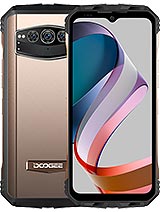
V30T
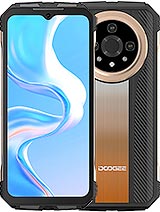
V31GT
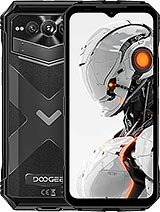
V Max Pro
V Max Plus
Galaxy A24