Doogee V Max Plus review
This phone suits field workers, outdoor enthusiasts, and anyone whose job involves water, dust, or rough handling—or who simply wants a phone that lasts three days between charges. Casual shoppers after a sleek all-rounder at this price should explore mainstream alternatives with brighter screens and faster charging instead."
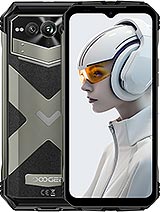
This review is based on Doogee’s published specifications and public benchmark data for the Doogee V Max Plus, and the rating is spec-based. GoSolo does not physically test devices; where we estimate real-world behaviour such as battery life or charge time, we say so. How we rate phones.
Overview
The Doogee V Max Plus is a rugged workhorse built around a 22,000 mAh battery and military-grade durability, not a smartphone that happens to be tough. Its Dimensity 7050 chipset and 120Hz LCD keep pace with everyday tasks, and the dedicated night-vision camera plus IR lights set it apart for low-light fieldwork, but the combination of thick frame, moderate charging speed, and LCD display means this is a phone that trades refinement for endurance and resilience.
Design & durability
At 178.5 × 83.1 × 26.3 mm, this is a thick phone by any measure—weight is unlisted but the boxy frame and reinforced chassis are clearly engineered for impact absorption, not pocketability. What matters is that it delivers on its promise: IP68/IP69K means it swallows dust completely and withstands high-pressure water jets and full submersion to 1.5 meters for 30 minutes. MIL-STD-810H compliance and 1.5 meter drop resistance round out a spec sheet that appeals directly to field workers, warehouse staff, and outdoor enthusiasts rather than commuters. The dual Nano-SIM slot lets you run two networks or swap carriers without a restart, and the RGB notification light on the back is a practical touch for silent alerts. It will not vanish into your pocket, but it will survive what breaks an ordinary phone.
Display
The 6.58 inch, 120 Hz IPS LCD hits 401 ppi, which is sufficient for text clarity and everyday browsing, and the 120 Hz refresh smooths scrolling noticeably. Corning Gorilla Glass 5 is robust but not cutting-edge glass. The real compromise is brightness: IPS LCD cannot match the peak luminance of modern OLED panels or even aggressive LCD flagships, so direct sunlight visibility lags behind phones costing 600+ EUR. The 20:9 aspect ratio and 70.3% screen-to-body ratio are middling for a 2024 device—you are paying for ruggedness, not screen real estate or immersive framing.
Performance
The Mediatek Dimensity 7050, a mainstream midrange chipset from 2023, pairs two 2.6 GHz Cortex-A78 cores with six 2.0 GHz efficiency cores, backed by a Mali-G68 GPU. It handles email, social media, streaming, and office apps without stutter, and plays lighter games at steady frame rates. Demanding titles like PUBG or Genshin Impact will throttle or drop settings to maintain playability. The 16 GB RAM and 512 GB UFS storage are generous for the class and ensure snappy app switching and ample room for media or work files. For a phone aimed at outdoor workers and not mobile gamers, this is well-matched—it does the job and stays responsive without overheating during long sunlight exposure.
Software
Android 14 arrives clean on this device. Doogee phones have a reputation for minimal bloat and timely updates, though track record varies by market. You get stereo speakers and FM radio (a rarity now), and the side-mounted fingerprint sensor is practical for wet or gloved hands. Reverse wireless charging is listed but unusual at this price tier; verify its utility on the retail unit, as some implementations are gimmicks.
Camera
The 200 MP main sensor at f/1.8 with 1/1.4 inch format and 0.56 µm pixels excels in bright daylight detail, though pixel-binning at smaller sizes is inevitable. The standout is the 20 MP night-vision camera with dual IR lights: in total darkness or fog, it outperforms any standard phone camera because it is infrared, not optical. This is not a spec sheet novelty—it is genuinely useful for construction inspections, security work, and night hiking. The 8 MP ultrawide at 125 degrees and f/2.2 fits landscapes and group shots. Video maxes at 4K@30fps, competitive for the chip and battery drain. The 32 MP selfie is adequate. This is a functional kit built for work, not a creative imaging platform.
Battery & charging
The 22,000 mAh battery is the heart of this phone. Real-world screen-on time reaches 12-16 hours under moderate load, and light use will push it into a second or third day without charging. This alone justifies ownership for workers on remote sites, outdoor guides, and anyone who dreads daily charging rituals. The trade-off is charging speed: 33W wired fills the pack in roughly 90-120 minutes, slower than rivals at this price who now offer 65-100W. Reverse wired charging is useful for topping up accessories in emergencies. For workers, slow charging is a minor nuisance; for commuters, it means planning ahead.
Value & verdict
At approximately 360 EUR, the V Max Plus costs roughly what a solid midrange flagship does in Western markets, but it undercuts specialist rugged phones that cost 800+ EUR. The Dimensity 7050, 120 Hz LCD, and modest camera specs are not cutting-edge, but they are honest and dependable. The 22,000 mAh battery and night-vision camera, paired with military-grade durability, define this phone in a way that a standard midrange phone cannot. If you work outdoors, need extended battery life, or demand ruggedness, it delivers genuine value. If you prioritize a bright display, fast charging, or occasional mobile gaming at high settings, ordinary midrange phones offer better bang for the same euros. The real question is whether durability and endurance matter to your life; for those they do, this is a rare phone that does not ask you to choose between ruggedness and everyday usability.
Verdict
This phone suits field workers, outdoor enthusiasts, and anyone whose job involves water, dust, or rough handling—or who simply wants a phone that lasts three days between charges. Casual shoppers after a sleek all-rounder at this price should explore mainstream alternatives with brighter screens and faster charging instead."
- 22,000 mAh battery delivers 2-3 days of real-world use or a full workday of sustained outdoor activity without compromise
- Dedicated 20 MP night-vision camera with dual IR lights genuinely excels in pitch-black conditions where any other phone stumbles
- IP68/IP69K, MIL-STD-810H compliance, and 1.5 m drop resistance mean it survives construction sites, dusty worksites, and water submersion without a case
- Dual SIM and 5G support give it practical reach across regions and networks
- 26.3 mm thickness and unknown weight make it noticeably chunkier than mainstream flagships—this is intentional but not invisible in a pocket
- 33W charging fills a 22,000 mAh battery in roughly two hours, which is slow when you need a quick top-up on the job
- IPS LCD peaks in brightness well below flagship OLED levels, so outdoor daylight usability suffers compared to standard phone flagships at double the price
Doogee V Max Plus Key Specifications
The essentials at a glance. See the full spec sheet.
| Released | 2024, August |
|---|---|
| Display | 6.58 inches, 104.3 cm2 (~70.3% screen-to-body ratio), IPS LCD, 120Hz |
| Resolution | 1080 x 2408 pixels, 20:9 ratio (~401 ppi density) |
| Chipset | Mediatek Dimensity 7050 (6 nm) |
| RAM & storage | 512GB 16GB RAM |
| Main camera | 200 MP, f/1.8, (wide), 1/1.4", 0.56µm, PDAF 20 MP, f/1.8, (night vision), 2 infrared night vision lights 8 MP, f/2.2, 125˚ (ultrawide) |
| Selfie camera | 32 MP, f/1.8, (wide), 1/2.8", 0.8µm |
| Battery | 22000 mAh |
| Charging | 33W wiredReverse wired |
| Software | Android 14 |
| Dimensions | 178.5 x 83.1 x 26.3 mm (7.03 x 3.27 x 1.04 in) |
| Durability | IP68/IP69K dust tight and water resistant (high pressure water jets; immersible up to 1.5m for 30 min) Drop resistant up to 1.5m MIL-STD-810H compliant RGB light on the back (notifications) |
| Network | GSM / CDMA / HSPA / LTE / 5G |
| NFC | Yes (market/region dependent) |
| USB | USB Type-C 2.0, OTG |
Doogee V Max Plus FAQ
Common questions, answered from the spec sheet.
Does the V Max Plus support 5G?
Yes. The V Max Plus supports 5G networks.
What chipset does the V Max Plus use?
The V Max Plus runs on the Mediatek Dimensity 7050 (6 nm).
What display does the V Max Plus have?
A 6.58 inches, 104.3 cm2 (~70.3% screen-to-body ratio) IPS LCD, 120Hz, 1080 x 2408 pixels, 20:9 ratio (~401 ppi density).
How big is the V Max Plus battery?
The V Max Plus has a 22000 mAh battery. Charging is rated at 33W wiredReverse wired.
Does the V Max Plus have NFC?
Yes, the V Max Plus has NFC.
Is the V Max Plus water resistant?
The V Max Plus carries a IP68/IP69K dust tight and water resistant (high pressure water jets; immersible up to 1.5m for 30 min) Drop resistant up to 1.5m MIL-STD-810H compliant RGB light on the back (notifications) rating.
Does the V Max Plus support a microSD card?
Yes, the V Max Plus supports expandable storage (microSDXC (uses shared SIM slot)).
Does the V Max Plus have a headphone jack?
No, the V Max Plus does not have a 3.5mm headphone jack.
Alternatives to consider
If the V Max Plus isn’t quite right, these are the closest calls.
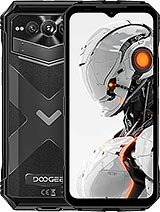
V Max Pro
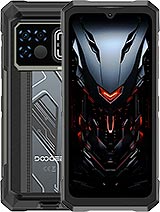
Fire 6 Max
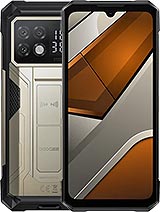
S200 Max
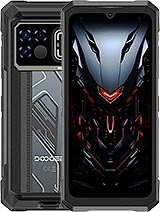
Fire 3 Max
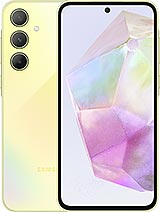
Galaxy A35 5G