Doogee V Max Pro review
This phone is for outdoor workers, remote field crews, or anyone whose daily life involves dust, water, and irregular charging access. If you spend most of your time in air-conditioned offices and value a sleek design and vivid display, there are lighter, thinner, better-looking options for less money.
This review is based on Doogee’s published specifications and public benchmark data for the Doogee V Max Pro, and the rating is spec-based. GoSolo does not physically test devices; where we estimate real-world behaviour such as battery life or charge time, we say so. How we rate phones.
Overview
The V Max Pro is a rugged workhorse built to survive, not impress. At around 300 EUR with a 22,000mAh battery, it prioritizes durability and endurance over performance or camera quality, making it a solid fit for outdoor workers or remote users who value lasting power and IP69K toughness—but it's heavy, slow to charge, and thick enough to notice in a pocket.
Design & build
This is not a phone designed to vanish in your hand. At 536 grams and 26.3mm thick, it feels industrial—closer to a rugged radio than the sleek slabs most of us carry. The trade-off is purposeful: MIL-STD-810H certification, IP68/IP69K protection against high-pressure water jets, immersion to 1.5 meters for 30 minutes, and survival of 1.5-meter drops mean it's built for outdoor professionals, field crews, or anyone who works in dust and rain. If you drop a typical flagship from a job site, you buy a new one. The V Max Pro is supposed to keep running. That durability costs you pocket comfort and a certain feel of refinement, but if your phone lives in a toolbelt or construction vest, this is the right choice.
Display
A 6.58-inch IPS LCD with 1080p resolution and 120Hz refresh is functional but unremarkable. At 401 ppi, it renders text and photos adequately on paper but without the crispness of modern OLED or higher-resolution LCDs. The 120Hz refresh does make scrolling feel smooth, which matters for everyday use. The catch is typical LCD weakness: it's bright enough indoors and in shade, but direct sunlight washes it out compared to OLED rivals. For a phone marketed as rugged and outdoor-focused, the display is the one component that doesn't match its durability promise. If you're checking maps, spreadsheets, or reading under a sun umbrella on a job site, it works; if you need vivid outdoor visibility, you'll squint.
Performance
The Dimensity 7050 is a mid-range chipset that handles the basics without complaint: texts, calls, social media, web browsing, and office apps run smoothly. Gaming is workable at reduced settings—PUBG or Fortnite on medium details will not stutter, but demanding 3D titles will ask you to lower resolution or frame rate. It's not the chip you'd choose for a gaming phone, but it's enough for someone who uses a phone to work, not play. The 12GB of RAM and UFS 3.1 storage keep file operations reasonably brisk. For a rugged outdoor phone at this price, the performance is appropriate; it won't slow you down during a work day, and you're not paying for gaming firepower you don't need.
Software
It runs Android 14, which is current as of the late 2024 release date. Doogee's skin is typically light, and there's little bloatware on the V Max Pro. You get FM radio, which is rarely useful in dense cities but can be a lifeline in remote areas without data coverage. The microSDXC slot shares a SIM tray, which is annoying if you want dual SIM and expandable storage at once, but the 512GB of onboard storage is generous enough that microSD matters less than it once did.
Camera
The 108MP main sensor with f/1.8 aperture and PDAF captures solid detail in daylight, and the 1/1.52" size with 0.7µm pixels is large enough for a 2024 mid-range phone. The unique element is the dedicated 20MP night vision sensor with infrared lights. In very dark environments—caves, dense forest at night, low-light construction sites—this module shines infrared light and captures what the main camera cannot, avoiding the noise and graininess typical of boosted ISO on a regular phone. Results won't match a flagship's computational night mode, but they're noticeably better than guessing in the dark. The 8MP ultrawide is weak by modern standards, and the 4K video caps at 30fps, which is functional but not smooth for action. The 16MP selfie is adequate for video calls. For a rugged phone, the camera lineup makes sense: the night vision is a specialised tool, not a general strength.
Battery & charging
The 22,000mAh battery is the phone's headline act. In real use, expect about 3 to 4 days if you text, call, browse, and use social media lightly; heavy video watching or gaming cuts that to 2 days. For someone working in remote areas or on outdoor sites without frequent charging access, this is genuinely valuable—most flagships die in a day and a half of active use. The downside is the 33W charger: it needs about 1.5 to 2 hours to top up the massive cell from empty, so if it dies you can't just grab a quick 30-minute boost the way you might with a 120W flagship. Plan ahead, or keep the heavy power bank it likely comes with. Battery life was clearly the design priority here, and it works.
Value & verdict
At around 300 EUR, the V Max Pro sits in the budget-to-mid-range space where durability usually costs extra or doesn't exist at all. For that money, you could grab a lighter, thinner mainstream phone with a sharper screen and snappier performance. But if your phone lives outdoors, in rain, on job sites, or in remote work camps, those trade-offs evaporate. The V Max Pro is built to last and to run for days without power—precisely the features someone working in the field actually needs. It is not a phone for someone who wants the slimmest pocket feel or the sharpest screen. It is for someone who genuinely needs a tool that will not quit. That clarity of purpose, even if it is not for everyone, is refreshing in a market of compromised middle-ground devices.
Verdict
This phone is for outdoor workers, remote field crews, or anyone whose daily life involves dust, water, and irregular charging access. If you spend most of your time in air-conditioned offices and value a sleek design and vivid display, there are lighter, thinner, better-looking options for less money.
- 22,000mAh battery delivers about 3 to 4 days on light use, a genuine advantage over typical flagships
- IP68/IP69K and MIL-STD-810H durability plus 1.5m drop resistance make it genuinely built for field work and rough outdoor conditions
- Dedicated 20MP night vision sensor with infrared lights gives an edge in very dark scenes where most phones would fail
- 5G connectivity across multiple bands (SA/NSA) and WiFi 6 keep it current for network standards
- At 536g and 26.3mm thick, it's noticeably heavy and bulky—more industrial tool than everyday phone
- 33W charging takes about 1.5 to 2 hours to top up the massive battery, so planning ahead is essential
- 1080p IPS LCD on a 6.58-inch screen produces text and photos that look ordinary rather than sharp, and LCD brightness suffers in direct sunlight
Doogee V Max Pro Key Specifications
The essentials at a glance. See the full spec sheet.
| Released | 2024, September 19 |
|---|---|
| Display | 6.58 inches, 104.3 cm2 (~70.3% screen-to-body ratio), IPS LCD, 120Hz |
| Resolution | 1080 x 2408 pixels, 20:9 ratio (~401 ppi density) |
| Chipset | Mediatek Dimensity 7050 (6 nm) |
| RAM & storage | 512GB 12GB RAM |
| Main camera | 108 MP, f/1.8, (wide), 1/1.52", 0.7µm, PDAF 20 MP, f/1.8, (night vision), 2 infrared night vision lights 8 MP, f/2.2, (ultrawide) |
| Selfie camera | 16 MP |
| Battery | 22000 mAh |
| Charging | 33W wiredReverse wired |
| Software | Android 14 |
| Dimensions | 178.5 x 83.1 x 26.3 mm (7.03 x 3.27 x 1.04 in) |
| Weight | 536 g (1.18 lb) |
| Durability | IP68/IP69K dust tight and water resistant (high pressure water jets; immersible up to 1.5m for 30 min) Drop resistant up to 1.5m MIL-STD-810H compliant |
| Network | GSM / CDMA / HSPA / LTE / 5G |
| NFC | Yes (market/region dependent) |
| USB | USB Type-C 2.0, OTG |
Doogee V Max Pro FAQ
Common questions, answered from the spec sheet.
Does the V Max Pro support 5G?
Yes. The V Max Pro supports 5G networks.
What chipset does the V Max Pro use?
The V Max Pro runs on the Mediatek Dimensity 7050 (6 nm).
What display does the V Max Pro have?
A 6.58 inches, 104.3 cm2 (~70.3% screen-to-body ratio) IPS LCD, 120Hz, 1080 x 2408 pixels, 20:9 ratio (~401 ppi density).
How big is the V Max Pro battery?
The V Max Pro has a 22000 mAh battery. Charging is rated at 33W wiredReverse wired.
Does the V Max Pro have NFC?
Yes, the V Max Pro has NFC.
Is the V Max Pro water resistant?
The V Max Pro carries a IP68/IP69K dust tight and water resistant (high pressure water jets; immersible up to 1.5m for 30 min) Drop resistant up to 1.5m MIL-STD-810H compliant rating.
Does the V Max Pro support a microSD card?
Yes, the V Max Pro supports expandable storage (microSDXC (uses shared SIM slot)).
Does the V Max Pro have a headphone jack?
No, the V Max Pro does not have a 3.5mm headphone jack.
Alternatives to consider
If the V Max Pro isn’t quite right, these are the closest calls.
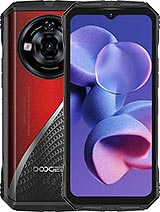
S118 Pro
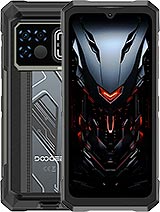
Fire 6 Max
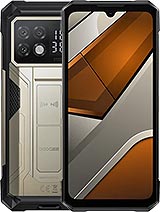
S200 Max
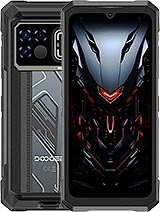
Fire 3 Max
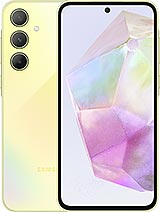
Galaxy A35 5G