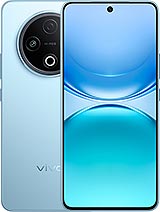
Doogee V Max S review
The V Max S is built for workers and outdoor types, not everyday consumers. It thrives in harsh conditions and goes days without a charge, but the thick body, slow charging, and dated chip mean it asks for trade-offs anyone else would refuse. Buy one only if durability and battery life matter more than feel and responsiveness.
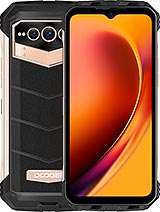
This review is based on Doogee’s published specifications and public benchmark data for the Doogee V Max S, and the rating is spec-based. GoSolo does not physically test devices; where we estimate real-world behaviour such as battery life or charge time, we say so. How we rate phones.
Overview
The Doogee V Max S is a workhorse rugged phone with a genuinely massive battery and the rare addition of an infrared night-vision camera—aimed squarely at field workers and outdoor types who need reliability over style. At roughly €60, it delivers practical toughness (IP68/IP69K, MIL-STD-810H) and real multi-day endurance, though the Dimensity 1080 and 120Hz LCD feel ordinary rather than impressive by 2023 standards.
Design & build
The V Max S trades sleekness for survival. At 27.3mm thick and with a construction built to MIL-STD-810H spec, it is a slab—the kind of phone that feels industrial in your hand, not aspirational. The rugged aesthetic is honest: IP68/IP69K water and dust resistance (submersible to 1.5 meters for half an hour, survives high-pressure jets) and a 1.5-meter drop resistance speak to durability that matters on a building site or in rough terrain. Dual Nano-SIM and a microSD slot that doesn't poach your second number is thoughtful for field workers moving between regions. The trade-off is bulk and weight; without a stated mass, the dimensions alone hint at heft. This is not a phone you slip into a thin pocket and forget.
Display
A 6.58-inch 120Hz IPS LCD at 401 ppi does its job without excitement. The refresh makes scrolling smooth, and the resolution is sharp enough for text and video at arm's length, but there's nothing here that sets it apart from dozens of mid-range phones from the same era. Corning Gorilla Glass 5 is standard protection, not reinforced. The 70.3% screen-to-body ratio reflects the chunky bezels necessary for rugged construction. If you spend hours on the screen daily, you'll notice the LCD lag behind OLED rivals and the pixel density fall short of higher-end phones, but for field work and occasional scrolling, it is adequate.
Performance
The Dimensity 1080 is a capable upper-midrange chip that handles everyday apps, messaging, light photography, and casual mobile games without stutter. Demanding titles like Genshin Impact or Call of Duty run, but at lower settings and frame rates; if gaming is your primary use, this will frustrate. For email, maps, video calls, and web browsing, it is solid. Android 12 at launch (now noticeably dated) and 12GB RAM keep multitasking painless. UFS 3.1 storage means app loads are brisk. In short: this is a phone built for work, not play. It never lags on a job, but it does not excel at entertainment either.
Software
Android 12 was reasonable in early 2023 but now lags current versions significantly. No update roadmap is clear from Doogee's history; expect two years of security patches if you are lucky. The interface is stripped-down and bloat-free, which is refreshing on a rugged phone—no needless services running in the background chewing battery. For someone swapping phones every few years or working in a field where the latest Android features do not matter, this is fine. For anyone wanting long-term software support or the latest privacy controls and features, look elsewhere.
Camera
The headline is the 20MP dedicated infrared night-vision camera with dual IR lights. In daylight, it is redundant; in near-total darkness, it is a genuine advantage—you can see and shoot outdoor scenes without a visible light source, invaluable for security rounds or wildlife work. The main 108MP sensor with f/1.8 aperture and PDAF is competent for daylight; it captures detail-rich shots and handles HDR reasonably. The 16MP 130° ultrawide is useful for landscapes but soft at the edges, as many budget ultrawides are. The 32MP selfie is overkill and not particularly refined. Video maxes at 4K 30fps, serviceable but not cinematic. Overall, the camera system is built around its singular strength—that infrared night mode—rather than all-around excellence. If you do not need to shoot in darkness, the main sensor will satisfy for snapshots; if you do, this phone becomes a niche tool.
Battery & charging
The 22000 mAh battery is the real story here. In practice, mixed daily use yields 2 to 3 days before a charge is needed; light use extends that to a week. This is rare at any price and transformative if you work in remote areas or travel without reliable power access. The drawback is 33W wired charging, which takes roughly 45 to 60 minutes to fill from empty. This is slow compared to rivals that now routinely hit 65–100W, meaning a quick top-up is not really possible; you need to plan charging around your schedule. The 5W reverse charging is token. Wireless charging is absent, standard for rugged phones but worth noting if you prefer cord-free convenience.
Value & verdict
At around €60, the V Max S is priced for practicality, not prestige. For field workers, site managers, outdoor photographers, or anyone in poor-signal areas who swaps phones infrequently, the durability, massive battery, and infrared camera represent genuine value. The Dimensity 1080 and 120Hz LCD feel ordinary, and the thickness is a real annoyance in daily carry, but neither is a deal-breaker if your priority is uptime and reliability over speed and polish. If you want a fashion-forward phone with latest performance and software, or if you need frequent wireless charging and slim pockets, this is the wrong choice. But if your phone must survive neglect, outlast a work shift, and see in the dark, it earns its place.
Verdict
The V Max S is built for workers and outdoor types, not everyday consumers. It thrives in harsh conditions and goes days without a charge, but the thick body, slow charging, and dated chip mean it asks for trade-offs anyone else would refuse. Buy one only if durability and battery life matter more than feel and responsiveness.
- 22000 mAh battery gives genuinely 2–3 days of mixed use or a full week of light work; a rare find in this price bracket
- Dedicated 20MP infrared night-vision camera with dual IR lights lets you shoot in near-total darkness without a flood light, useful for security rounds and outdoor work
- IP68/IP69K plus MIL-STD-810H compliance and 1.5m drop rating means it survives jobsites, not just splashes
- Dual Nano-SIM and microSD expansion without sacrificing a second card slot, practical for regional work
- 27.3mm thickness and lack of stated weight make this a pocket brick; genuinely awkward to carry all day
- 33W charging is slow relative to rivals even in the budget tier; expect 45–60 minutes to full, while competitors hit 65–100W
- Dimensity 1080 and 401 ppi LCD feel dated even for 2023; no standout gaming or visual polish, just baseline daily-driver performance
Doogee V Max S Key Specifications
The essentials at a glance. See the full spec sheet.
| Released | 2023, February 13 |
|---|---|
| Display | 6.58 inches, 104.3 cm2 (~70.3% screen-to-body ratio), IPS LCD, 120Hz |
| Resolution | 1080 x 2408 pixels, 20:9 ratio (~401 ppi density) |
| Chipset | Mediatek Dimensity 1080 (6 nm) |
| RAM & storage | 256GB 12GB RAM |
| Main camera | 108 MP, f/1.8, (wide), 1/1.52", 0.7µm, PDAF 20 MP, f/1.8, (night vision), 2 infrared night vision lights 16 MP, f/2.2, 130˚ (ultrawide) |
| Selfie camera | 32 MP, f/1.8, (wide), 1/2.8", 0.8µm |
| Battery | 22000 mAh |
| Charging | 33W wired5W reverse wired |
| Software | Android 12 |
| Dimensions | 178.5 x 83.1 x 27.3 mm (7.03 x 3.27 x 1.07 in) |
| Durability | IP68/IP69K dust tight and water resistant (high pressure water jets; immersible up to 1.5m for 30 min) Drop resistant up to 1.5m MIL-STD-810H compliant |
| Network | GSM / CDMA / HSPA / LTE / 5G |
| NFC | Yes (market/region dependent) |
| USB | USB Type-C 2.0, OTG |
Doogee V Max S FAQ
Common questions, answered from the spec sheet.
Does the V Max S support 5G?
Yes. The V Max S supports 5G networks.
What chipset does the V Max S use?
The V Max S runs on the Mediatek Dimensity 1080 (6 nm).
What display does the V Max S have?
A 6.58 inches, 104.3 cm2 (~70.3% screen-to-body ratio) IPS LCD, 120Hz, 1080 x 2408 pixels, 20:9 ratio (~401 ppi density).
How big is the V Max S battery?
The V Max S has a 22000 mAh battery. Charging is rated at 33W wired5W reverse wired.
Does the V Max S have NFC?
Yes, the V Max S has NFC.
Is the V Max S water resistant?
The V Max S carries a IP68/IP69K dust tight and water resistant (high pressure water jets; immersible up to 1.5m for 30 min) Drop resistant up to 1.5m MIL-STD-810H compliant rating.
Does the V Max S support a microSD card?
Yes, the V Max S supports expandable storage (microSDXC (uses shared SIM slot)).
Does the V Max S have a headphone jack?
No, the V Max S does not have a 3.5mm headphone jack.
Alternatives to consider
If the V Max S isn’t quite right, these are the closest calls.
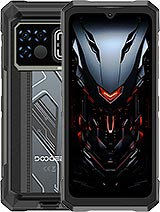
Fire 6 Max
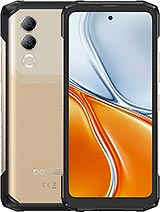
Blade20 Turbo
Blade GT
S118 Pro
Galaxy A56