Energizer E246SC review
This is for people in emerging markets who need reliable calls and texts without internet distraction or charging anxiety, or for anyone who has lost a phone and wants something bulletproof as a replacement without emotional investment. Anyone expecting a modern smartphone, even a cheap one, should look at used Android devices instead.
This review is based on Energizer’s published specifications and public benchmark data for the Energizer E246SC, and the rating is spec-based. GoSolo does not physically test devices; where we estimate real-world behaviour such as battery life or charge time, we say so. How we rate phones.
Overview
This is a bare-bones 2G-era phone sold in 2024–a dual-SIM brick aimed squarely at users in regions with poor charging infrastructure who need calls, texts, and radio, not apps or internet. At €50, it delivers durability and a removable battery, but everything else (screen, cameras, performance) is deliberately minimal.
Design and durability
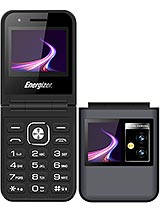
At 86 × 70 × 21 mm, this is a pocket brick with a secondary 1.77-inch external display for time, signal, and caller ID without flipping open. The form factor is intentional: Energizer is not targeting Instagram enthusiasts. Dual-SIM nano slots are practical for regional roaming or work-personal separation. The removable 2000 mAh battery is the headline feature—rare in 2024 and genuinely useful where charging points are sparse or unreliable. Swap a worn cell every 1–2 years instead of scrapping the whole device. At €50, durability is not about flagship materials; it is about simplicity. No wireless charging, no water rating, no gorilla glass—just a phone that does calls and texts without breaking your budget when you drop it.
Display
The 2.4-inch TN TFT with 240 × 320 resolution (167 ppi) is a museum piece by modern standards. Text and icons are chunky, colors wash out at any angle, and scrolling anything longer than an SMS will feel cramped. The secondary external 1.77-inch display helps: you see incoming calls and the time without opening the device, a small quality-of-life win. This screen is not for browsing or reading; it is for what phones were in 2010—calls, calendar, and FM radio. Anyone expecting even basic web utility will be frustrated.
Performance
The Unisoc T107 (single-core, 1 GHz) and 48 MB RAM are purposefully minimal. This chipset is designed for calls, texts, and background radio, not multitasking or modern apps. Opening anything beyond the phone dialer will stall noticeably. The proprietary OS (not Android, not iOS) adds to the isolation: there is no app ecosystem here, no Google Play. This is not a bottleneck to bemoan; it is by design. Energizer knows its audience does not want a smartphone in the modern sense. They want a reliable calling device that lasts all week on one charge and does not demand a charger every night.
Camera
VGA (0.3 MP) front and rear cameras are film-quality in the literal sense—each frame could be mistaken for a still from a mid-1990s camcorder. LED flash on the rear will not salvage low-light shots; the sensor is too small and slow. Daylight video calls will work; daylight photos will not. If you need a camera, this is the wrong device. If you need video calling, this does it at the bare minimum.
Software
Proprietary OS means no Android updates, no Google services, and no app store. What you see at purchase is what you get. This is a security and longevity concern for anyone expecting to use the device long-term beyond calls and FM radio, but it also means no bloat, no forced updates, and predictable battery behavior. The trade-off is stark: simplicity for isolation.
Battery and charging
The removable 2000 mAh Li-Ion cell will give roughly 1–2 days of light use (calls, texts, FM radio) before demanding a charge. That is not terrible for a phone with a 1 GHz CPU and dim screen, but it is not exceptional either. Charging speed is unspecified, so USB Type-C 2.0 likely means a slow, shallow trickle. The real value is the removable battery: if the cell dies after 18 months, you buy a €5 replacement instead of a €50 new phone.
Value and reality
At €50, the Energizer E246SC is not competing with budget Android phones; it is a parallel product. Android-based competitors at this price can run WhatsApp, Google Maps, and basic apps. This cannot. The question is whether your use case is calls, texts, FM radio, and durability, or whether you actually need a smartphone. If Energizer's target audience—regions with unreliable power, users replacing lost devices frequently, or people who deliberately avoid internet on their phone—this device makes sense. It is honest about what it is. If you want a functioning smartphone, spend €20–30 more for a used Android from three years ago and get vastly more utility.
Verdict
This is for people in emerging markets who need reliable calls and texts without internet distraction or charging anxiety, or for anyone who has lost a phone and wants something bulletproof as a replacement without emotional investment. Anyone expecting a modern smartphone, even a cheap one, should look at used Android devices instead.
- Removable battery, a rarity in 2024, lets you swap a worn cell without binning the entire phone
- Dual-SIM with LTE and FM radio covers essential needs in emerging markets where infrastructure is patchy
- Compact and light (86 × 70 × 21 mm), with a secondary 1.77" external display for quick glances without opening
- Price under €50 makes replacement painless if lost or damaged
- 48 MB RAM and single-core 1 GHz CPU mean any app beyond basic call/SMS utilities will stall or crash
- VGA cameras (0.3 MP front and rear) are fit only for video calls; daylight shots lack all detail
- 2000 mAh battery gives roughly 1–2 days on light use; overnight charging is essential
Energizer E246SC Key Specifications
The essentials at a glance. See the full spec sheet.
| Released | 2024, May |
|---|---|
| Display | 2.4 inches, 17.8 cm2 (~29.6% screen-to-body ratio), TN TFT |
| Resolution | 240 x 320 pixels, 4:3 ratio (~167 ppi density) |
| Chipset | Unisoc T107 (22 nm) |
| RAM & storage | 128MB 48MB RAM |
| Main camera | VGA |
| Selfie camera | VGA |
| Battery | 2000 mAh |
| Software | Proprietary OS |
| Dimensions | 86 x 70 x 21 mm (3.39 x 2.76 x 0.83 in) |
| Network | GSM / HSPA / LTE |
| NFC | No |
| USB | USB Type-C 2.0 |
Energizer E246SC FAQ
Common questions, answered from the spec sheet.
Does the E246SC support 5G?
No. The E246SC tops out at GSM / HSPA / LTE, without 5G.
What chipset does the E246SC use?
The E246SC runs on the Unisoc T107 (22 nm).
What display does the E246SC have?
A 2.4 inches, 17.8 cm2 (~29.6% screen-to-body ratio) TN TFT, 240 x 320 pixels, 4:3 ratio (~167 ppi density).
How big is the E246SC battery?
The E246SC has a 2000 mAh battery.
Does the E246SC have NFC?
No, the E246SC does not list NFC support.
Does the E246SC support a microSD card?
Yes, the E246SC supports expandable storage (microSDHC).
Does the E246SC have a headphone jack?
Yes, the E246SC has a 3.5mm headphone jack.
Alternatives to consider
If the E246SC isn’t quite right, these are the closest calls.
E244s
E130S
Ultimate U608s
E29
Y50 5G