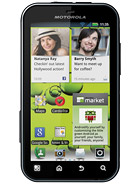
Energizer E288s review
The E288s suits users in emerging markets who prioritize battery swappability, long runtime between charges, and reliable calling and texting over media features. Skip it if you expect smartphone capabilities, modern speeds, or a camera worth using; this is a functional tool, not a connected device.
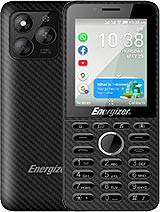
This review is based on Energizer’s published specifications and public benchmark data for the Energizer E288s, and the rating is spec-based. GoSolo does not physically test devices; where we estimate real-world behaviour such as battery life or charge time, we say so. How we rate phones.
Overview
The Energizer E288s is a basic 2G/3G/LTE phone aimed at users in emerging markets who need long battery life and simplicity, running KaiOS with a removable battery that can be swapped in the field. It delivers what it promises—calling, texts, FM radio, and light browsing—but the 512MB RAM and 0.3MP camera mean it is strictly a functional device, not a media phone.
Design & build
At 138mm long and 116g, the E288s feels compact and pocket-friendly, with a 12.8mm profile that is genuinely thin. The design does not aspire to luxury; it is plainly a utilitarian device built to withstand rough handling and power cycles. Dual nano-SIM slots and USB Type-C charging are practical decisions for a phone marketed at emerging markets, though the absence of a headphone jack would have been a red flag two years ago—fortunately, it is here. The removable battery is the standout feature: in regions where power cuts are routine or charging infrastructure sparse, the ability to carry and swap a spare battery is not a luxury but a necessity. This alone explains why this phone exists in 2024, well past the era when removable batteries became a rarity.
Display
The 2.8-inch TFT screen is cramped by modern standards, with 240×320 resolution and just 143 ppi. Text and icons are readable in daylight at arm's length, and the 4:3 ratio is familiar for anyone who remembers pre-smartphone phones. Anything beyond basic navigation—scrolling a web page, reading email threads, or watching video—requires constant scrolling and squinting. KaiOS menus and SMS work fine here; anything else is compromise. This is not a limitation unique to the E288s; it is the reality of a phone this size, and buyers are choosing the size deliberately for battery endurance and portability, not media consumption.
Performance
The Mediatek MT6739WW running at 1.3GHz with 512MB RAM is adequate for voice calls, SMS, and FM radio, but falters under any real load. Opening a second app while another runs in the background causes visible pause. Web browsing is usable but feels glacial; loading a news site or social feed takes seconds longer than it should. The quad-core processor helps more than the RAM hurts, but 512MB is genuinely limiting by 2024 standards, even for a budget device. KaiOS 2.X does its part to keep overhead low, and the trade-off is accepted by users who know they are buying for endurance and simplicity, not speed.
Software
KaiOS 2.X is not Android or iOS; it is a lightweight operating system designed for emerging markets, offering calling, texting, FM radio, and basic web browsing without the complexity or battery drain of a full smartphone OS. The app ecosystem is minimal—think messaging, maps, banking apps, and FM player rather than games or Instagram. Updates are infrequent. For users who want a phone that does one thing well (stay connected with low power overhead), KaiOS is the right choice. For anyone expecting a smartphone experience, this is a reality check: you are trading features for battery life and simplicity.
Camera
The 0.3MP rear camera is so underpowered that it barely qualifies as a camera at all. It captures video at 480p, which means footage is soft and low-detail. For a user in a region without reliable cloud backup or multiple devices, this is not practical for preserving memories; it is a checkbox feature. A front-facing camera (mentioned in specs but not detailed) exists for selfies or video calls, though the small screen makes framing difficult. Do not buy this phone expecting to take pictures worth keeping.
Battery & charging
The 2000mAh removable battery is the E288s's defining trait. In light use (calls, texts, FM radio), expect one to two days before needing a recharge; heavy LTE browsing or GPS can drain it in hours. For a phone this size, the capacity is not unusual, but the removability is. In areas with unstable power, the ability to carry a fully charged spare and swap it without powering down means continuous operation across a power cut or work shift. USB Type-C is standard and welcome, though charging speed is not specified—assume about two hours from empty. The trade-off is clear: a larger, sealed battery would last longer, but you would lose the swappability that makes this phone valuable in its target markets.
Connectivity & value
LTE band support spans bands 1–41, covering most global networks. Dual-SIM capability and FM radio add flexibility for users who switch carriers, travel between regions, or rely on free radio when data is metered or costly. The E288s costs roughly $50–70 in markets where it is sold, positioning it as an ultra-budget option. Against competitors in this tier, it offers little that is unusual—basic connectivity, modest specs, and simple software are the norm. The removable battery and dual-SIM are the only differentiators, and they matter only if your use case demands them. For urban users in developed markets, this phone is archaeologically quaint. For someone in a region with frequent power cuts, limited data plans, and a need for reliability over features, it is honest value.
Verdict
The E288s suits users in emerging markets who prioritize battery swappability, long runtime between charges, and reliable calling and texting over media features. Skip it if you expect smartphone capabilities, modern speeds, or a camera worth using; this is a functional tool, not a connected device.
- Removable battery lets you carry a spare and swap without powering down, critical in areas with erratic grid power
- Dual nano-SIM and broad LTE band coverage (1–41) work across most global networks without region-locking hassle
- Light enough (116g) and thin enough (12.8mm) to slip into a pocket; USB Type-C is a modern touch on a basic form factor
- FM radio and 3.5mm jack preserve connectivity options when data is scarce or unreliable
- Only 512MB RAM makes multitasking painful and app switching laggy even on KaiOS
- 2000mAh battery, while removable, is small enough that heavy LTE use or GPS drains it in hours, not a full workday
- 0.3MP camera is essentially decorative; any photo beyond proof-of-presence is a waste of storage
Energizer E288s Key Specifications
The essentials at a glance. See the full spec sheet.
| Released | 2024, April |
|---|---|
| Display | 2.8 inches, 24.3 cm2 (~30.2% screen-to-body ratio), TFT |
| Resolution | 240 x 320 pixels, 4:3 ratio (~143 ppi density) |
| Chipset | Mediatek MT6739WW (28 nm) |
| RAM & storage | 4GB 512MB RAM |
| Main camera | 0.3 MP |
| Selfie camera | Yes |
| Battery | 2000 mAh |
| Software | KaiOS 2.X |
| Dimensions | 138 x 58.2 x 12.8 mm (5.43 x 2.29 x 0.50 in) |
| Weight | 116 g (4.09 oz) |
| Network | GSM / HSPA / LTE |
| NFC | No |
| USB | USB Type-C |
Energizer E288s FAQ
Common questions, answered from the spec sheet.
Does the E288s support 5G?
No. The E288s tops out at GSM / HSPA / LTE, without 5G.
What chipset does the E288s use?
The E288s runs on the Mediatek MT6739WW (28 nm).
What display does the E288s have?
A 2.8 inches, 24.3 cm2 (~30.2% screen-to-body ratio) TFT, 240 x 320 pixels, 4:3 ratio (~143 ppi density).
How big is the E288s battery?
The E288s has a 2000 mAh battery.
Does the E288s have NFC?
No, the E288s does not list NFC support.
Does the E288s support a microSD card?
Yes, the E288s supports expandable storage (microSDXC).
Does the E288s have a headphone jack?
Yes, the E288s has a 3.5mm headphone jack.
Alternatives to consider
If the E288s isn’t quite right, these are the closest calls.
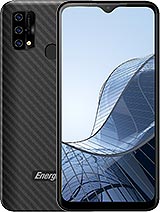
U683S
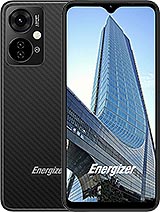
Ultimate U652S
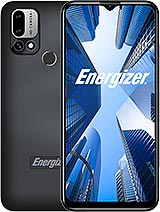
Ultimate 65G
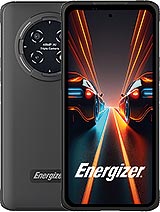
H67G
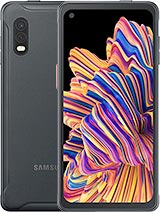
Galaxy XCover 7 Pro