Energizer U683S review
This phone suits someone who needs a second device, a temporary burner, or an entry-level smartphone in a market where €80 feels reasonable and LTE coverage is reliable. Anyone who multitasks, takes many photos, or wants a phone that feels responsive should look elsewhere.
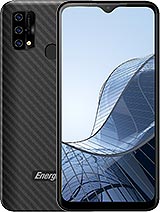
This review is based on Energizer’s published specifications and public benchmark data for the Energizer U683S, and the rating is spec-based. GoSolo does not physically test devices; where we estimate real-world behaviour such as battery life or charge time, we say so. How we rate phones.
Overview
The Energizer U683S is a barebones budget Android phone that does calls, messages, and light browsing without complaint—as long as you don't ask much else of it. At €80 it is honest about what it is: a no-frills device for emerging markets where LTE coverage matters more than performance or display crispness.
Design & build
At 210g and 9.7mm thick, this is a straightforward slab of plastic. The weight is unremarkable for the 6.82-inch body size, and it sits comfortably in the hand without feeling flimsy or premium. Dual nano-SIM slots and a microSD card slot suggest this is pitched at markets where people juggle multiple carriers and need expandable storage—a genuine practical touch. The rear fingerprint sensor is placed sensibly. Nothing here announces ambition, but nothing feels cheap either; it is just an appliance.
Display
The 6.82-inch IPS LCD screen with 720 × 1640 resolution works out to 263 ppi, which means text and small icons look slightly soft when you hold the phone at a normal reading distance. For messaging and web browsing it is liveable, though a sharper screen would make reading less of a strain during long sessions. The IPS technology means viewing angles are decent, but the low brightness ceiling and poor outdoor visibility in sunlight are typical for the class and price. At this cost you simply do not get OLED or punchy contrast; this is a basic utility display.
Performance
The MediaTek MT6762CB with 2GB of RAM is entry-level silicon from 2024. It handles social apps, calls, and browsing without stuttering as long as you are not juggling many tasks at once. Jump between apps, open a few browser tabs, or fire up anything with real CPU hunger and frame drops become noticeable. Video playback and casual games will work, but demanding apps or heavy multitasking will slow things down. If you own more than a dozen installed apps and switch between them often, this machine will make you wait. The 64GB storage is tight but expandable via microSD, which helps.
Software
Android 13 Go edition is a lightweight variant designed for modest hardware. It strips bloat and makes do with 2GB RAM, which is the correct choice for a phone this cheap. Updates and security patches are a question mark at this price—Energizer is not known for after-sales support, and Go edition phones often languish on older patches. What you get out of the box should work, but do not expect long-term software care.
Camera
The 8MP main sensor and 5MP selfie camera are functional for daytime snaps and video calls. Indoor light and low-light shots will look grainy, and zoom is poor because there is no telephoto. Video maxes out at 1080p and 30fps, which is adequate but not smooth for fast motion. A macro auxiliary lens is listed but 0.08MP suggests it is a gimmick. For a phone at this price you get what you pay for: cameras that work for bright daylight and messaging, nothing more.
Battery & charging
The 4900 mAh battery should see you through a day of light use—browsing, messages, calls—comfortably into the evening. Heavy use will drain it by midday. No charging wattage is listed, which is telling: expect a slow charger. Without fast charging spec, assume a 5W or 10W brick and a couple of hours to reach 100%. Battery longevity should be reasonable, but without a stated charge speed or cycle rating, this is a guess. The inclusion of USB Type-C is standard even here, though it is USB 2.0 so file transfers are slow.
Value & verdict-context
At €80, the U683S is positioned as a throwaway phone for markets where a second device for work or a spare makes sense. In 2024, that is its honest lane. It offers no upgrades over a 2023 budget phone, no innovations, no surprises—but it also does not pretend to be anything it is not. Buyers should expect compromises: a low-res screen, weak performance under load, basic cameras, and slow charging. For someone who needs a phone to stay reachable without spending real money, or as a temporary device while traveling through regions with poor telecom infrastructure, it fills a gap. Anyone wanting a phone that feels responsive, takes decent photos, or lasts longer than a work day should spend more.
Verdict
This phone suits someone who needs a second device, a temporary burner, or an entry-level smartphone in a market where €80 feels reasonable and LTE coverage is reliable. Anyone who multitasks, takes many photos, or wants a phone that feels responsive should look elsewhere.
- Dual SIM and microSD expansion for emerging markets where these matter practically
- Lightweight and compact for its 6.82-inch size, easy to carry
- 4900 mAh battery lasts a full day on light use without strain
- LTE with a wide band selection and dual-band Wi-Fi ac for solid mobile coverage in most regions
- 2GB RAM and MT6762CB chipset make multitasking noticeably slow; even switching apps feels sluggish under load
- 720p display density (263 ppi) looks soft and outdoors washes out; fine for reading but not sharp
- No charging wattage specified suggests a slow charger, and likely takes 2+ hours to fill the battery
Energizer U683S Key Specifications
The essentials at a glance. See the full spec sheet.
| Released | 2024, January |
|---|---|
| Display | 6.82 inches, 110.5 cm2 (~81.4% screen-to-body ratio), IPS LCD |
| Resolution | 720 x 1640 pixels (~263 ppi density) |
| Chipset | Mediatek MT6762CB |
| RAM & storage | 64GB 2GB RAM |
| Main camera | 8 MP, (wide), AF 0.08 MP (macro) Auxiliary lens |
| Selfie camera | 5 MP, (wide) |
| Battery | 4900 mAh |
| Software | Android 13 (Go edition) |
| Dimensions | 172.8 x 78.5 x 9.7 mm (6.80 x 3.09 x 0.38 in) |
| Weight | 210 g (7.41 oz) |
| Network | GSM / HSPA / LTE |
| NFC | No |
| USB | USB Type-C 2.0 |
Energizer U683S FAQ
Common questions, answered from the spec sheet.
Does the U683S support 5G?
No. The U683S tops out at GSM / HSPA / LTE, without 5G.
What chipset does the U683S use?
The U683S runs on the Mediatek MT6762CB.
What display does the U683S have?
A 6.82 inches, 110.5 cm2 (~81.4% screen-to-body ratio) IPS LCD, 720 x 1640 pixels (~263 ppi density).
How big is the U683S battery?
The U683S has a 4900 mAh battery.
Does the U683S have NFC?
No, the U683S does not list NFC support.
Does the U683S support a microSD card?
Yes, the U683S supports expandable storage (microSDXC).
Does the U683S have a headphone jack?
Yes, the U683S has a 3.5mm headphone jack.
Alternatives to consider
If the U683S isn’t quite right, these are the closest calls.
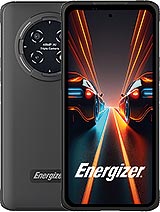
H67G
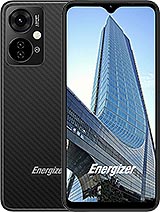
Ultimate U652S
Ultimate U6G
E288s
Galaxy XCover 7 Pro