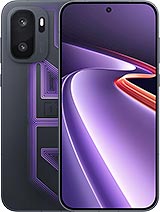
Google Pixel 10 Pro Fold review
The Pixel Fold works for photographers who zoom, people who use spreadsheets on the go, and those comfortable with the foldable form factor as a long-term bet. For most buyers at this price, a flat flagship or a standalone tablet remains the smarter call.
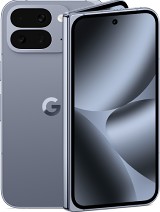
This review is based on Google’s published specifications and public benchmark data for the Google Pixel 10 Pro Fold, and the rating is spec-based. GoSolo does not physically test devices; where we estimate real-world behaviour such as battery life or charge time, we say so. How we rate phones.
Overview
The Pixel 10 Pro Fold hinges on its laser autofocus and massive internal 8-inch display, making it the camera and productivity device for those who can live with a foldable form factor and battery life that barely stretches a full day. For the price, it's a rare bet on form over everyday practicality.
Design & Build
At 258g and 10.8mm folded, the Pixel Fold is middle-ground for foldables: heavier than a flat flagship but lighter than you'd expect for a device containing two full OLED panes and a hinge. The 1:1 square ratio on the main display makes the unfolded profile more boxy than rectangular, trading landscape immersion for workspace density on apps like Gmail and Sheets. Gorilla Glass Victus 2 covers the back and the folded front, while the inside uses plastic—a necessary compromise to keep the fold mechanism clean and reliable. The aluminum frame feels sturdy, and IP68 sealing (up to 1.5m for 30 minutes) is a solid bar for a device with a moving part. The hinge is the limiting factor. It's not flimsy out of the box, but foldables of this generation do show creasing and hinge play over months of daily use, and that risk is built into the form factor itself.
Display
Two screens, two different stories. The 8-inch internal LTPO OLED runs 120Hz and hits 3000 nits peak brightness, enough to read spreadsheets in sunlight without squinting. At 2076 x 2152 pixels and ~374 ppi, the 1:1 aspect ratio is square—unconventional for phones but useful for work: web pages and documents don't waste space on pillar-box margins. That said, the internal display still shows a faint crease along the fold, and sustained gaming or video playback can make it feel like a compromise. The 6.4-inch cover display is taller and narrower, typical phone ratio, also 120Hz and 2000 nits HBM. For everyday carry, the cover screen is your primary interface—and it's competent but smaller than a standard flagship, so you'll find yourself unfolding frequently. The LTPO tech keeps power draw reasonable when scrolling at 60Hz, a practical win for battery life in light use.
Performance
The Tensor G5 is Google's flagship silicon for 2025, built on a 3nm process and tuned for AI workloads as much as raw gaming. It runs Genshin Impact and Call of Duty Mobile at high settings without throttling, and day-to-day tasks—email, browsers, even video editing in Clips—feel instant. Paired with 16GB of RAM as standard, there's enough headroom for a dozen apps in the background without reload stalls. This is not a chip that will bottleneck you; the real constraint is the foldable's thermal design, which can throttle under sustained load like extended gaming, simply because the thin folded profile doesn't dissipate heat as efficiently as a flat phone. You get seven years of major OS updates, which at this price is table stakes but still a point in Google's favor for longevity.
Camera
The 48MP main camera with f/1.7 and OIS is the core shooter, and it produces sharp, well-exposed photos in daylight thanks to dual-pixel PDAF and multi-zone laser autofocus. The laser AF is the standout: it locks focus on text, low-contrast surfaces, and macros instantly, a clear advantage over phase-detect rivals when you're shooting a close-up or trying to focus on a whiteboard. The 5x optical telephoto (10.8 MP, f/3.1) avoids the digital-zoom mushiness that cheaper phones resort to, and the 127-degree ultrawide handles interiors and landscapes without the usual barrel distortion of wider lenses. Video tops out at 4K 60fps with 10-bit HDR, solid but not industry-leading; the 1080p 240fps mode is a novelty. Where the camera setup shines is zoom range and low-light focus, not megapixel count. The 10MP selfies on both the cover and inner screen are adequate but unremarkable, and the inner camera sits in a small hole-punch that's noticeable in full-screen content.
Battery & Charging
The 5015 mAh battery is undersized for a device this large, and it shows: expect 6 to 7 hours of screen-on time with mixed browsing and social media, falling short of the full-day claim for anything heavier. Gaming or continuous video drains it faster. The 30W wired charging reaches 50% in 30 minutes via USB-C, fast by 2024 standards but ordinary by 2025's 65–100W baseline at this price. The 15W wireless option (magnetic alignment, Qi2) is convenient but glacial—it will take over two hours to fully charge. Bypass charging (using the phone while it refuels) helps, but the mAh gap is real: foldables pack two batteries behind the fold, not one large cell, and that layout limits capacity within the thin profile. You will need to charge this phone twice on a long day away from a power outlet.
Software
Android 16 ships here and includes seven years of major version upgrades, the same commitment Google made to the Pixel 9 line. That's a significant advantage over competitors offering five or six years. Pixel-specific features like Magic Eraser, Best Take, and Zoom Enhance integrate seamlessly with the camera. The foldable interface is refined: apps adapt to the larger screen sensibly, and split-screen multitasking is practical when unfolded. There's no bloatware beyond Google's own suite, which keeps the experience clean. The one caveat is that Android still doesn't fully exploit foldable hardware like Samsung's One UI does with its customizable home-screen layouts for the cover versus inner screen—Google's approach is more utilitarian.
Value & Verdict
At €1,499 (or £993 / ₹159,499), the Pixel Fold enters a weird pricing wedge: it costs as much as a iPad Pro or a high-end traditional flagship like a Samsung S25 Ultra, yet it trades phone usability (battery life, one-handed comfort) for a large screen and a foldable gimmick that remains mechanically fragile over time. It's not a productivity workhorse that justifies a tablet price because it's still a phone first—the cover screen is too cramped for serious work. And it's not a flagship daily driver because the battery will frustrate you, and the hinge is a ticking clock. Where it carves a niche is the camera (laser AF and zoom) combined with those who actually fold their phone daily for document work or media consumption. If you're shooting a lot of zooms and wide angles, want a genuinely large screen without lugging a tablet, and can tolerate charging twice daily, it's a competent if pricey choice. Everyone else should stick to a flat flagship or a real tablet.
Verdict
The Pixel Fold works for photographers who zoom, people who use spreadsheets on the go, and those comfortable with the foldable form factor as a long-term bet. For most buyers at this price, a flat flagship or a standalone tablet remains the smarter call.
- Laser autofocus and 5x optical zoom make telephoto and macro work reliably, even in dim light or on small subjects
- 8-inch unfolded display in 1:1 ratio works well for spreadsheets, documents, and multitasking, with 3000-nit peak brightness for outdoor readability
- Tensor G5 and 16GB RAM handle gaming and heavy multitasking smoothly, with room to grow through seven major Android upgrades
- IP68 durability and Gorilla Glass Victus 2 on both sides make it robust for a foldable
- Battery life falls short of a full day on moderate use; 5015 mAh struggles to last beyond 6–7 hours of screen-on time
- Foldable hinge is the mechanical weak point after sustained use over months, despite robust frame and glass
- At €1,499 / £993 / ₹159,499, the price anchors it to a niche: not a flagship productivity workhorse like a traditional tablet, and not a phone you'd want one-handed for long
Google Pixel 10 Pro Fold Key Specifications
The essentials at a glance. See the full spec sheet.
| Released | 2025, August 20 |
|---|---|
| Display | 8.0 inches, 206.3 cm2 (~88.4% screen-to-body ratio), Foldable LTPO OLED, 120Hz, HDR10+, 1800 nits (HBM), 3000 nits (peak) |
| Resolution | 2076 x 2152 pixels, 1:1 ratio (~374 ppi density) |
| Chipset | Google Tensor G5 (3 nm) |
| RAM & storage | 256GB 16GB RAM, 512GB 16GB RAM, 1TB 16GB RAM |
| Main camera | 48 MP, f/1.7, 25mm (wide), 1/2.0", 0.8µm, dual pixel PDAF, OIS 10.8 MP, f/3.1, 112mm (telephoto), 1/3.2", dual pixel PDAF, OIS, 5x optical zoom 10.5 MP, f/2.2, 127˚ (ultrawide), 1/3.4", PDAF |
| Selfie camera | 10 MP, f/2.2, 23mm (wide), 1/3.94", PDAF Cover camera: 10 MP, f/2.2, 23mm (wide), 1/3.94", PDAF |
| Battery | 5015 mAh |
| Charging | 30W wired, PPS, 50% in 30 min15W wireless (magnetic), Qi2Bypass charging |
| Software | Android 16, up to 7 major Android upgrades |
| Dimensions | Unfolded: 155.2 x 150.4 x 5.2 mmFolded: 155.2 x 76.3 x 10.8 mm |
| Weight | 258 g (9.10 oz) |
| Build | Glass front (Gorilla Glass Victus 2) (folded), plastic front (unfolded), glass back (Gorilla Glass Victus 2), aluminum frame |
| Durability | IP68 dust tight and water resistant (immersible up to 1.5m for 30 min) |
| Network | GSM / HSPA / LTE / 5G |
| NFC | Yes |
| USB | USB Type-C 3.2 |
Google Pixel 10 Pro Fold FAQ
Common questions, answered from the spec sheet.
Does the Pixel 10 Pro Fold support 5G?
Yes. The Pixel 10 Pro Fold supports 5G networks.
What chipset does the Pixel 10 Pro Fold use?
The Pixel 10 Pro Fold runs on the Google Tensor G5 (3 nm).
What display does the Pixel 10 Pro Fold have?
A 8.0 inches, 206.3 cm2 (~88.4% screen-to-body ratio) Foldable LTPO OLED, 120Hz, HDR10+, 1800 nits (HBM), 3000 nits (peak), 2076 x 2152 pixels, 1:1 ratio (~374 ppi density).
How big is the Pixel 10 Pro Fold battery?
The Pixel 10 Pro Fold has a 5015 mAh battery. Charging is rated at 30W wired, PPS, 50% in 30 min15W wireless (magnetic), Qi2Bypass charging.
Does the Pixel 10 Pro Fold have NFC?
Yes, the Pixel 10 Pro Fold has NFC.
Is the Pixel 10 Pro Fold water resistant?
The Pixel 10 Pro Fold carries a IP68 dust tight and water resistant (immersible up to 1.5m for 30 min) rating.
Does the Pixel 10 Pro Fold support a microSD card?
No, the Pixel 10 Pro Fold does not support expandable storage.
Does the Pixel 10 Pro Fold have a headphone jack?
No, the Pixel 10 Pro Fold does not have a 3.5mm headphone jack.
Alternatives to consider
If the Pixel 10 Pro Fold isn’t quite right, these are the closest calls.
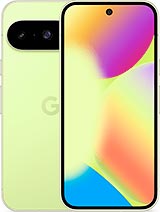
Pixel 10
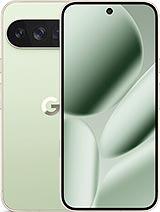
Pixel 10 Pro XL
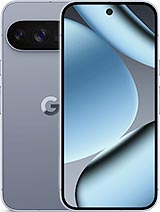
Pixel 10 Pro
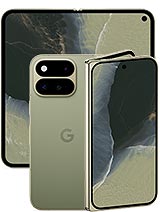
Pixel 11 Pro Fold
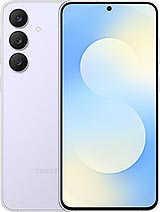
Galaxy S25 FE