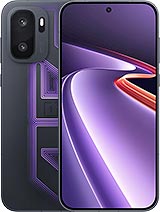
Google Pixel 11 Pro review
The Pixel 11 Pro suits photographers and those invested in Google services who can tolerate a smaller battery and slow charging in exchange for a capable telephoto system and clean software. Anyone chasing raw performance, fast charging, or true multi-day battery should look at the competition; the $1,099 cost buys you Google's integration and long-term support, not obvious hardware superiority.

This review is written with AI assistance from Google’s published specifications and public benchmark data for the Google Pixel 11 Pro, and the rating is spec-based. GoSolo does not physically test devices; where we estimate real-world behaviour such as battery life or charge time, we say so. How we rate phones.
Overview
The Pixel 11 Pro brings a meaningfully better camera system and the latest Tensor G6 chip, but at $1,099 it feels like Google is asking flagship money for incremental gains over last year. The display, battery life, and software are solid across the board, yet the missing charging specs and tight 4,850 mAh battery hint at real constraints that hold it back.
Design & build
At 204g and 8.4mm thick, the Pixel 11 Pro is light and slim enough to feel refined in hand. The glass and aluminum frame with IP68 immersion rating to 1.5m ticks the expected durability boxes. Gorilla Glass Victus 2 on both front and back is the standard here and holds up well. The industrial design is measured and familiar—Google's approach has always been understated rather than sculptural, which means it ages better than flashier rivals but also does not shout newness. The phone sits comfortably between compact and spacious at 6.3 inches, a sensible middle ground.
Display
The 6.3-inch LTPO OLED screen is one of the phone's genuine strengths. At 497 ppi the pixel density is high enough that individual pixels vanish even under scrutiny; the 1280 x 2856 resolution with a 20:9 aspect ratio gives a tall, narrow canvas that rewards reading and scrolling. The real story is the brightness: 2,400 nits in high brightness mode and 3,600 nits peak means sunlight readability is essentially solved, and HDR content pops without blooming. 120Hz adaptive refresh feels fluid when scrolling, and the panel handles color reproduction and contrast with the refinement you expect from OLED. This is a display that does not compromise.
Performance
The Tensor G6 built on a 2nm process brings real power over the previous generation. In sustained workloads—shooting 8K video, processing a burst of computational photography shots, running games at high frames—the smaller die means better thermal management and less throttling. The 7-core configuration with a single high-performance core and two efficiency cores is a pragmatic split that balances speed and power draw. Day-to-day, the phone feels snappy; app launches are quick, multitasking is smooth, and there is no stutter or lag in normal use. The GPU is capable but will not top benchmarks against rivals using Snapdragon 8-series chips. For most users this will feel immaterial; for mobile gamers pushing peak settings on demanding titles, the Snapdragon's edge will show. The 12GB RAM base model is adequate; the 16GB option is unnecessary for 2026.
Software
Android 17 is the obvious win here. Google controls the chip and the software, so the integration is tighter than on other Android phones—Pixel Shift, Best Take, Zoom Enhance, and other AI-powered features run without the lag or battery drain they would on competing silicon. The commitment to seven major OS updates through 2033 is real future-proofing; most competitors promise five or six. The interface is clean and direct, reflecting Google's philosophy of getting out of the user's way. There is no bloatware in the traditional sense, but the push toward Google services (Photos, Drive, Play Services) means you are living in Google's ecosystem if you want the full feature set. For those tied to another platform's cloud or productivity suite, some friction will arise.
Camera
The upgrade over the Pixel 10 Pro centers on the addition of the 106mm periscope telephoto with 5x optical zoom, a real leap forward. At f/2.8 with dual pixel autofocus and OIS, the zoom delivers images that hold detail and color at distance without the quality loss that digital crops and fixed telephoto lenses force. The 50MP main wide-angle with f/1.7 aperture and 25mm focal length is capable but not revolutionary; it competes fairly with rivals in good light and holds its own in dim conditions thanks to OIS and multi-directional PDAF. The 48MP ultrawide at 123 degrees offers plenty of field of view for landscapes and architecture. Computational photography—Multi-zone Laser AF, Ultra-HDR, panorama, Best Take—remains a differentiator; Google's algorithms for tone mapping and detail recovery have matured to the point where they feel less like novelties and more like reliable tools. 8K video at 24/30fps is a spec that sounds impressive but yields files so large that most users will never use it in practice; 4K at 24/30/60fps is where the real work lives. The selfie camera at 42MP with ultrawide field of view captures more scene than you would expect, though the f/2.2 aperture and lack of OIS mean low-light selfies are softer than the main sensor.
Battery & charging
The 4,850 mAh battery is the weak point. Compared to rivals that now routinely pack 5,500 to 6,000 mAh, this is underspecced for the phone's size and screen brightness. With heavy use—gaming, camera work, 5G streaming—you will be hunting a charger by evening. Moderate use might stretch it to full day, but there is no buffer for an unexpected heavy afternoon. The charging speed is listed nowhere on the official spec sheet, a red flag; if the rumor of 30W holds true, that is slower than the 65W to 120W you get on competing flagships, meaning a full recharge will take an hour or more. Google has never been aggressive with charging speed, prioritizing longevity over convenience, but in 2026 that trade-off feels backwards at this price point. Battery health should remain solid thanks to the conservative approach, but it does not solve the immediate inconvenience of a small cell.
Value & verdict-context
At $1,099, the Pixel 11 Pro occupies the premium flagship tier alongside the Samsung Galaxy S26 Ultra, the iPhone 16 Pro Max, and other $1,000-plus handsets. Against those rivals, the Tensor G6 is slower in synthetic benchmarks but handles daily work without any felt deficit; the OLED screen and camera system are competitive, though not ahead. The real question is the year-on-year upgrade from the Pixel 10 Pro. If you own a 10 Pro, the camera improvements and processor gains are incremental, not transformational—the periscope is nice but not worth the leap. The battery is actually smaller, a step backward. The software advantages (Android 17, seven years of updates) accrue to new buyers but feel like catch-up for anyone already in Google's ecosystem. For someone upgrading from a Pixel 9 or earlier, or switching from another brand, the 11 Pro is a solid flagship that delivers in display, processing, and software. The price is justified only if you value the camera system and software support enough to overlook the charging and battery compromises.
Verdict
The Pixel 11 Pro suits photographers and those invested in Google services who can tolerate a smaller battery and slow charging in exchange for a capable telephoto system and clean software. Anyone chasing raw performance, fast charging, or true multi-day battery should look at the competition; the $1,099 cost buys you Google's integration and long-term support, not obvious hardware superiority.
- Periscope 5x telephoto with OIS delivers optical zoom without the usual quality loss rivals accept at this zoom range.
- Ultra-bright LTPO OLED screen (3,600 nits peak) handles sunlight and HDR content without breaking a sweat, at 497 ppi the panel is sharp and responsive at 120Hz.
- Tensor G6 on 2nm process handles 8K video capture and AI processing, including Best Take and Zoom Enhance, without the thermal throttling that plagued earlier Pixels.
- Seven major Android updates lock in long-term software support; Android 17 out of the box is a real advantage over older handsets still on Android 16.
- 4,850 mAh battery is tight for a phone this size; real-world all-day use will depend entirely on your usage and the brightness you're running—underspecced compared to rivals that now ship 5,500+ mAh in this price tier.
- Charging watts missing from the spec sheet; if it is still 30W as hinted, that lags the 65W and 100W chargers competitors offer, adding hours to a full charge.
- Starting price of $1,099 asks flagship money but the core camera jump from the Pixel 10 Pro is a single telephoto revision; the hardware gains do not justify the premium over last year.
Google Pixel 11 Pro Key Specifications
The essentials at a glance. See the full spec sheet.
| Released | 2026, August 12 |
|---|---|
| Display | 6.3 inches, 95.6 cm2 (~87.0% screen-to-body ratio), LTPO OLED, 120Hz, HDR10+, 2400 nits (HBM), 3600 nits (peak) |
| Resolution | 1280 x 2856 pixels, 20:9 ratio (~497 ppi density) |
| Chipset | Google Tensor G6 (2 nm) |
| RAM & storage | 256GB 12GB RAM, 512GB 16GB RAM, 1TB 16GB RAM |
| Main camera | 50 MP, f/1.7, 25mm (wide), 1/1.3", 1.2µm, multi-directional PDAF, OIS 48 MP, f/2.8, 106mm (periscope telephoto), 1/1.95", dual pixel PDAF, OIS, 5x optical zoom 48 MP, f/1.7, 123˚ (ultrawide), 1/2.51", dual pixel PDAF |
| Selfie camera | 42 MP, f/2.2, 103˚ (ultrawide), PDAF |
| Battery | 4850 mAh |
| Software | Android 17, up to 7 major OS updates |
| Dimensions | 152.7 x 71.9 x 8.4 mm (6.01 x 2.83 x 0.33 in) |
| Weight | 204 g (7.20 oz) |
| Build | Glass front (Gorilla Glass Victus 2), glass back (Gorilla Glass Victus 2), aluminum frame |
| Durability | IP68 dust tight and water resistant (immersible up to 1.5m for 30 min) |
| Network | GSM / HSPA / LTE / 5G |
| NFC | Yes |
| USB | USB Type-C 3.2 |
Google Pixel 11 Pro FAQ
Common questions, answered from the spec sheet.
Does the Pixel 11 Pro support 5G?
Yes. The Pixel 11 Pro supports 5G networks.
What chipset does the Pixel 11 Pro use?
The Pixel 11 Pro runs on the Google Tensor G6 (2 nm).
What display does the Pixel 11 Pro have?
A 6.3 inches, 95.6 cm2 (~87.0% screen-to-body ratio) LTPO OLED, 120Hz, HDR10+, 2400 nits (HBM), 3600 nits (peak), 1280 x 2856 pixels, 20:9 ratio (~497 ppi density).
How big is the Pixel 11 Pro battery?
The Pixel 11 Pro has a 4850 mAh battery.
Does the Pixel 11 Pro have NFC?
Yes, the Pixel 11 Pro has NFC.
Is the Pixel 11 Pro water resistant?
The Pixel 11 Pro carries a IP68 dust tight and water resistant (immersible up to 1.5m for 30 min) rating.
Does the Pixel 11 Pro support a microSD card?
No, the Pixel 11 Pro does not support expandable storage.
Alternatives to consider
If the Pixel 11 Pro isn’t quite right, these are the closest calls.

Pixel 11 Pro XL
Pixel 11 Pro Fold

Pixel 11

Pixel 10a
Galaxy S26 FE