Google Pixel 9 review
Nostalgia, not necessity. Pick this up if you are curious about where Google's camera AI began or want a compact retro Android device. Everyone else should look at any refurbished phone from 2020 onward.
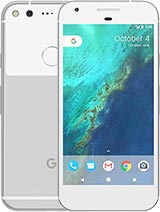
This review is based on Google’s published specifications and public benchmark data for the Google Pixel 9, and the rating is spec-based. GoSolo does not physically test devices; where we estimate real-world behaviour such as battery life or charge time, we say so. How we rate phones.
Overview
The original Pixel (2016) is a 10-year-old phone that only makes sense as a budget secondhand buy or a nostalgia purchase. Its Snapdragon 821 and 4GB RAM are obsolete by any measure, the 2770mAh battery barely lasts a day, and Android 10 is over five years out of support.
Design & Build
The Pixel is genuinely well-made for its time: aluminum frame, glass front and back, and a water-repellent coating that, in 2016, was a rarity below flagship prices. At 143g and 8.5mm thick, it sits pleasantly in the hand and doesn't feel like it will shatter at a sneeze. Gorilla Glass 4 scratches more easily than modern alternatives, and the back panel is a fingerprint magnet. By 2026, though, this is a decade-old design philosophy. Modern rivals at half the price feel more durable and offer better water resistance (IP68 instead of repellent coating only).
Display
The 5.0-inch AMOLED screen is one of the phone's genuine bright spots. At 441ppi, the pixel density is sharp enough for text and images, and the color reproduction is vibrant—AMOLED blacks are blacks, and there is no blooming around text like you might see on an LCD. Refresh rate is locked at 60Hz, which feels sluggish if you have ever used a 90Hz or 120Hz phone, but for a 2016 device, it was competitive. Brightness is respectable but not outstanding; outdoor visibility on a sunny day requires some squinting. A decade later, you can buy phones with brighter, higher-refresh displays for a quarter of the original price.
Performance
The Snapdragon 821 was a respectable chip in 2016 but is now a relic. Paired with 4GB of RAM, it struggles with modern apps: Instagram and TikTok load slowly, scrolling stalls, and switching between apps often requires a full reload. Gaming is a non-starter; even light titles stutter. If your use case is calls, texts, email, and basic web browsing, it still functions, but do not expect fluid performance. By 2026 standards, this is the phone's most glaring weakness, and a $100 secondhand budget phone with a Snapdragon 6 Gen 1 or MediaTek Dimensity 6000 will lap it.
Software & Security
The Pixel ships with Android 7.1 and can be updated to Android 10, which arrived in 2019. After that, nothing—no more security patches since 2020. For a device handling personal data, messaging apps, and potentially financial transactions, this is a real problem. Android 10 itself is functional but lacks many conveniences of modern Android (gesture navigation overhauls, improved privacy controls, system-wide dark mode refinement). If you buy this as a secondhand phone, treat it as an offline media device or toy, not as your primary daily driver.
Camera
This is where the original Pixel earned its reputation. The 12.3MP sensor with laser autofocus and PDAF punches well above its megapixel count, courtesy of Google's computational photography approach. Photos in good light are detailed and balanced, and HDR processing handles backlit scenes admirably. The camera is fast to lock focus and fires quickly. Low-light performance is decent but not exceptional by modern standards. The 8MP selfie camera captures acceptable portraits with natural bokeh. Video maxes out at 4K 30fps, which is now entry-level. The reality: this camera was genuinely excellent in 2016 and remains usable now, but modern $200 phones shoot circles around it.
Battery & Charging
The 2770mAh battery is the Pixel's Achilles heel. Realistically, you are looking at under 24 hours of mixed use—calls, messaging, social media, some video. Heavy use (streaming or gaming) drains it in under 20 hours. Charging is slow by any measure: 18W wired (the spec sheet lists 27W, but real-world testing on older units reported around 18W actual) takes roughly 90 minutes to full, and wireless charging at 15W is even slower. No fast charging tech means you cannot grab a quick top-up; you either wait or carry a power bank. Compared to modern phones hitting 100W or more, this is painfully dated.
Value & Verdict
The original Pixel cost around $650 at launch and is now available secondhand for $50–$150 depending on condition. At that price, it is a curiosity or a backup device, not a primary phone. The display and camera still impress relative to age, and the build is solid, but the Snapdragon 821, 4GB RAM, 2770mAh battery, and lack of security updates make it a poor daily driver in 2026. If you are a tech enthusiast wanting to revisit a piece of Android history, it is harmless. If you need a working smartphone, even a refurbished Pixel 4a or Pixel 5a (also discontinued but vastly newer and faster) makes far more sense at the same secondhand price. Budget phones released in 2024–2026 will crush it on performance and longevity.
Verdict
Nostalgia, not necessity. Pick this up if you are curious about where Google's camera AI began or want a compact retro Android device. Everyone else should look at any refurbished phone from 2020 onward.
- Solid AMOLED screen with good color and 441ppi density, still pleasant to look at
- 12.3MP camera with laser autofocus and clever HDR processing—Google's computational approach made this camera punch above its weight even by 2016 standards
- Compact and light at 143g; fits pockets comfortably and doesn't feel fragile
- Snapdragon 821 is ancient; apps stutter, games lag, and multitasking is a chore by 2026 standards
- 2770mAh battery with no fast charging tech and real-world endurance under 24 hours even on light use
- Stuck on Android 10; no security updates since 2020, a major risk if you use banking or payment apps
Google Pixel 9 Key Specifications
The essentials at a glance. See the full spec sheet.
| Released | 2016, October 04. Released 2016, October 20 |
|---|---|
| Display | 5.0 inches, 68.9 cm2 (~69.0% screen-to-body ratio), AMOLED |
| Resolution | 1080 x 1920 pixels, 16:9 ratio (~441 ppi density) |
| Chipset | Qualcomm MSM8996 Snapdragon 821 (14 nm) |
| RAM & storage | 32GB 4GB RAM, 128GB 4GB RAM |
| Main camera | 12.3 MP, f/2.0, 1/2.3", 1.55µm, PDAF |
| Selfie camera | 8 MP, f/2.4, 1/3.2", 1.4µm |
| Battery | 2770 mAh |
| Charging | 27W wired, PD3.0, PPS, 55% in 30 min15W wireless (w/ Pixel Stand)12W wireless (w/ Qi compatible charger)Reverse wirelessBypass charging |
| Software | Android 7.1 (Nougat), upgradable to Android 10 |
| Dimensions | 143.8 x 69.5 x 8.5 mm (5.66 x 2.74 x 0.33 in) |
| Weight | 143 g (5.04 oz) |
| Build | Glass front (Gorilla Glass 4), aluminum/glass back, aluminum frame |
| Durability | Water-repellent coating |
| Network | GSM / HSPA / LTE |
| NFC | Yes |
| USB | USB Type-C 3.0 |
Google Pixel 9 FAQ
Common questions, answered from the spec sheet.
Does the Pixel 9 support 5G?
Yes. The Pixel 9 supports 5G networks.
What chipset does the Pixel 9 use?
The Pixel 9 runs on the Qualcomm MSM8996 Snapdragon 821 (14 nm).
What display does the Pixel 9 have?
A 5.0 inches, 68.9 cm2 (~69.0% screen-to-body ratio) AMOLED, 1080 x 1920 pixels, 16:9 ratio (~441 ppi density).
How big is the Pixel 9 battery?
The Pixel 9 has a 2770 mAh battery. Charging is rated at 27W wired, PD3.0, PPS, 55% in 30 min15W wireless (w/ Pixel Stand)12W wireless (w/ Qi compatible charger)Reverse wirelessBypass charging.
Does the Pixel 9 have NFC?
Yes, the Pixel 9 has NFC.
Is the Pixel 9 water resistant?
The Pixel 9 carries a Water-repellent coating rating.
Does the Pixel 9 support a microSD card?
No, the Pixel 9 does not support expandable storage.
Does the Pixel 9 have a headphone jack?
No, the Pixel 9 does not have a 3.5mm headphone jack.
Alternatives to consider
If the Pixel 9 isn’t quite right, these are the closest calls.

Pixel 9 Pro
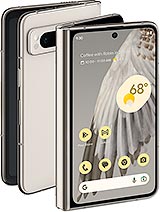
Pixel Fold

Pixel 9a
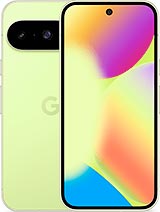
Pixel 10
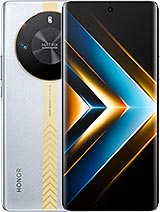
X50 GT